


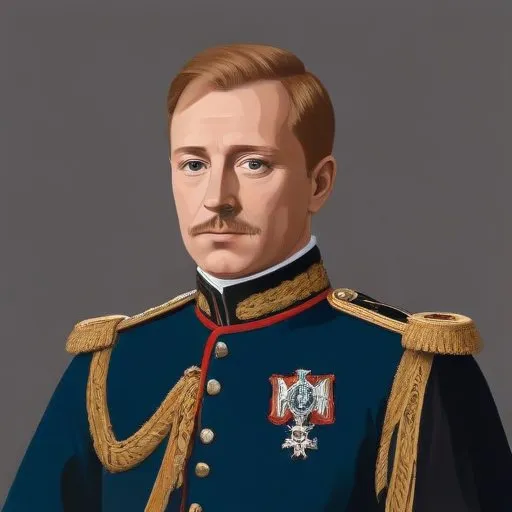
King of Denmark and Norway from 1699 to 1730, known for his military campaigns and cultural achievements, including the founding of the University of Kiel.
Frederick IV of Denmark, also known as Frederik 4, is renowned for his remarkable reign as the King of Denmark and Norway from 1699 until his death in 1730. He is celebrated for his ambitious architectural projects, foreign policy accomplishments, and significant cultural contributions that continue to shape the country's identity.
Born on October 11, 1671, at Copenhagen Castle, Frederick IV was the eldest son of King Christian V and his wife, Charlotte Amalie of Hesse-Kassel. As the crown prince, he was given a seat on the Council of State at the age of 18, broadening his education by traveling in Europe, where he was particularly impressed by Italian architecture.
In 1699, Frederick IV succeeded his father as the King of Denmark and Norway. During his reign, he demonstrated a keen interest in architecture, commissioning several grand projects, including the construction of Frederiksberg Palace, which would become a symbol of the Danish monarchy. He also strengthened Denmark's foreign policy, forging alliances with European powers and expanding the country's trade and commerce.
In 1695, Frederick IV married Louise of Mecklenburg-Güstrow, a great-great-granddaughter of Frederick II of Denmark. The couple had five children, including their son, Christian VI, who would succeed him as the King of Denmark and Norway.
Frederick IV's remarkable reign and cultural achievements have had a lasting impact on Denmark's history and identity. His legacy serves as a testament to his vision, leadership, and commitment to the welfare of his people.
Born in 1818
The King of Denmark who unified the country and founded the modern Danish monarchy, known for his strong leadership and family ties to European royal houses.
Born in 1609
King of Denmark and Norway from 1648 to 1670, known for establishing absolute monarchy and modernizing Denmark's administration.
Born in 1577
A 17th-century king who ruled Denmark and Norway, known for his ambitious projects, including the construction of Rosenborg Castle and the founding of the city of Kristiansand. He's also famous for his military endeavors, particularly the Thirty Years' War.
Born in 1723
King of Denmark and Norway from 1746 to 1766, known for his cultural and economic reforms, as well as his patronage of the arts.
Born in 1667
Queen of Denmark and Norway from 1721 to 1730, known for her strong will and cultural achievements, including the establishment of the first Danish theater.
Born in 1628
Queen of Denmark and Norway from 1648 to 1670, known for her cultural and architectural contributions, including the establishment of the Nyhavn harbor in Copenhagen.
Born in 1749
King of Denmark and Norway from 1766 to 1808, known for his mental health issues and scandals, which led to a regency that ruled in his place.
Born in 1723
King of Denmark and Norway from 1746 to 1766, known for his cultural and economic reforms, as well as his patronage of the arts.
