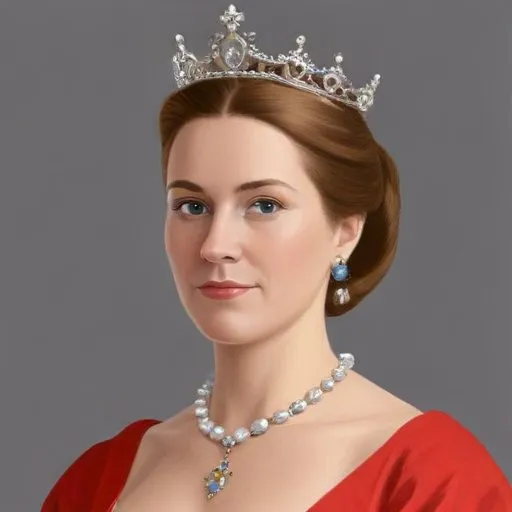
Louise of Mecklenburg-Güstrow: The Piety and Beauty that Captivated Denmark
A Royal Matrimony that Shaped a Nation
Louise of Mecklenburg-Güstrow is renowned for being the Queen of Denmark and Norway as the first spouse of King
Frederick IV of Denmark. Her marriage to the King in 1695 marked the beginning of a new era in Danish history, one that would be characterized by piety, beauty, and strong leadership.
Early Life and Upbringing
Born on August 28, 1667, in Güstrow, Mecklenburg-Schwerin, Louise was the daughter of Duke Gustav Adolph of Mecklenburg-Güstrow and Duchess Magdalena Sibylla of Holstein-Gottorp. Her upbringing was marked by a strong emphasis on piety and religiosity, led by her father, who wrote religious songs in the pietistic spirit. This environment would shape Louise's values and worldview, influencing her later role as queen.
The Crown Princess
In 1695, Louise was selected by Crown Prince Frederick as his bride, chosen for her beauty and suitability as a future queen. Their marriage was initially described as happy, with Louise reciprocating Frederick's attraction. The French ambassador noted, "The crown princess loves her spouse intensely, and he lives with her in complete bliss."
Queen of Denmark and Norway
Upon the death of Christian V in 1699, Louise became Queen of Denmark and Norway, alongside her husband King Frederick IV. They were crowned on April 15, 1700, in the Chapel of Frederiksborg Palace. During her reign, Louise played an active role in promoting piety and education, earning the admiration of her people.
Regency and Leadership
In 1708-1709, Louise took on the role of regent during her husband's trip to Italy, demonstrating her ability to lead and govern. Her tenure was marked by wisdom and compassion, earning her the respect of the Danish nobility and people.
Personal Life and Legacy
Louise's marriage to King Frederick IV produced two children who reached maturity: King
Christian VI of Denmark and Princess Charlotte Amalie of Denmark. Despite her husband's infidelities, Louise remained devoted to him and her duties as queen. Her legacy is one of pietistic dedication, strong leadership, and beauty, inspiring generations to come.
Impact on Modern Society
Louise's emphasis on education and piety during her reign had a lasting impact on Danish society. Her promotion of religious values and charitable works paved the way for future queens to follow in her footsteps, solidifying her place in Danish history.
Historical Context and Legacy
Louise of Mecklenburg-Güstrow's life and reign are a testament to the complex and often tumultuous relationships between European royal houses during the 17th and 18th centuries. Her story serves as a reminder of the importance of strong leadership, compassion, and piety in shaping the course of history.
FAQ
Who was Louise of Mecklenburg-Güstrow?
Louise of Mecklenburg-Güstrow was a queen of Denmark and Norway, married to King Frederick I of Denmark and Norway. She played an important role in shaping the royal court and promoting cultural development during her reign.
What were Louise of Mecklenburg-Güstrows accomplishments as queen?
Louise of Mecklenburg-Güstrow was a patron of the arts and sciences, supporting scholars and artists at the royal court. She also played a key role in promoting education and healthcare in Denmark and Norway.
How did Louise of Mecklenburg-Güstrows marriage affect Danish-Norwegian relations?
Louise of Mecklenburg-Güstrows marriage to King Frederick I helped to strengthen ties between Denmark and Norway, promoting cooperation and unity between the two countries.
What is Louise of Mecklenburg-Güstrows legacy?
Louise of Mecklenburg-Güstrow is remembered as a wise and caring queen who promoted cultural and educational development in Denmark and Norway. She is also celebrated for her strong character and independence.
Did Louise of Mecklenburg-Güstrow have any children?
Yes, Louise of Mecklenburg-Güstrow had several children with King Frederick I, including sons who would go on to become kings of Denmark and Norway.