


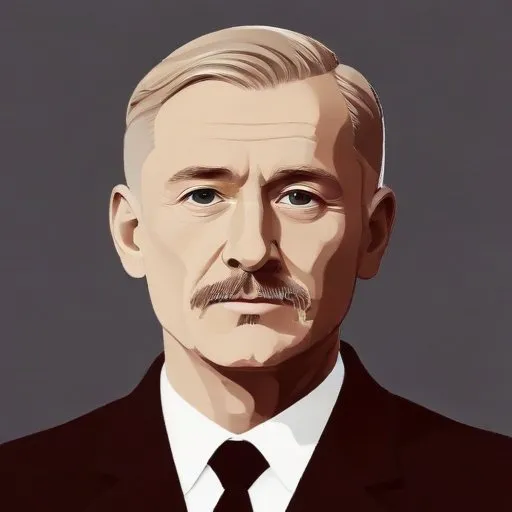
A Danish lieutenant and politician who worked tirelessly to promote international arbitration and disarmament, earning him the Nobel Peace Prize in 1908. He's a pioneering figure in the development of modern peace movements.
Fredrik Bajer was a renowned Danish writer, teacher, and politician who dedicated his life to promoting peace and international arbitration. In 1908, he was awarded the Nobel Peace Prize, alongside Klas Pontus Arnoldson, for his tireless efforts to establish a more peaceful and harmonious world.
Born on April 21, 1837, in Nørsted, Denmark, Bajer was the son of a clergyman. He grew up in a family that valued education and public service, which would shape his future endeavors. Bajer served as an officer in the Danish army during the 1864 war against Prussia and Austria, where he was promoted to the rank of first lieutenant. After his discharge in 1865, he moved to Copenhagen and pursued a career as a teacher, translator, and writer.
In 1872, Bajer entered the Danish Parliament as a member of Folketinget, where he would serve for the next 23 years. During his tenure, he devoted himself to promoting international arbitration as a means of resolving conflicts between nations. His efforts led to the inclusion of foreign relations in the Danish Parliament's work and Denmark's participation in the InterParliamentary Union. Bajer also supported the early women's suffrage movement and various peace organizations, both in Denmark and across Europe.
Bajer's philosophical stance on peace and international relations was rooted in the idea that law should replace power as a means of resolving disputes. He believed that nations should strive to serve the interests of law, rather than relying on force and aggression. This philosophy guided his advocacy for peace and international cooperation throughout his career.
In 1908, Bajer was awarded the Nobel Peace Prize, a testament to his unwavering commitment to promoting peace and international arbitration. This prestigious honor recognized his tireless efforts to create a more harmonious world, free from conflict and violence.
Fredrik Bajer's legacy extends far beyond his notable achievements. His advocacy for peace, international arbitration, and women's suffrage has inspired generations of peace activists and policymakers. His commitment to promoting a more peaceful world has left an indelible mark on modern society, reminding us of the importance of diplomacy, cooperation, and the pursuit of peace.
Always we must bear in mind that law has to be substituted for power, that care must be taken to serve the interests of law.
As we reflect on Bajer's remarkable life and achievements, we are reminded of the power of individual dedication and perseverance in shaping a better future for all.
Born in 1822
A French economist and academic who was awarded the Nobel Peace Prize in 1901 for his efforts to establish the International Committee of the Red Cross and promote international arbitration. He is known for his pioneering work in promoting peace and conflict resolution.
Born in 1828
Co-founder of the Red Cross, a humanitarian organization providing aid in war zones and natural disasters, and a Nobel Peace Prize winner for his efforts. He pioneered the concept of international humanitarian law.
Born in 1851
A French police officer turned politician who served as Prime Minister of France and was awarded the Nobel Peace Prize for his efforts to establish the International Court of Arbitration. He championed international cooperation and peace.
Born in 1833
A pioneering pacifist and women's rights advocate, she dedicated her life to promoting international peace and unity, earning her the Nobel Peace Prize in 1902.
Born in 1843
A Swiss lawyer and politician who worked tirelessly to promote international arbitration and peace, earning him the Nobel Peace Prize in 1902. He's most known for his efforts to establish the International Committee of the Red Cross.
Born in 1860
A pioneering social worker and peace activist, she founded Hull House, a settlement that provided social services to immigrants and the working poor, and was awarded the Nobel Peace Prize in 1931.
Born in 1843
A pioneering pacifist and writer, she championed international disarmament and peace, earning the first Nobel Peace Prize awarded to a woman. Her groundbreaking work inspired a generation of peace activists.
