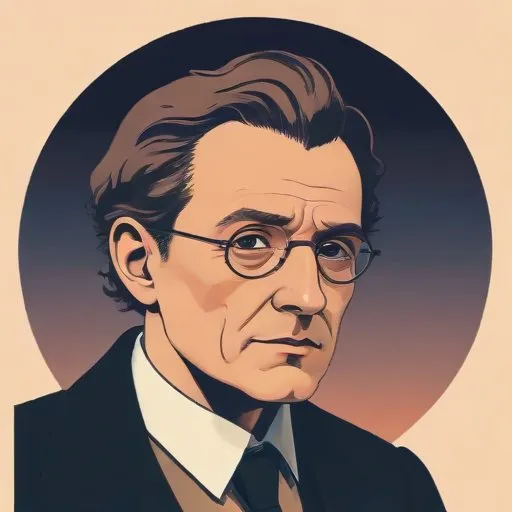
Friedrich Achleitner: The Visionary Architectural Critic and Poet
A Life Dedicated to Architecture and Literature
Friedrich Achleitner, an Austrian poet and architecture critic, left an indelible mark on the world of architecture and literature. As a member of the Wiener Gruppe, he revolutionized the concept of concrete poetry and experimental literature, while his magnum opus, a multivolume documentation of 20th-century Austrian architecture, remains a testament to his unwavering dedication to the field.
Early Life and Career
Born on May 23, 1930, in Schalchen, Upper Austria, Achleitner grew up in a farming family. He attended the Hhere Bundesgewerbeschule in Salzburg and later studied architecture at the Academy of Fine Arts Vienna from 1950 to 1953 under the guidance of Clemens Holzmeister. During this period, he supervised architectural projects, including the restoration of the Rosenkranzkirche in Vienna.
The Wiener Gruppe and Literary Contributions
In 1955, Achleitner joined the Wiener Gruppe, a collective of avant-garde writers that included H. C. Artmann, Konrad Bayer, Gerhard Rhm, and Oswald Wiener. This association led to his participation in literary cabarets and the creation of poems in dialect, montages, and concrete poems. His experimental quadratroman, published in 1973, showcased his innovative approach to literature.
Architecture Criticism and Academia
Achleitner's work as an architecture critic began in 1961, when he wrote anonymously for the Abendzeitung. He later became a prominent critic for Die Presse, a position he held until 1972. His writings introduced a new level of thinking about architecture, and in 1961, he started lecturing at the Academy of Fine Arts Vienna on the history of building construction. In 1983, he was appointed professor of the history and theory of architecture at the University of Applied Arts Vienna, a position he held until 1998.
Magnum Opus: Österreichische Architektur im 20. Jahrhundert
Achleitner's magnum opus, Österreichische Architektur im 20. Jahrhundert, is a comprehensive guide to Austrian architecture in the 20th century. Comprising multiple volumes, the first of which was published in 1980, this work is a testament to his tireless dedication to documentation and critique. Achleitner personally visited each building, creating a unique and authoritative archive now housed at the Architekturzentrum Wien.
Legacy and Impact
Friedrich Achleitner's contributions to architecture, literature, and academia have left an indelible mark on modern society. His work has inspired generations of architects, writers, and thinkers, and his influence continues to be felt in the fields of architecture, literature, and beyond.
Notable Works and Awards
- Österreichische Architektur im 20. Jahrhundert (Multiple Volumes)
- Quadratroman (1973)
- Professor of the History and Theory of Architecture at the University of Applied Arts Vienna (1983-1998)
Personal Milestones
- Born on May 23, 1930, in Schalchen, Upper Austria
- Joined the Wiener Gruppe in 1955
- Passed away on March 27, 2019, at the age of 88
In Conclusion
Friedrich Achleitner's life and work serve as a testament to the power of dedication, innovation, and creativity. His contributions to architecture, literature, and academia continue to inspire and shape the world around us, cementing his place as a visionary and a true original.
FAQ
What is Friedrich Achleitners most notable literary work?
Friedrich Achleitner is best known for his poetry collections, particularly Das Wahrhafte (The True One) and Die Rückkehr des Dionysos (The Return of Dionysus). His poetry is characterized by its lyricism, depth, and exploration of the human condition.
What is Friedrich Achleitners connection to the Vienna Group?
Achleitner was a member of the Vienna Group, a circle of avant-garde writers and artists who sought to challenge traditional forms and conventions. He was influenced by the groups emphasis on experimentation, innovation, and pushing the boundaries of language and art.
What are Friedrich Achleitners views on poetry and literature?
Achleitner believed that poetry was a means of accessing the deeper truths and mysteries of human existence. He advocated for a more expressive, intuitive approach to writing, and saw poetry as a way to transcend the mundane and tap into the sublime.
What is Friedrich Achleitners legacy in Austrian literature?
Achleitners legacy in Austrian literature is one of innovation, experimentation, and lyricism. He is remembered as a pioneering poet and critic who expanded the possibilities of language and explored the human condition with depth and sensitivity.
What are Friedrich Achleitners thoughts on the role of the poet in society?
Achleitner saw the poet as a seer, a prophet, and a challenger of the status quo. He believed that poets had a responsibility to critique society, challenge authority, and speak truth to power, using their art as a means of promoting social change and transformation.