


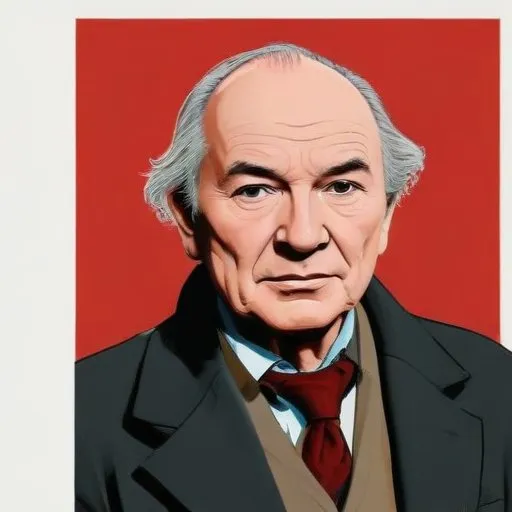
A provocative and influential writer known for his avant-garde, often provocative works that critique Austrian culture and society. His unique, lyrical prose has captivated readers worldwide.
Thomas Bernhard is renowned for his incisive and unflinching portrayals of human existence, delving into the complexities of death, isolation, obsession, and illness in his literature. His unique prose style, characterized by multiple perspectives, idiosyncratic vocabulary, and punctuation, and lengthy monologues by protagonists on the brink of madness, has cemented his status as one of the most important German-language authors of the post-war era.
Born on February 9, 1931, in the Netherlands to an unwed Austrian mother, Bernhard spent much of his childhood with his maternal grandparents in Austria and in boarding homes in Austria and Nazi Germany. His grandfather, the novelist Johannes Freumbichler, introduced him to literature and philosophy, sparking a lifelong passion for the written word.
At a young age, Bernhard contracted pleurisy and tuberculosis, which led to debilitating lung disease that would plague him for the rest of his life. During his recovery in a sanatorium, he began writing poetry and stories, laying the foundations for his future literary endeavors.
Bernhard's breakthrough novel, Frost (1963), catapulted him to literary stardom, establishing him as a leading novelist and playwright in the German-speaking world. Over the next two decades, he continued to produce significant works, including the novels Correction (1975) and Extinction (1986), as well as his memoirs, Gathering Evidence (1975-1982).
George Steiner, a prominent literary critic, lauded Bernhard as "the foremost craftsman of German prose after Kafka and Musil," underscoring his immense literary talent.
Bernhard was not one to shy away from controversy. He publicly lambasted what he perceived as Austria's post-war cultural pretensions, anti-Semitism, provincialism, and denial of its Nazi past. His criticisms earned him both admiration and vitriol, with some labeling him a "Nestbeschmutzer" (a person who dirties their own nest).
Despite the backlash, Bernhard remained unapologetic, using his writing as a means to confront and challenge the societal status quo.
Bernhard's impact on Austrian literature and culture is undeniable. He influenced the Austrian vernacular and inspired a younger generation of writers, including Elfriede Jelinek, who would go on to win the Nobel Prize in Literature in 2004.
His writing continues to captivate readers worldwide, offering a glimpse into the complexities of the human experience and the darker aspects of society.
Thomas Bernhard's life and work serve as a testament to the power of literature to challenge, provoke, and inspire. His legacy continues to resonate, reminding us that the most unflinching portrayals of human existence can often lead to the most profound insights.
79 Years Old
Austrian writer and playwright known for her provocative and unflinching portrayals of social and political issues, particularly in regards to feminism and power dynamics. Her works often blend elements of drama, poetry, and music to create a unique and unsettling reading experience.
83 Years Old
Austrian author and playwright known for his provocative and avant-garde works that challenge traditional narrative forms, winning the Nobel Prize in Literature in 2019.
Born in 1926
Austrian literary icon who penned poetic and introspective works that probed the human condition, exploring themes of love, identity, and social critique. Her writing is celebrated for its lyricism and philosophical depth.
Born in 1883
A writer of surreal, psychologically complex fiction that explores the human condition, often featuring isolated protagonists in absurd, nightmarish scenarios.
Born in 1862
Austrian author and playwright who explored the human psyche through his works, often focusing on themes of love, relationships, and the bourgeoisie. His plays and novels offered a glimpse into the lives of Viennese high society during the early 20th century.
Born in 1886
Austrian-American author and poet, known for his novels that explored the decay of values in modern society, particularly in his masterpiece "The Death of Virgil".
Born in 1905
A Bulgarian-Swiss writer who explored the human condition through novels, plays, and memoirs, winning the Nobel Prize in Literature in 1981 for his thought-provoking works.
Born in 1917
A German novelist and short story writer, known for his critical and satirical portrayals of post-war German society, exploring themes of morality, politics, and identity. His works often blended realism with fantastical elements, offering a unique perspective on the human condition.
