


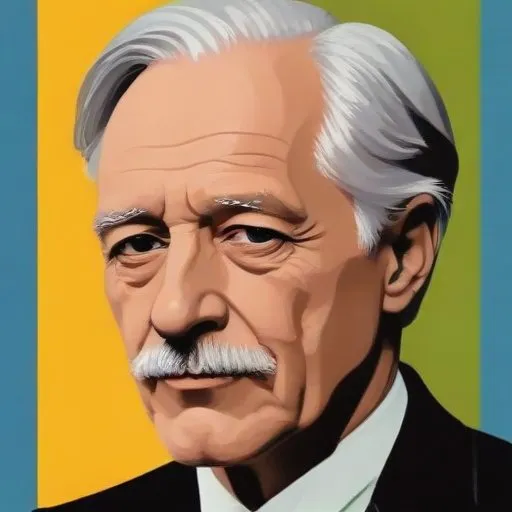
A novelist, essayist, and poet who weaves together historical and personal narratives to explore themes of memory, identity, and the human condition, often blurring the lines between fiction and nonfiction.
Winfried Georg Sebald, known affectionately as Max Sebald, was a German writer and academic renowned for his poignant and lyrical prose, which traversed the realms of literature, history, and philosophy. His extraordinary contribution to world literature lies in his unique ability to weave together intricate narratives that explore the human condition, tackling themes such as memory, identity, and the impact of historical events on individual lives.
Born on May 18, 1944, in Wertach, Bavaria, Sebald grew up in the shadow of World War II, an experience that would later influence his writing significantly. His father, Georg Sebald, served in the Wehrmacht under the Nazi regime, while his maternal grandfather, Josef Egelhofer, was a small-town police officer who played a crucial role in shaping Sebald's early years.
Sebald's educational pursuits took him to the University of Freiburg and later to the University of Fribourg in Switzerland, where he earned a degree in 1965. His academic career was marked by stints as a lector at the University of Manchester and later as a lecturer at the University of East Anglia (UEA), where he completed his Ph.D. in 1973.
Sebald's literary output is characterized by its nuanced exploration of the human experience, often incorporating elements of history, philosophy, and personal reflection. Some of his notable works include:
Sebald's work has had a profound impact on contemporary literature, inspiring a new generation of writers to explore the intersections of history, memory, and personal narrative. His influence extends beyond the literary world, as his work has been praised for its ability to capture the essence of the human experience in the face of trauma and loss.
Throughout his career, Sebald received numerous awards and honors, including the National Book Critics Circle Award and the Heinrich Böll Prize. His work has been translated into numerous languages, cementing his status as a literary giant of the 20th century.
In 1967, Sebald married his Austrian-born wife, Ute, and the couple settled in Norwich, where Sebald would spend much of his academic and literary career. In 1987, he was appointed to a chair of European literature at UEA, a position he held until his untimely death in 2001.
Sebald's life was marked by a deep sense of introspection and a passion for exploring the human condition. His work continues to captivate readers and inspire writers, ensuring his legacy as one of the most important literary voices of our time.
77 Years Old
A celebrated British novelist known for his witty, provocative, and often controversial works that explore the human condition, morality, and the darker aspects of society.
79 Years Old
A celebrated author of magical realist fiction, known for provocative and imaginative novels that explore cultural identity, politics, and history. His writing often sparks controversy and debate.
77 Years Old
A Japanese literary master crafting surreal, psychologically complex tales that blend fantasy and reality, exploring themes of identity, alienation, and the human condition.
Born in 1923
A renowned Italian writer, celebrated for his imaginative and philosophical fiction, often blending fantasy and reality, leaving a lasting impact on modern literature.
Born in 1919
An Italian chemist and author who survived Auschwitz and wrote powerful memoirs about his experiences, including "If This Is a Man" and "The Truce".
Born in 1894
Austrian journalist and author who wrote novels and essays that explored the decline of the Austro-Hungarian Empire and the rise of fascism in Europe, known for his lyrical and poignant prose.
Born in 1905
A Bulgarian-Swiss writer who explored the human condition through novels, plays, and memoirs, winning the Nobel Prize in Literature in 1981 for his thought-provoking works.
86 Years Old
A celebrated travel writer and novelist, known for blending fiction and non-fiction to create captivating narratives that explore human experience and cultural identity.
