


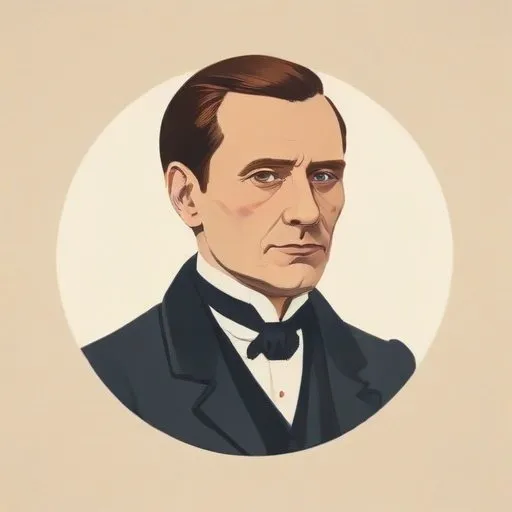
Estonian-German historian, businessman, and composer who contributed to the development of Estonian national identity through his writings and musical compositions. He's also known for his entrepreneurial ventures, including the establishment of a printing press and a music publishing house.
Friedrich Amelung was a Baltic German cultural historian, businessman, and chess endgame composer, renowned for his profound contributions to the world of chess and Baltic cultural heritage. With a multifaceted career spanning decades, Amelung left an indelible mark on the fields of history, culture, and sports.
Born on March 23, 1842, in Visiku, Governorate of Livonia (present-day Jõgeva County, Estonia), Amelung was raised in a family steeped in cultural and intellectual pursuits. He pursued higher education at the University of Dorpat (now Tartu University), where he studied philosophy and chemistry from 1862 to 1864.
Amelung's early career was marked by his directorship of the Riga-Meleski mirror factory, which he inherited from his father. During this period, he published several writings on the culture and history of Estonian localities, including Viljandi, Tallinn, and Põltsamaa. These works showcased his deep understanding of the region's cultural heritage and cemented his reputation as a cultural historian.
In the realm of chess, Amelung's contributions were equally significant. He edited the chess magazine Baltische Schachblätter from 1888 to 1908 and established the Baltic Chess Society in 1898. His most notable achievement in chess was the publication of over 230 endgame studies, earning him the distinction of being the first chess historian in the Baltic States.
Amelung's impact on Baltic culture and society was multifaceted. His historical writings helped preserve the cultural heritage of the region, while his contributions to chess promoted the game as a symbol of intellectual pursuits and cultural sophistication. Through his work, Amelung fostered a sense of community and connectedness among Baltic intellectuals and chess enthusiasts.
Amelung's philosophical outlook was shaped by his studies in philosophy and chemistry. He believed in the importance of intellectual curiosity and the pursuit of knowledge in understanding the world around us. His contributions to chess and cultural history reflected this philosophical stance, as he sought to uncover the deeper meanings and significance of these pursuits.
Amelung's life was marked by significant events that shaped his career and personal growth. In 1879, he moved to Reval (now Tallinn), where he immersed himself in the study of chess history in the Baltics. This period marked a turning point in his life, as he began to focus more intensely on his chess compositions and historical writings.
Despite his many accomplishments, Amelung's life was not without controversy. Some critics argued that his focus on chess and cultural history detracted from his responsibilities as a businessman and director of the mirror factory. However, Amelung's defenders countered that his intellectual pursuits enriched his business acumen and fostered a deeper understanding of the cultural context in which he operated.
While Amelung's writings and compositions are replete with insightful quotes and memorable sayings, one of his most famous remarks is: "The beauty of chess lies not in its complexity, but in its simplicity and elegance." This quote captures the essence of his approach to chess and cultural history, highlighting the importance of nuance and refinement in understanding the world around us.
Friedrich Amelung's legacy extends far beyond his own lifetime. His contributions to Baltic cultural history and chess have inspired generations of scholars, historians, and chess enthusiasts. His work serves as a testament to the power of intellectual curiosity and the importance of preserving cultural heritage.
In conclusion, Friedrich Amelung was a true Renaissance man, whose multifaceted career and intellectual pursuits continue to inspire and educate us today. His legacy serves as a reminder of the importance of cultural heritage, intellectual curiosity, and the pursuit of knowledge in shaping our understanding of the world and our place within it.
Born in 1744
A German Enlightenment thinker who shaped modern philosophy, literature, and anthropology with his ideas on cultural relativism, nationalism, and the importance of folklore. He's often considered the father of comparative literature.
Born in 1759
A renowned poet and playwright who crafted influential works that explored the human condition, morality, and the struggle for freedom, leaving a lasting impact on German literature.
Born in 1749
A German literary giant who penned iconic works like "Faust" and "The Sorrows of Young Werther", shaping the Romantic movement and influencing countless writers.
Born in 1724
Developed influential philosophical frameworks, such as the Critique of Pure Reason, that shaped modern Western thought on ethics, morality, and human understanding.
Born in 1770
A German philosopher and academic who developed a comprehensive and systematic philosophy that emphasized the unity of all things and the dialectical process of thesis, antithesis, and synthesis. His ideas have had a profound impact on modern thought, influencing fields such as philosophy, politics, and art.
Born in 1788
A pessimistic philosopher who wrote about the human condition, emphasizing the struggles and sufferings of life, and is famous for his concept of the "will to life".
Born in 1813
A revolutionary composer who transformed opera with his epic, mythological works, creating a new era of musical storytelling. His iconic operas, such as "Der Ring des Nibelungen," continue to captivate audiences worldwide.
