


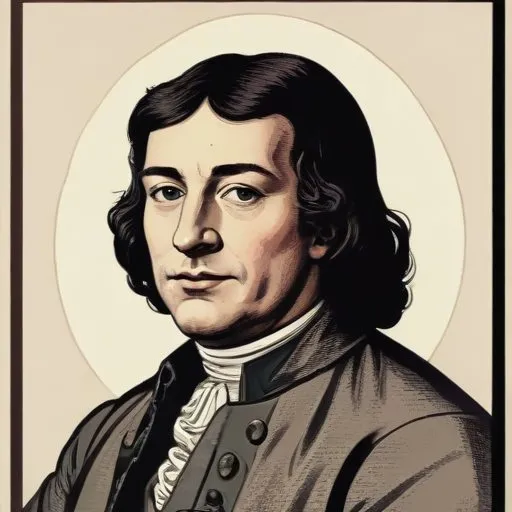
Count of Hanau-Lichtenberg and Hanau-Münzenberg, a German nobleman who ruled two counties in the 17th century, known for his territorial expansions and cultural developments.
Friedrich Casimir, Count of HanauLichtenberg, is best known for reuniting the Hanau counties under one rule, a feat that hadn't been accomplished since 1458. As the Count of HanauLichtenberg and HanauMünzenberg, he played a significant role in shaping the history of the region during a tumultuous period in European history.
Friedrich Casimir was born on August 4, 1623, in Bouxwiller, Germany, to Count Philipp Wolfgang and his wife, Countess Johanna of Oettingen-Oettingen. His early life was marked by frequent relocations to Strasbourg due to the Thirty Years War. Upon his father's death in 1641, Friedrich Casimir succeeded him as the ruler of HanauLichtenberg, although he was still a minor at the time.
Between 1643 and 1645, Friedrich Casimir embarked on the Grand Tour, a traditional journey for young nobles of his standing. He traveled to France, Spain, Italy, England, and the Netherlands, visiting countries unaffected by the Thirty Years War. This sojourn not only broadened his horizons but also provided a safer haven than his war-torn homeland.
During his minority, a committee of guardians was established to oversee his rule. The committee consisted of Johann Ernst of HanauMünzenberg and Baron Georg II of Fleckenstein-Dagstuhl, followed by Count Georg Albrecht of Erbach after Johann Ernst's death in 1642. However, with Friedrich Casimir approaching the age of majority, no further attempt was made to establish a guardianship after Count Georg Albrecht's death in 1647.
In 1642, Friedrich Casimir inherited the County of HanauMünzenberg, reuniting the Hanau counties under one rule for the first time since 1458. This significant achievement marked a turning point in the region's history, as it brought an end to the fragmentation of the Hanau counties and paved the way for a more stable and prosperous future.
Friedrich Casimir's legacy is a testament to his ability to navigate the complexities of 17th-century European politics and warfare. His reunification of the Hanau counties demonstrated his commitment to the region's prosperity and left a lasting impact on the House of Hanau. As a ruler, he played a significant role in shaping the course of regional history, earning his place as a notable figure in the annals of European history.
Born in 1504
A German nobleman who ruled Hesse from 1509 to 1567, known for being a champion of the Protestant Reformation and a key figure in the Schmalkaldic League.
Born in 1602
A 16th-century German nobleman who ruled Hesse-Kassel and played a significant role in the Protestant Reformation, known for his military campaigns and territorial expansions.
Born in 1547
Ruler of Hesse-Darmstadt from 1567 to 1596, he played a key role in the Protestant Reformation and was a prominent figure in the German Renaissance.
