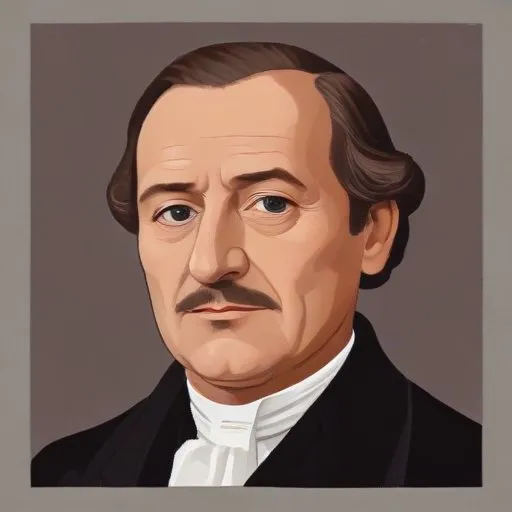
Friedrich von Flotow: The Master of Opera Comique
A Life of Melody and Theatre
Friedrich von Flotow is remembered as one of the most celebrated opera composers of the 19th century, particularly for his iconic opera, Martha, which continues to enthrall audiences to this day. With a career spanning over four decades, Flotow's contributions to the world of opera comique remain unparalleled, blending French elegance with German Romanticism.
Early Life and Training
Born on April 27, 1812, in Teutendorf, Mecklenburg, Flotow came from an aristocratic family. Initially destined for a diplomatic career, his passion for music led him to study at the renowned Conservatoire de Paris under
Anton Reicha. Here, he was heavily influenced by the likes of Auber, Rossini, Meyerbeer, Donizetti, Halvy, and later, Gounod and Offenbach.
Rise to Fame
Flotow's early works, including chamber music and operettas, showcased his growing talent. However, it was his first opera, Pierre et Cathrine (1835), that marked the beginning of his ascent to fame. Le naufrage de la Méduse (1839), based on the infamous wreck of the warship Méduse, cemented his reputation as a master of opera comique.
Martha: The Opera That Conquered Hearts
Flotow's magnum opus, Martha, premiered at the Theater am Kärntnertor in Vienna on November 25, 1847. This three-act romantic opera, with its French-inspired arias and Germanic dramatic flair, became an instant hit, captivating audiences across Europe and beyond.
A Life of Theatre and Music
Between 1856 and 1863, Flotow served as Intendant of the court theatre at Schwerin, Germany. During this period, he continued to compose, producing works that debuted in Paris, Vienna, and even Saint Petersburg. His opera, Alessandro Stradella (1844), remains one of his most revered creations.
Legacy and Impact
Friedrich von Flotow's contributions to opera comique are undeniable. Although his works, apart from Martha, have largely fallen into obscurity, his influence on the genre remains palpable. Today, Martha continues to be performed, albeit less frequently than in its heyday, still enchanting audiences with its timeless melodies and engaging storylines.
Works
Flotow's oeuvre comprises approximately 30 operas, many of which were performed in various versions and languages. While some have been lost to time, others continue to be rediscovered and celebrated.
- Pierre et Cathrine (1835)
- Le naufrage de la Méduse (1839)
- Alessandro Stradella (1844)
- Martha (1847)
A Life Well-Lived
Friedrich von Flotow passed away on January 24, 1883, in Darmstadt, leaving behind a legacy that continues to inspire generations of musicians, composers, and music lovers alike. His story serves as a testament to the power of passion, dedication, and creativity, reminding us that even the most fleeting moments of beauty can leave an indelible mark on the world of music.
FAQ
What is Friedrich von Flotows most famous opera?
Friedrich von Flotows most famous opera is Martha, a romantic opera that premiered in 1847. It is still widely performed today and remains one of his most beloved works.
What was Friedrich von Flotows contribution to German opera?
Friedrich von Flotow was a German composer who made significant contributions to the development of German opera. His works showcased his talent for melodic writing and his ability to craft engaging stories.
What are the key features of Friedrich von Flotows compositional style?
Friedrich von Flotows compositional style is characterized by its lyricism, catchy melodies, and dramatic flair. His music is often described as elegant, refined, and expressive.
How did Friedrich von Flotows music reflect the cultural trends of his time?
Friedrich von Flotows music reflected the cultural trends of the Romantic era, with its emphasis on emotion, individuality, and dramatic expression. His works were popular in their time and continue to be enjoyed today.
What are some interesting facts about Friedrich von Flotows life?
Friedrich von Flotow was born in 1812 in Teutendorf, Germany. He studied music in Berlin and later worked as a conductor and composer in several German cities. He died in 1883 at the age of 71.