


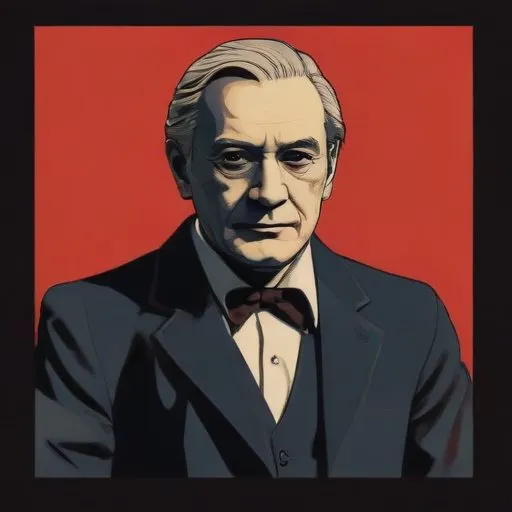
Austrian playwright who wrote influential plays that explored themes of morality, guilt, and redemption, often set against the backdrop of World War II.
Fritz Hochwlder was a renowned Austrian playwright known for his sparse prose and strong moralist themes, which earned him several literary awards, including the prestigious Grand Austrian State Prize for Literature in 1966. His works, often performed at the esteemed Burgtheater in Vienna, explored social and political dramas, delving into historical themes that continue to resonate with audiences today.
Born on May 28, 1911, in Vienna, Austria, Hochwlder's life took a dramatic turn with the rise of Nazi power. Before fleeing Austria in 1938, Hochwlder worked as an upholsterer's apprentice, a far cry from his future career as a successful playwright.
His escape from Nazi-occupied Austria was a harrowing experience. Hochwlder entered Switzerland illegally, where he was interned in camps, barred from working in his profession. This period of hardship and uncertainty marked a turning point in his life, as he began to write plays in earnest.
During his time in Zurich, Hochwlder met and was influenced by Georg Kaiser, a prominent exiled playwright. Kaiser's guidance and mentorship played a significant role in shaping Hochwlder's writing style and thematic focus.
Hochwlder's breakthrough came with his play (1942), which was adapted for the screen in 1959 as The Strong Are Lonely. This work marked the beginning of his exploration into themes of violence, moral responsibility, and the human condition.
Hochwlder's plays often tackled complex, morally charged subjects, including the violent dismantling of a utopian Jesuit settlement in Paraguay (Das Heilige Experiment) and the brutality of the French Revolution (Der öffentliche Ankläger, 1948). His commitment to exploring these themes earned him a reputation as a powerful, thought-provoking playwright.
Hochwlder's contributions to Austrian literature were recognized with the Grand Austrian State Prize for Literature in 1966, solidifying his position as one of the country's most esteemed playwrights.
Fritz Hochwlder's plays continue to resonate with audiences today, offering a powerful commentary on the human condition, violence, and moral responsibility. His work serves as a testament to the transformative power of art, born from the darkness of his own experiences and the turmoil of his time.
As a playwright, Hochwlder's legacy extends beyond his own body of work, inspiring future generations of writers and artists to tackle the complex, often difficult themes that define the human experience.
Born in 1862
Austrian author and playwright who explored the human psyche through his works, often focusing on themes of love, relationships, and the bourgeoisie. His plays and novels offered a glimpse into the lives of Viennese high society during the early 20th century.
Born in 1890
Austrian-Bohemian author, poet, and playwright known for his novels and plays that often explored themes of identity, morality, and social justice, particularly in the context of World War I and the Jewish experience.
Born in 1874
Austrian literary giant behind iconic works like "Der Rosenkavalier" and "Electra", known for poetic and philosophical explorations of human identity and morality.
Born in 1898
A German-Swiss soldier and author, best known for writing the classic novel "All Quiet on the Western Front", a powerful anti-war tale that vividly depicts the horrors of World War I.
Born in 1881
A celebrated writer of psychological novels and biographies that probed the human condition, known for his vivid storytelling and insightful portrayals of historical figures.
Born in 1885
A pioneering journalist and writer, known for his vivid reportage and travelogues that captured the essence of people and places, blending fiction and fact in his unique style.
Born in 1874
Austrian satirist and writer who critiqued the hypocrisy of modern life through his witty writings and biting social commentary. He's most famous for his magazine Die Fackel, which he wrote and published single-handedly for over 30 years.
Born in 1883
A writer of surreal, psychologically complex fiction that explores the human condition, often featuring isolated protagonists in absurd, nightmarish scenarios.
