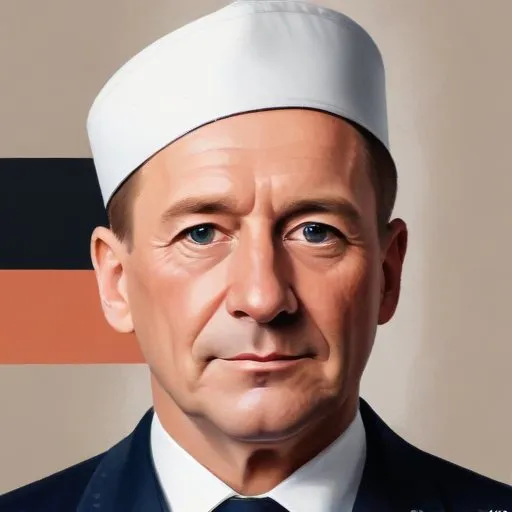
Fritz Sauckel: The German Nazi Politician and War Criminal
Introduction
Fritz Sauckel, a German Nazi politician, is infamously known for his role as the General Plenipotentiary for Labour Deployment during World War II, responsible for overseeing the brutal forced labor program that exploited millions of people. As a high-ranking Nazi official, Sauckel's crimes against humanity led to his prosecution and execution in the Nuremberg Trials.
Early Life and Education
Born on October 27, 1894, in Haßfurt, Kingdom of Bavaria, Sauckel was the only child of a postman and a seamstress. He attended the local
Volksschule and later enrolled in the
Gymnasium in Schweinfurt, but left in 1909 without graduating when his mother fell ill. At the age of 15, Sauckel joined the merchant marine of Norway and Sweden, where he rose to the rank of
Vollmatrose (able seaman) after years of sailing around the world.
Rise to Prominence
Following his release from French internment in 1919, Sauckel returned to Germany and worked as an apprentice locksmith and toolmaker in the Ersten Automatischen GustahlkugelFabrik Cie ballbearing works. He joined the
Deutschvölkischer Schutz- und Trutzbund, a prominent anti-Semitic organization, in 1919 and served as its local manager for Lower Franconia until 1921. Sauckel's involvement in the Nazi Party began in January 1923, and he quickly rose through the ranks, becoming the
Gauleiter of Thuringia in 1927.
Labour Deployment and War Crimes
Sauckel's most notorious role was as the General Plenipotentiary for Labour Deployment, a position he held from March 1942 until the end of World War II. During this period, he oversaw the brutal forced labor program, which exploited millions of people, including concentration camp inmates, prisoners of war, and civilians from occupied territories. Sauckel's policies led to the deaths of millions, and his crimes against humanity were prosecuted in the Nuremberg Trials.
Trial and Execution
Sauckel was among the 24 defendants accused in the Nuremberg Trial of the Major War Criminals before the International Military Tribunal. He was found guilty of war crimes and crimes against humanity, and on October 1, 1946, he was sentenced to death by hanging. Sauckel was executed on October 16, 1946, along with nine other high-ranking Nazi officials.
Legacy and Historical Context
Sauckel's crimes and legacy serve as a dark reminder of the atrocities committed during World War II. His involvement in the Nazi Party and his role in the forced labor program have had a lasting impact on modern society, serving as a cautionary tale against the dangers of totalitarianism and human exploitation.
Personal Milestones and Key Life Events
- 1894: Born on October 27 in Haßfurt, Kingdom of Bavaria
- 1909: Left school due to his mother's illness
- 1914: Interned as an enemy alien in France
- 1919: Released from French internment and joined the Deutschvölkischer Schutz- und Trutzbund
- 1923: Joined the Nazi Party
- 1927: Became the Gauleiter of Thuringia
- 1942: Appointed General Plenipotentiary for Labour Deployment
- 1946: Found guilty of war crimes and crimes against humanity, sentenced to death, and executed
Philosophical Contributions and Beliefs
While Sauckel's beliefs and actions were largely driven by his allegiance to the Nazi Party and its ideology, his involvement in the forced labor program and crimes against humanity were rooted in his anti-Semitic and nationalist views. Sauckel's philosophical contributions, if any, are overshadowed by his reprehensible actions and the devastating impact they had on millions of people.
FAQ
What was Fritz Sauckels role in the Nazi regime?
Fritz Sauckel was a high-ranking official in the Nazi regime, serving as the Reichsstatthalter of Thuringia and the General Plenipotentiary for Labour Deployment. He was responsible for forced labour and overseeing the use of concentration camp prisoners.
What were the consequences of Fritz Sauckels actions during World War II?
Fritz Sauckels actions during World War II led to the deaths of millions of people, mostly forced labourers and concentration camp prisoners. He was held accountable for his crimes and executed after the war.
What was Fritz Sauckels early life and career like?
Fritz Sauckel was born in 1894 and served in the German navy during World War I. He joined the Nazi Party in 1923 and quickly rose through the ranks, becoming a powerful figure in the regime.
How did Fritz Sauckels policies affect the German economy during World War II?
Fritz Sauckels policies of forced labour and conscription had a significant impact on the German economy during World War II. While they provided a short-term boost, they ultimately led to economic instability and contributed to Germanys defeat.
What was Fritz Sauckels fate after the war?
Fritz Sauckel was arrested in 1945 and put on trial at the Nuremberg Trials. He was found guilty of war crimes and crimes against humanity, and was executed by hanging in 1946.