


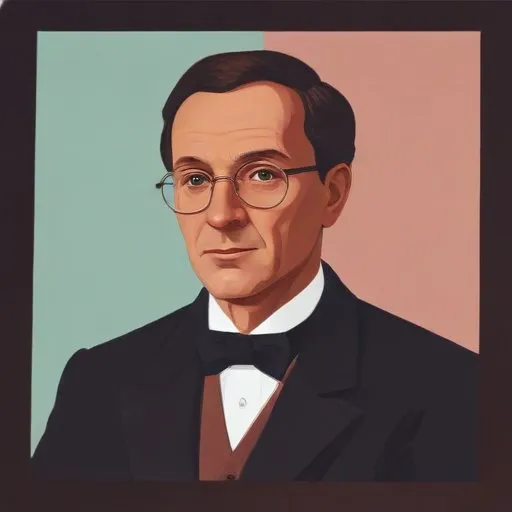
A pioneer in applying mathematical principles to psychology, this individual developed the Laws of Form, a philosophical and mathematical framework for understanding reality.
G. Spencer Brown was a renowned English polymath, celebrated for his groundbreaking work, Laws of Form, a seminal book that has been in print since 1969. This multifaceted individual was a mathematician, consulting engineer, psychologist, educational consultant, practitioner, consulting psychotherapist, author, and poet, leaving an indelible mark on various disciplines.
Born on April 2, 1923, in Grimsby, Lincolnshire, England, Spencer Brown attended Mill Hill School and later pursued his medical studies at London Hospital Medical College (now part of Barts and The London School of Medicine and Dentistry). After serving in the Royal Navy from 1943 to 1947, he delved into the world of philosophy and psychology at Trinity College, Cambridge, where he earned honours in both subjects and had the privilege of meeting the esteemed philosopher Bertrand Russell.
Spencer Brown's academic journey was filled with notable milestones. He taught philosophy at Christ Church, Oxford, and later became a lecturer in formal mathematics at the University of London in 1964, thanks to Bertrand Russell's recommendation. His association with the Department of Pure Mathematics and Mathematical Statistics at the University of Cambridge began in 1969 and continued for many years. As a visiting professor, he shared his expertise with the University of Western Australia, Stanford University, and the University of Maryland, College Park, in the 1970s and 1980s.
Laws of Form, his magnum opus, emerged from his work in electronic engineering and lectures on mathematical logic. This pioneering book has never gone out of print since its publication in 1969, a testament to its significance and enduring relevance.
Spencer Brown's work was deeply influenced by his association with the innovative Scottish psychiatrist R. D. Laing. His Laws of Form is not only a work of mathematics but also a philosophical treatise that explores the nature of reality, perception, and knowledge. Through his unique approach, he sought to reconcile the divide between logic and intuition, offering a fresh perspective on the human experience.
Laws of Form has had a profound impact on various fields, from mathematics and philosophy to psychology and computer science. Its influence can be seen in the development of new mathematical systems, improvements in electronic engineering, and innovative approaches to problem-solving. Spencer Brown's work continues to inspire researchers, scholars, and thinkers across disciplines, ensuring his legacy in modern society.
G. Spencer Brown's contributions to mathematics, philosophy, and psychology have created a lasting impact on the intellectual landscape. His work embodies the essence of interdisciplinary scholarship, bridging gaps between subjects and fostering a deeper understanding of the world. As a testament to his polymathic nature, his legacy continues to inspire future generations of thinkers and scholars.
Spencer Brown's work can be seen in the context of other influential thinkers of his time, such as Bertrand Russell, R. D. Laing, and Gregory Bateson. His unique approach to mathematics, philosophy, and psychology sets him apart from his contemporaries, while his contributions to the development of new mathematical systems and his influence on subsequent scholars ensure his place among the intellectual giants of the 20th century.
Throughout his illustrious career, Spencer Brown received numerous honors and accolades for his contributions to mathematics, philosophy, and psychology. Although specific awards are not well-documented, his enduring legacy and continuing influence are a testament to the significance of his work.
Born in 1872
A renowned thinker who made significant contributions to mathematics, philosophy, and social commentary, known for his influential writings on logic, ethics, and politics. He's a prominent figure in shaping modern intellectual thought.
Born in 1889
A philosopher who challenged traditional philosophy by emphasizing the importance of language and its limits, and is famous for his philosophical ideas on logic, reality, and the nature of meaning.
Born in 1912
Pioneering mathematician and computer scientist who cracked the German Enigma code during WWII and laid the foundations for modern computer science and artificial intelligence.
Born in 1906
A groundbreaking logician and philosopher who shook the foundations of mathematics with his incompleteness theorems, proving that no formal system can be both complete and consistent.
Born in 1815
Developed Boolean logic, a system of algebraic notation for logical operations that laid the foundation for modern computer science and electronic communication.
Born in 1806
Developed the De Morgan's laws, which are fundamental principles in logic and set theory, and made significant contributions to the development of modern mathematics.
Born in 1845
Developed set theory, introducing infinite sets and cardinal numbers, revolutionizing mathematics and philosophy.
