


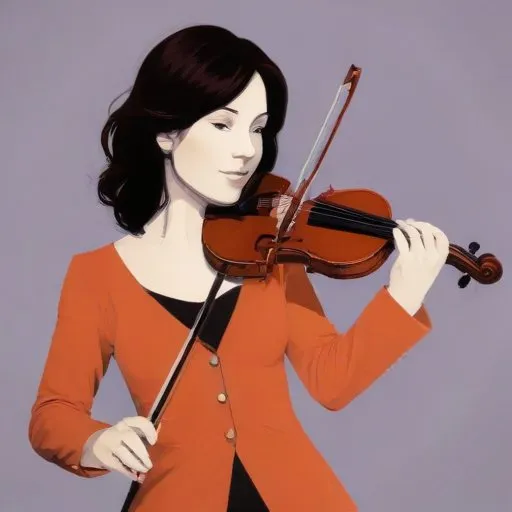
A pioneering female composer and educator, known for her innovative violin techniques and contributions to American classical music.
Gail Kubik was a renowned American composer, music director, violinist, and teacher, best known for winning the 1952 Pulitzer Prize for Music for his Symphony Concertante. Throughout his illustrious career, he made significant contributions to the world of classical music, leaving an indelible mark on the industry.
Born on September 5, 1914, in South Coffeyville, Oklahoma, to Henry and Evelyn O. Kubik, Gail Kubik demonstrated a keen interest in music from a young age. He pursued his passion at the Eastman School of Music, the American Conservatory of Music in Chicago, and Harvard University, where he studied under the tutelage of esteemed composers Walter Piston and Nadia Boulanger.
Kubik's professional journey commenced as a teacher of violin and composition at Monmouth College and composition and music history at Columbia University in 1937. He later joined NBC Radio as a staff composer in New York in 1940 and served as the music director for the Motion Picture Bureau at the Office of War Information during World War II, where he composed and conducted music scores for motion pictures.
Some of his notable works include:
In addition to the prestigious Pulitzer Prize, Kubik's contributions to music earned him recognition as a National Patron of Delta Omicron, an international professional music fraternity.
Kubik's work reflected the cultural and patriotic fervor of the 1940s and 1950s, with compositions that often drew inspiration from American folk themes and patriotic ideals. His legacy extends beyond his own compositions, as he played a significant role in shaping the course of American classical music during the mid-20th century.
Notable events in Kubik's life include his stint as a staff composer at NBC Radio and his work at the Office of War Information during World War II. He passed away on July 20, 1984, in Covina, California, leaving behind a rich cultural heritage.
Kubik's contributions to classical music continue to influence contemporary composers and musicians. His work serves as a testament to the power of music to evoke emotions, inspire patriotism, and bring people together.
Born in 1899
A renowned violinist and conductor, leading the Philadelphia Orchestra for over 40 years, known for his technical precision and interpretations of Romantic-era composers.
Born in 1918
A renowned musician who blended jazz, classical, and Broadway styles, creating iconic works like West Side Story, and inspiring generations with his charismatic performances and innovative compositions.
Born in 1920
A renowned violinist and conductor, celebrated for his technical mastery and passionate performances, particularly with the New York Philharmonic.
81 Years Old
A world-renowned virtuoso, celebrated for mesmerizing performances and iconic recordings that have elevated the art of classical music.
99 Years Old
A renowned Russian cellist and conductor, celebrated for his virtuosic performances and advocacy for human rights and freedom of expression. He was a prominent figure in the classical music world, known for his collaborations with prominent composers and musicians.
Born in 1916
A renowned violinist and conductor who mesmerized audiences with his virtuosic performances and collaborations with esteemed musicians, also a passionate advocate for music education.
Born in 1904
A virtuosic violinist and composer, renowned for his technical mastery and poetic interpretations of classical music, particularly Bach's solo violin works.
Born in 1908
A renowned violinist and educator, known for his technical mastery and emotional depth, influencing generations of musicians with his iconic performances and pedagogical legacy.
