


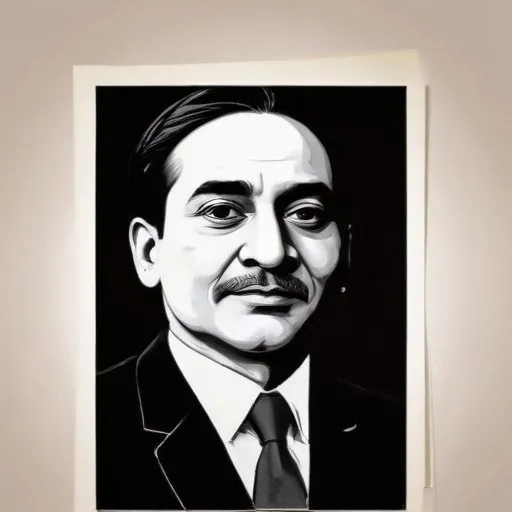
Indian lawyer and politician who served as a Member of Parliament and was a key figure in the Indian National Congress, known for his contributions to India's independence movement.
Gaj Singh, also known as Bapji, is an Indian politician who has served as a member of the Indian parliament and as Indian High Commissioner to Trinidad and Tobago. He is also the Maharaja of Jodhpur, a position he has held since 1952, making him one of the youngest to ascend to the throne.
Gaj Singh was born on January 13, 1948, into a royal Rajput family. He is the son of Maharaja Hanwant Singh of Jodhpur and his first wife, Maharani Krishna Kumari of Dhrangadhra.
Tragedy struck early in his life when his father died in a plane crash in 1952, making Gaj Singh the Maharaja of Jodhpur at just four years old. His mother, Rajmata Krishna Kumari, raised him and his siblings.
Gaj Singh was educated at some of the best institutions in the world, including Cothill House, a prep school in Oxfordshire, England, Eton College, and Christ Church, Oxford, where he obtained a degree in Philosophy, Politics, and Economics.
In 1970, he returned to Jodhpur to take up his duties as Maharaja. Three years later, he married Hemalata Rajye, daughter of the Raja of Poonch, and they have two children, Shivranjani Rajye and Shivraj Singh.
Gaj Singh has had a long and distinguished career in politics. He has served as a member of the Indian parliament and as Indian High Commissioner to Trinidad and Tobago.
In 1971, the constitution of India was amended, and the Maharaja and other princes were deprived of their privy purses and other privileges. Despite this, Gaj Singh continued to serve his country and his people with dedication.
Gaj Singh's legacy is one of service, dedication, and commitment to his people. As the Maharaja of Jodhpur, he has worked tirelessly to promote the welfare of his people and preserve the rich cultural heritage of his state.
As a politician, he has been a vocal advocate for the rights and interests of his constituents. His contributions to Indian politics and society have been significant, and he continues to be a respected figure in Indian public life.
Born in 1884
India's first president, a key figure in the country's struggle for independence, who played a crucial role in shaping the nation's early years. He's revered for his leadership and commitment to democracy.
Born in 1889
India's first Prime Minister, a key figure in the country's struggle for independence from British rule, and a champion of democracy and secularism. He played a crucial role in shaping modern India's government and economy.
Born in 1917
The first female Prime Minister of India, serving from 1966 to 1977 and again from 1980 until her assassination in 1984, known for her strong leadership and economic reforms.
82 Years Old
The 6th Prime Minister of India, a key figure in Indian politics, known for introducing economic reforms and promoting technology in the country. He was also a strong advocate for social justice and equality.
Born in 1896
Fourth Prime Minister of India, known for his efforts to decentralize power and promote economic development, and for being the first Indian Prime Minister to resign from office.
Born in 1902
The 5th Prime Minister of India, a champion of rural development and social justice, who implemented land reforms and empowered farmers. He played a crucial role in shaping India's agricultural sector and economy.
Born in 1924
A renowned Indian poet and politician who served as the country's 10th Prime Minister, known for his efforts to strengthen India's economy and improve relations with neighboring countries.
Born in 1904
The second Prime Minister of India, leading the country through a tumultuous period, including a war with Pakistan, and known for his simplicity, honesty, and dedication to the nation. He is also credited with promoting the Green Revolution, which transformed India's agricultural sector.
