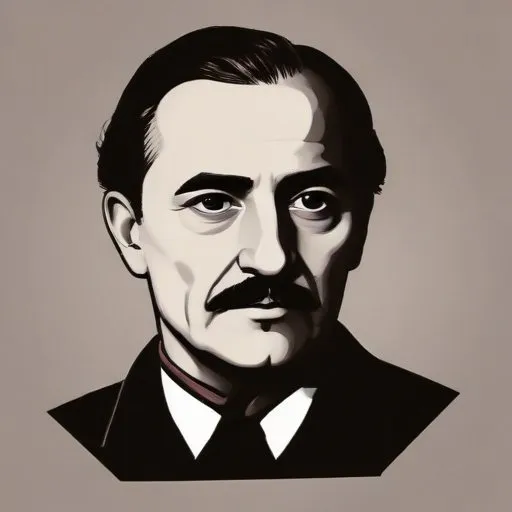
Gaspar Schott: The Indefatigable Jesuit Scientist
A Prolific Polymath in the Realm of Science
Gaspar Schott, a 17th-century German Jesuit and scientist, is renowned for his immense contributions to the fields of physics, mathematics, and natural philosophy. His unwavering industry and dedication to the pursuit of knowledge earned him a revered place among the scientific community of his time.
Early Life and Education
Born on February 5, 1608, in Bad Knigshofen im Grabfeld, Schott's early education likely took place at the Jesuit College at Würzburg. At the age of 19, he joined the Society of Jesus, entering the novitiate at Trier on October 30, 1627. Schott's academic trajectory followed the conventional path prescribed for Jesuit seminarians, with a three-year study of Philosophy at the University of Würzburg, commencing on November 6, 1629.
The Turbulent Years: War and Displacement
The Swedish invasion of Würzburg in 1631 led to the Jesuit community's flight from the city. Schott fled to the Jesuit seminary of Tournai in Belgium, and later, in 1633, to Caltagirone in Sicily, where he continued his Theological studies. The displacement did not hinder his academic pursuits, as he was eventually transferred to Palermo for his final year of Theological studies.
A priest and a Scholar
Schott was ordained a priest in 1637, marking the beginning of his 15-year tenure in various Jesuit colleges in Sicily, where he held diverse teaching and pastoral positions. His correspondence with
Athanasius Kircher, his former mathematics teacher at Würzburg, led to his transfer to the Collegio Romano in 1652. For two and a half years, Schott assisted Kircher, simultaneously assembling material for his own publications.
The Return to Germany
In 1655, Schott returned to Germany, first to Mainz, and later the same year, to Würzburg, where he would remain until his death. This return was partly motivated by the desire of his Jesuit superiors to appease the Archbishop-Elector of Mainz, Johann von Schnborn, with whom relations had been strained.
Schott's Published Works
Schott's scientific endeavors yielded a plethora of publications, showcasing his expertise in physics, mathematics, and natural philosophy. His notable works include:
- Magia Universalis Naturae et Artis (1657-1659), a comprehensive treatise on natural magic and the arts
- Physica Curiosa (1662), an examination of the natural world, featuring innovative experiments and observations
- Techne Pneumatica (1657), a pioneering work on pneumatic engineering and experimentations
A Legacy of Industry and Erudition
Gaspar Schott's remarkable life and contributions serve as a testament to his unwavering dedication to the pursuit of knowledge. His multifaceted scientific endeavors and literary outputs continue to inspire generations, solidifying his place as one of the most prolific and erudite scientists of the 17th century.
FAQ
What were Gaspar Schotts contributions to the field of mathematics?
Gaspar Schott made significant contributions to the field of mathematics, particularly in the areas of geometry and algebra. He wrote extensively on the subject of mathematics, and his works include Cursus mathematicus and Geometria.
What was Gaspar Schotts role in the development of the scientific method?
Gaspar Schott was a strong advocate for the scientific method, and his works reflect his commitment to empirical observation and experimentation. He believed that mathematics and physics were essential components of a scientific education.
Where did Gaspar Schott teach mathematics and physics?
Gaspar Schott taught mathematics and physics at the University of Palermo in Sicily, where he was a professor of mathematics and physics.
What was Gaspar Schotts most famous publication?
Gaspar Schotts most famous publication is his Magia universalis naturae et artis, a comprehensive treatise on natural magic and the arts.
What is Gaspar Schotts legacy in science?
Gaspar Schotts legacy in science is significant, as he was one of the first scientists to advocate for the use of empirical observation and experimentation in the pursuit of scientific knowledge.