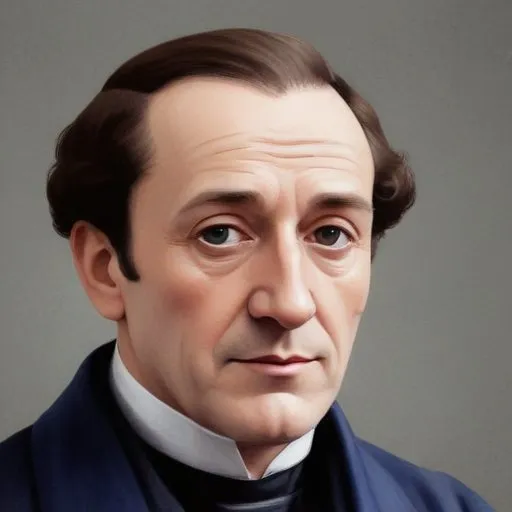
Marin Mersenne: The Father of Acoustics and Polymath Extraordinaire
A Life of Unbridled Curiosity and Contributions
Marin Mersenne, a French polymath, left an indelible mark on multiple fields, including mathematics, music theory, and philosophy. He is perhaps best known for Mersenne prime numbers, those written in the form Mn = 2n - 1 for some integer n, which continue to fascinate mathematicians to this day.
A Childhood of Humble Beginnings
Born on September 8, 1588, to Julien and Jeanne Mersenne, peasants living near Oiz, County of Maine (present-day Sarthe, France), Marin's early life was marked by simplicity and humble means. However, his innate curiosity and thirst for knowledge would soon propel him to greatness.
Education and the Pursuit of Knowledge
Mersenne's educational journey began at Le Mans and continued at the Jesuit College of La Flèche. In 1611, he joined the Minim Friars, a religious order known for their humility and dedication to academics. His ordination as a priest in 1613 was followed by a stint teaching theology and philosophy at Nevers between 1614 and 1618. It was during this period that Mersenne's fascination with mathematics and music began to take shape.
The Harmonious Union of Mathematics and Music
Mersenne's work on music theory, culminating in his seminal book
Harmonie universelle, earned him the title "Father of Acoustics." His groundbreaking research on the harmonics of vibrating strings, which he termed "Mersenne's laws," continues to influence the design of musical instruments to this day.
A Network of Luminaries and the "Postbox of Europe"
Mersenne's ability to connect people and ideas across disciplines earned him the sobriquet "postbox of Europe." His extensive network of correspondents included luminaries such as
René Descartes,
Galileo Galilei, and
Thomas Hobbes. He played a crucial role in facilitating the exchange of ideas, often serving as a catalyst for innovation and collaboration.
A Champion of Galileo and the Scientific Community
Mersenne was a staunch defender of Galileo, assisting him in translating his mechanical works. He maintained a strong rapport with the Italian scientist, even during times of controversy and persecution. This unwavering support underscores Mersenne's commitment to the pursuit of truth and his role as a champion of the scientific community.
Legacy and Impact on Modern Society
Mersenne's contributions have had a lasting impact on various fields, from mathematics and music to philosophy and theology. His work continues to inspire researchers, musicians, and thinkers, earning him a place among the greatest polymaths of the 17th century.
Personal Milestones and Key Life Events
- 1588: Born on September 8th in Oiz, County of Maine (present-day Sarthe, France)
- 1611: Joined the Minim Friars
- 1613: Ordained as a priest
- 1614-1618: Taught theology and philosophy at Nevers
- 1620: Settled at the convent of L'Annonciade in Paris
- 1636: Published Harmonie universelle
- 1648: Passed away on September 1st
Inspirational Quotes and Memorable Sayings
"I am not one of those who see science as a separate entity from the rest of human knowledge. I believe that all knowledge is interconnected, and that the pursuit of truth is the greatest virtue." - Marin Mersenne
FAQ
What was Marin Mersennes contribution to the development of mathematics?
Mersenne was a prominent mathematician who made significant contributions to the development of number theory, geometry, and optics, and is remembered for his work on Mersenne primes.
How did Marin Mersennes work influence the scientific revolution?
Mersennes work played a crucial role in the scientific revolution, as he corresponded with and supported prominent scientists such as Galileo, Kepler, and Descartes.
What was Marin Mersennes role in the development of music theory?
Mersenne was a talented musician and music theorist who wrote extensively on harmony, proportion, and the nature of sound, making significant contributions to the development of music theory.
How did Marin Mersennes work on optics influence the development of telescopes?
Mersennes work on optics led to improvements in telescope design, enabling astronomers to study the heavens with greater precision and accuracy.
What is the significance of Marin Mersennes correspondence network?
Mersennes extensive correspondence network, which spanned Europe, facilitated the exchange of ideas and collaboration between leading scientists and thinkers of his time.