


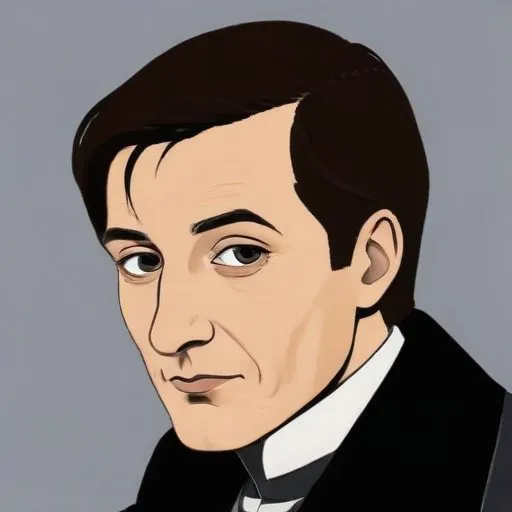
A 17th-century mathematician and academic who made significant contributions to the development of algebra and geometry, particularly in the discovery of the method of indivisibles, a precursor to integration.
Gilles de Roberval, a French mathematician, is renowned for his groundbreaking contributions to the field of mathematics, particularly in the areas of infinitesimals, quadrature of surfaces, and cubature of solids. His innovative methods and discoveries paved the way for the development of calculus, making him a significant figure in the history of mathematics.
Born on August 10, 1602, in Roberval, near Beauvais, France, Gilles de Roberval was originally named Gilles Personne or Gilles Personier. His birthplace, Roberval, eventually became an integral part of his name.
In 1631, Roberval was appointed as the chair of philosophy at Gervais College, Paris. Two years later, he also became the chair of mathematics at the Royal College of France. This prestigious position came with a unique condition: Roberval was required to propose mathematical questions for solution, and should resign in favor of anyone who could solve them better than himself.
Despite this challenge, Roberval managed to retain his position until his death. During his tenure, he worked tirelessly on various mathematical problems, including the quadrature of surfaces and the cubature of solids. He developed an original method, which he called the "Method of Indivisibles," to solve these problems.
Roberval's work on drawing tangents to curves was another significant achievement. He developed a method that involved considering a curve as described by a moving point whose motion is the resultant of several simpler motions. This innovative approach enabled him to derive one curve from another, thereby obtaining finite areas equal to the areas between certain curves and their asymptotes.
Although Roberval's Method of Indivisibles was not widely known during his lifetime, his work influenced many prominent mathematicians, including Bonaventura Cavalieri, who independently developed a similar method. Cavalieri's publication of his method led to Roberval's discovery being overshadowed, and he did not receive the recognition he deserved during his lifetime.
However, Evangelista Torricelli, a prominent mathematician, recognized Roberval's contributions and named certain curves "Robervallian lines" in his honor. These curves were applied to effect some quadratures, further solidifying Roberval's legacy in the field of mathematics.
Like René Descartes, Roberval was present at the siege of La Rochelle in 1627. This experience likely shaped his worldview and influenced his approach to mathematics.
Throughout his life, Roberval was driven by a passion for mathematics and a desire to contribute to the field. His dedication and perseverance enabled him to make significant strides, despite the challenges and setbacks he faced.
Gilles de Roberval's remarkable contributions to mathematics have had a lasting impact on the field. His innovative methods, dedication, and perseverance serve as an inspiration to mathematicians and scholars around the world. Despite being an unsung hero of mathematics, Roberval's legacy continues to influence and shape the field, ensuring that his work remains relevant and significant to this day.
Roberval's remarkable life and achievements are a testament to the power of human ingenuity and the importance of perseverance in the pursuit of knowledge.
Born in 1596
Developed influential philosophical and mathematical concepts, including the famous phrase "I think, therefore I am," and laid the foundation for modern Western philosophy.
Born in 1623
A 17th-century genius who made major contributions to mathematics, physics, and philosophy, inventing the mechanical calculator and developing the theory of probability. His writings also explored the human condition and faith.
Born in 1629
A 17th-century polymath who made groundbreaking contributions to optics, probability theory, and astronomy, including the discovery of Saturn's rings and the largest moon, Titan.
Born in 1646
Developed calculus independently of Isaac Newton, and made major contributions to the fields of philosophy, politics, and history.
Born in 1588
A 17th-century polymath who made significant contributions to mathematics, particularly in the discovery of prime numbers, and wrote extensively on philosophy and theology.
Born in 1677
A French Baroque composer, he wrote sacred music and operas, and was a prominent figure in the development of the French opera.
