


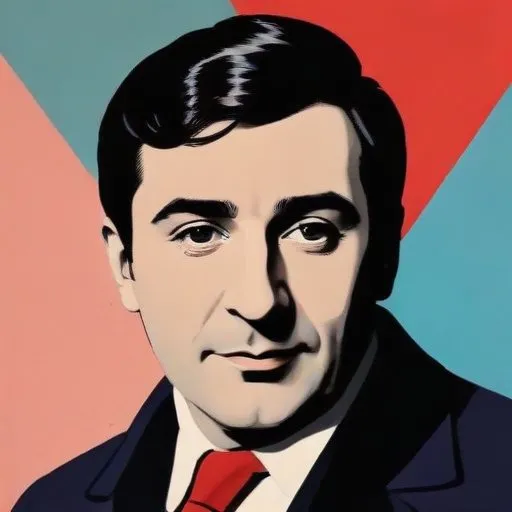
Gaston Gallimard was a French publisher, best known for founding the esteemed publishing house Éditions Gallimard, one of the leading French publishing houses, and co-founding the literary magazine La Nouvelle Revue Française (The New French Review) with André Gide and Jean Schlumberger.
Gallimard's passion for literature and his astute business sense led him to establish his own publishing house, Librairie Gallimard, in 1919. He continued to work closely with the NRF, showcasing his commitment to nurturing French literary talent. Under his guidance, Éditions Gallimard became a haven for innovative writers, fostering a new generation of literary masters.
During the German occupation of Paris, Gallimard played host to a roundtable of French and German intellectuals at the Georges V Hotel. This gathering, which included writers Ernst Jünger, Paul Morand, Jean Cocteau, and Henry Millon de Montherlant, as well as legal scholar Carl Schmitt, sparked intense debates and intellectual exchanges.
In 1932, Gallimard founded the Marianne magazine, which ran until 1940. This literary venture further solidified his reputation as a champion of French literature. Throughout his life, Gallimard remained dedicated to promoting French writers, earning him a revered place in the country's literary heritage.
Gallimard's life was marked by significant milestones, including his centennial celebration in 1981, which was marked by the publication of a comprehensive bibliography. In 2011, the Bibliothèque nationale de France and Gallimard jointly published Gallimard: Un siècle d'édition, a testament to his lasting impact on French literature.
Gaston Gallimard's unwavering dedication to French literature has left an indelible mark on the country's cultural landscape. His publishing house, Éditions Gallimard, remains a beacon of literary excellence, continuing to nurture new generations of writers and intellectuals. As a testament to his vision, Gallimard's legacy will forever be intertwined with the rich tapestry of French literature.
Born in 1869
A French literary giant, renowned for his novels and essays that explored the human condition, morality, and the search for authenticity. His works often blurred the lines between fiction and autobiography.
Born in 1905
Existentialist philosopher and playwright who argued that humans have complete freedom to choose their actions and create their own meaning in life, influencing modern thought on morality and individual responsibility.
Born in 1908
A pioneering feminist philosopher who wrote extensively on ethics, politics, and gender, famously arguing that "one is not born, but rather becomes, a woman."
Born in 1913
A French novelist, philosopher, and journalist who wrote influential works like "The Stranger" and "The Plague", exploring absurdism and the human condition.
Born in 1889
A German philosopher and academic who explored the meaning of existence, time, and human existence, influencing 20th-century philosophy with his concept of "Being-in-the-world".
Born in 1889
A renowned French creative force, celebrated for his innovative and surreal works that blurred the lines between literature, art, and cinema, leaving an indelible mark on 20th-century culture.
Born in 1885
A French literary giant, celebrated for his novels and plays that probed the human condition, morality, and the complexities of faith. His works are known for their psychological depth and lyrical prose.
Born in 1901
A French historian, theorist, and author who wrote influential novels and essays on art, politics, and human condition, exploring the complexities of modern society.
