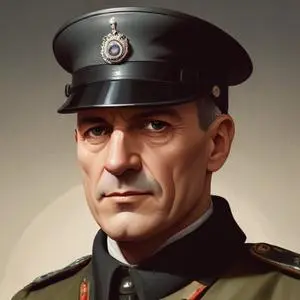
Ernst Jünger: The Warrior-Philosopher of the Twentieth Century
The Storm of Steel and Beyond
Ernst Jünger, a German author, philosopher, and entomologist, is best known for his gripping World War I memoir,
Storm of Steel, which has become a classic of modern war literature. Jünger's vivid and unflinching account of his experiences on the Western Front has captivated readers for generations, offering a unique glimpse into the mind of a soldier who witnessed the worst of humanity.
A Life of Adventure and Rebellion
Born on March 29, 1895, into an affluent family, Jünger rejected the comforts of his upbringing and sought adventure in the Wandervogel, a German youth movement that emphasized nature, community, and independence. However, his thirst for excitement soon led him to run away and join the French Foreign Legion, an act illegal in Germany at the time. Although he escaped prosecution thanks to his father's efforts, Jünger's desire for adventure and service eventually led him to enlist in the German Army in 1914, just as World War I was breaking out.
A Warrior's Honor and Decorations
During his time in the trenches, Jünger demonstrated remarkable courage and leadership, earning him the Pour le Mérite, Germany's highest military honor. Although wounded multiple times, Jünger continued to fight, eventually becoming one of the last living recipients of the military class award.
A Philosopher's Pen and Anti-Liberal Views
In the aftermath of World War I, Jünger's writing turned increasingly philosophical, critiquing liberal values, democracy, and the Weimar Republic. His controversial views, although rejected by the Nazi regime, led to accusations of being a fellow traveler of the far right. However, Jünger's unorthodox writings also began to explore the impact of materialism on modern society, earning him recognition as a conservative thinker.
World War II and The Peace
During World War II, Jünger served as an army captain in occupied Paris, but by 1943, he had turned decisively against Nazi totalitarianism. His work,
Der Friede (
The Peace), reflected this shift, as did his subsequent dismissal from the army in 1944 after being indirectly implicated in a plot to assassinate Hitler.
In the aftermath of World War II, Jünger was initially viewed with suspicion, but his philosophical works eventually won him recognition in mainstream German circles. By the later stages of the Cold War, Jünger had become an honored literary figure, celebrated for his unique blend of warrior-philosopher insight and unorthodox views on modern society.
Controversies and Legacy
Despite controversies surrounding his views on democracy and materialism, Jünger's work remains a powerful testament to the human experience. His legacy extends beyond his writings, influencing generations of philosophers, writers, and historians. Ernst Jünger died on February 17, 1998, at the age of 102, leaving behind a body of work that continues to challenge and inspire readers to this day.
Quotes and Memorable Sayings
- "The only true greatness is in being the master of oneself."
- "The more technology advances, the more it regresses."
- "War is not a word, it's a condition."
Awards and Honors
- Pour le Mérite (1918)
- Goethe Prize (1982)
Major Works
- Storm of Steel (1920)
- Der Friede (The Peace) (1943)
- The Glass Bees (1957)
Personal Milestones and Key Life Events
- Ran away to join the French Foreign Legion (1913)
- Enlisted in the German Army (1914)
- Wounded multiple times during World War I
- Dismissed from the army (1944)
- Son died in combat (1944)
FAQ
What is Ernst Jüngers most famous work?
Ernst Jüngers most famous work is the novel Storm of Steel, which is a classic of modern war literature.
What is Ernst Jüngers writing style?
Ernst Jüngers writing style is characterized by his use of descriptive language, philosophical insights, and exploration of themes such as technology, war, and human existence.
What awards did Ernst Jünger receive?
Ernst Jünger received several awards for his literary contributions, including the Goethe Prize and the Imperial Ring of the German Language and Literature.
What is Ernst Jüngers contribution to modern literature?
Ernst Jüngers contribution to modern literature is significant. He is considered one of the most important German writers of the 20th century, and his work has had a lasting impact on literary culture.
What is Ernst Jüngers legacy as a philosophical thinker?
Ernst Jüngers legacy as a philosophical thinker is profound. He is remembered as a pioneer of existentialist thought, a perceptive analyst of modern society, and a passionate advocate for individual freedom and autonomy.