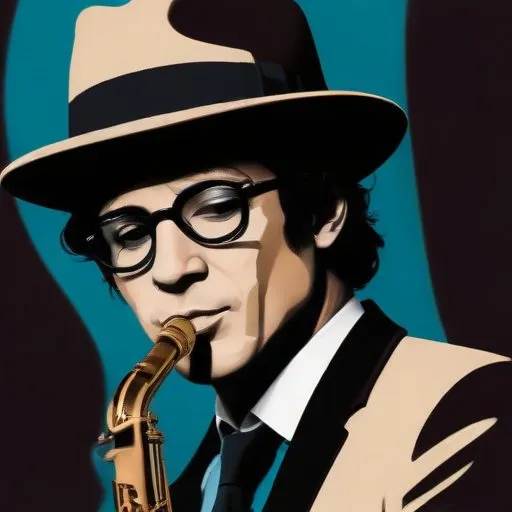
Gato Barbieri: The Argentine Jazz Legend
A Saxophonist with a Latin Soul
Gato Barbieri is widely regarded as one of the most influential jazz tenor saxophonists of all time, known for his unique blend of Latin American rhythms and free jazz experimentation. With a career spanning over four decades, Barbieri left an indelible mark on the jazz scene, earning himself a Grammy Award and a permanent place in the hearts of jazz enthusiasts worldwide.
Early Life and Influences
Born Leandro Barbieri on November 28, 1932, in Rosario, Argentina, Gato grew up in a family of musicians. He was introduced to music at a young age, inspired by the likes of
Charlie Parker and
John Coltrane. Barbieri began his musical journey playing the clarinet, eventually switching to the alto saxophone, which became his instrument of choice.
Rise to Fame
In the late 1950s, Barbieri collaborated with Argentine pianist
Lalo Schifrin, followed by a stint in Rome, where he worked with trumpeter
Don Cherry. These formative years laid the groundwork for his distinctive style, which was heavily influenced by the free jazz movement and the works of
Albert Ayler and Pharoah Sanders.
The Latin Jazz Era
The 1970s saw Barbieri fusing Latin American music with his jazz roots, resulting in a unique sound that captivated audiences worldwide. His score for
Bernardo Bertolucci's 1972 film
Last Tango in Paris earned him a Grammy Award and led to a record deal with Impulse Records.
Soul, Jazz, and Pop
In the mid-1970s, Barbieri transitioned to AM Records, where he explored soul, jazz, and pop sensibilities. His 1976 album
Caliente, featuring his iconic rendition of
Carlos Santana's "Europa," became a commercial success. This period was marked by collaborations with
Herb Alpert, who produced
Caliente and its follow-up,
Ruby Ruby (1977).
Withdrawal and Revival
The death of his wife Michelle in the 1980s led Barbieri to withdraw from the public eye. However, in the late 1990s, he returned to recording and performing, composing original scores for films such as
Manhattan by Numbers (1991) and
Seven Servants (1996).
Legacy and Impact
Gato Barbieri's contributions to jazz and Latin American music are immeasurable. He has inspired generations of musicians, from saxophonists to composers, and continues to be celebrated for his innovative spirit and unique sound.
- Awards and Honors:
- Grammy Award for Best Original Score for a Motion Picture (1973)
- Notable Collaborations:
- Lalo Schifrin
- Don Cherry
- Herb Alpert
- Bernardo Bertolucci
- Influential Works:
- Last Tango in Paris (1972)
- Caliente (1976)
- Ruby Ruby (1977)
- Qu Pasa (1997)
A Lasting Legacy
Gato Barbieri's passing on April 2, 2016, marked the end of an era, but his music continues to inspire and influence new generations of musicians and jazz enthusiasts. As a testament to his enduring legacy, Barbieri's unique sound and style remain an integral part of the jazz canon.
FAQ
What was Gato Barbieris most notable achievement in jazz?
Gato Barbieri was a renowned Argentine saxophonist and composer, known for his work on the soundtrack of the film Last Tango in Paris, which earned him an Academy Award for Best Original Score.
What was Gato Barbieris contribution to Latin jazz?
Gato Barbieri was a key figure in the development of Latin jazz, fusing traditional Argentine tango music with modern jazz and improvisation techniques.
What were some of Gato Barbieris most famous albums?
Gato Barbieri recorded many influential albums, including In Search of the Mystery, The Third World, and Fiesta, which showcased his unique blend of jazz and Argentine music.
Did Gato Barbieri have a successful career as a composer?
Yes, Gato Barbieri had a highly successful career as a composer, writing music for film, television, and stage, and earning numerous awards and nominations for his work.
What legacy did Gato Barbieri leave behind in jazz?
Gato Barbieri left behind a legacy as a highly respected and influential jazz musician, known for his innovative approach to Latin jazz and his iconic soundtrack for Last Tango in Paris.