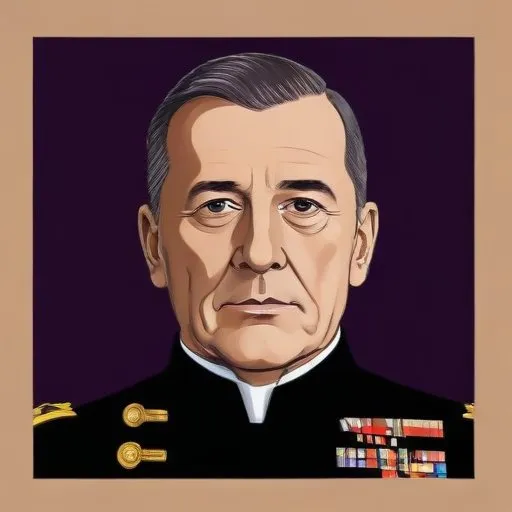
Gene La Rocque: A Trailblazing Admiral and Anti-Nuclear Activist
A Legacy of Courage and Conviction
Rear Admiral Gene La Rocque was a decorated naval officer, a pioneering anti-nuclear activist, and a vocal critic of the military-industrial complex. He is best known for founding the Center for Defense Information (CDI) in 1971, a think tank dedicated to promoting transparency and accountability in the US military.
Early Life and Naval Career
Born on June 29, 1918, in Kankakee, Illinois, La Rocque enlisted in the US Navy in 1940, just before the outbreak of World War II. He served with distinction, participating in 13 major battles and earning several decorations, including the Bronze Star. During the war, he was present at the attack on Pearl Harbor and was the first man to go ashore in the landings at Roi-Namur in the Battle of Kwajalein.
A Turn Towards Activism
La Rocque's experience in the war and his subsequent service in the Strategic Plans Directorate of the Joint Chiefs of Staff led to his disillusionment with the Vietnam War. He retired from the Navy in 1972 and dedicated himself to exposing the dangers of nuclear proliferation and the excesses of the military-industrial complex.
Founding the Center for Defense Information
La Rocque's most enduring legacy is the Center for Defense Information, which he founded in 1971. The CDI was a groundbreaking think tank that brought together military experts, policymakers, and journalists to promote transparency and accountability in the US military. Through the CDI, La Rocque and his colleagues testified before Congress, appeared in the media, and consulted with national and international leaders.
A Controversial Figure
La Rocque's forthright views and revelations about the US military's nuclear policies made him a controversial figure. In 1974, he sparked international controversy by stating that any ship capable of carrying nuclear weapons carried them, contradicting the US Department of Defense's policy of neither confirming nor denying the presence of nuclear weapons.
Personal Life and Legacy
La Rocque was married twice, first to Sally Fox, with whom he had three children, and then to Lillian Kerekes Danchik. He passed away on October 31, 2016, leaving behind a legacy of courage, conviction, and a commitment to promoting peace and transparency.
Impact and Influence
La Rocque's work had a profound impact on modern society. He inspired a generation of anti-nuclear activists, and his advocacy helped to shape US nuclear policy. His commitment to transparency and accountability in the military has inspired numerous organizations and initiatives.
Quotes and Memorable Sayings
- "The only thing that's being protected by our nuclear weapons is the existence of our nuclear weapons."
- "I'm not a pacifist, but I believe that war is the ultimate in stupidity."
Honors and Awards
La Rocque received numerous awards and honors for his work, including the Albert Lasker Award and the Lennon-Ono Grant for Peace.
A Lasting Legacy
Gene La Rocque's remarkable life and legacy serve as a testament to the power of individual courage and conviction. His tireless advocacy for peace, transparency, and accountability continues to inspire and educate generations of scholars, policymakers, and activists.
FAQ
What were Gene La Rocques most notable military accomplishments?
Gene La Rocque, a U.S. admiral, had a distinguished military career, serving as the Commander-in-Chief of the U.S. Pacific Command and later as the Supreme Allied Commander of NATOs Atlantic Fleet. His most notable accomplishments include overseeing the Vietnam War and leading NATOs military efforts during the Cold War.
What were Gene La Rocques thoughts on military spending?
Gene La Rocque was a vocal critic of military spending, arguing that it was excessive and wasteful. He believed that the United States should prioritize disarmament and diplomacy over military expansion.
What role did Gene La Rocque play in the anti-war movement?
Gene La Rocque was an active participant in the anti-war movement, using his military credentials to speak out against the Vietnam War and other military interventions. He worked closely with organizations such as the Washington Office on Latin America to promote peace and disarmament.
What awards did Gene La Rocque receive for his military service?
Gene La Rocque received numerous awards for his military service, including the Distinguished Service Medal, the Legion of Merit, and the Navy Commendation Medal.
What was Gene La Rocques stance on nuclear disarmament?
Gene La Rocque was a strong advocate for nuclear disarmament, believing that the possession of nuclear weapons was a threat to global security. He worked with organizations such as the Nuclear Age Peace Foundation to promote disarmament and non-proliferation.