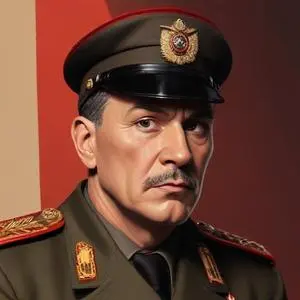
Genrikh Yagoda: The Notorious Director of the Soviet Secret Police
A Legacy of Repression and Terror
Genrikh Yagoda, born Yenokh Gershevich Iyeguda, is infamous for his role as the director of the Soviet Union's security and intelligence agency, the NKVD, from 1934 to 1936. During his tenure, he oversaw the arrests, show trials, and executions of prominent Old Bolsheviks, including Lev Kamenev and Grigory Zinoviev, marking the climax of the Great Purge.
Early Life and Revolutionary Roots
Yagoda was born on November 7, 1891, in Rybinsk, Russia, to a Jewish family. His father, a jeweler, instilled in him a strong sense of revolutionary spirit from a young age. Yagoda claimed to have been an active revolutionary from the age of 14, working as a compositor on an underground printing press in Nizhny Novgorod. He later joined the Bolsheviks at the age of 16 or 17 and was arrested and sent into exile in 1911.
Rise to Power and the NKVD
After the October Revolution, Yagoda returned to Russia and quickly rose through the ranks of the Soviet secret police. He became the deputy director of the OGPU (Unified State Political Administration) in 1931 and eventually succeeded Vyacheslav Menzhinsky as the director of the NKVD in 1934. As director, Yagoda implemented Stalin's policies of political repression, orchestrating the persecution of perceived enemies of the state.
The Great Purge and the Trial of the Twenty-One
Yagoda's tenure as director of the NKVD was marked by the infamous Great Purge, during which millions of people were arrested, imprisoned, or executed. He personally supervised the torture and execution of leading figures, including Kamenev and Zinoviev. However, in 1936, Yagoda was demoted from his position as director of the NKVD, replaced by
Nikolai Yezhov. Yagoda was arrested in 1937, charged with crimes of wrecking, espionage, Trotskyism, and conspiracy, and stood trial alongside 20 other high-ranking officials in the Trial of the Twenty-One. Following his confession, Yagoda was found guilty and executed on March 15, 1938.
Irony of Fate: A Victim of the Purge
Yagoda's downfall serves as a poignant illustration of the brutal nature of Stalin's regime. Having played a crucial role in the persecution of countless individuals, Yagoda himself ultimately became a victim of the very system he had helped to create. His fate serves as a stark reminder of the capricious nature of Soviet power politics during the Stalin era.
Legacy and Impact on Modern Society
Yagoda's legacy is forever tied to the darkest chapters of Soviet history. His name has become synonymous with terror, repression, and political violence. His actions, however, also serve as a powerful cautionary tale about the dangers of unchecked power and the devastating consequences of totalitarianism.
- Notable works: Yagoda was instrumental in the construction of the White Sea-Baltic Canal, a massive infrastructure project built using forced labor from the gulag system, during which an estimated 12,000 to 25,000 laborers died.
- Personal relationships: Yagoda's relationships with other high-ranking officials, including Stalin and Yezhov, were marked by intrigue, rivalry, and ultimately, betrayal.
Historical Context and Comparative Analysis
Yagoda's rise and fall must be viewed within the context of Stalin's consolidation of power and the Soviet Union's tumultuous political landscape during the 1930s. His legacy invites comparison with other notorious figures of the era, including Stalin himself, Yezhov, and
Lavrentiy Beria. Each of these individuals played a distinct role in shaping the Soviet regime's repressive apparatus, leaving an indelible mark on the course of modern history.
FAQ
What was Genrikh Yagodas role in the Soviet Union?
Genrikh Yagoda was the director of the NKVD, the Soviet Unions secret police, from 1934 to 1936. He played a crucial role in implementing Stalins purges and was responsible for the persecution and execution of millions of people.
How did Genrikh Yagodas actions impact the Soviet people?
Genrikh Yagodas actions had a devastating impact on the Soviet people. His brutal suppression of dissent and his role in the Great Purge led to widespread fear, terror, and suffering. Millions of innocent people were arrested, imprisoned, and executed under his watch.
What were some of Genrikh Yagodas notable actions as NKVD director?
Some of Genrikh Yagodas notable actions as NKVD director include his role in the assassination of Sergei Kirov, his implementation of the forced labor camp system, and his orchestration of the show trials during the Great Purge.
How did Genrikh Yagodas relationship with Stalin evolve?
Genrikh Yagodas relationship with Stalin was complex and ultimately tragic. Initially, Yagoda was a loyal and trusted ally, but as Stalins paranoia and brutality increased, Yagoda fell out of favor and was eventually arrested, tried, and executed in 1938.
What is Genrikh Yagodas legacy in Soviet history?
Genrikh Yagodas legacy in Soviet history is that of a ruthless and feared figure who played a key role in one of the darkest periods of Soviet rule. His actions serve as a stark reminder of the dangers of unchecked power and the importance of protecting human rights and dignity.