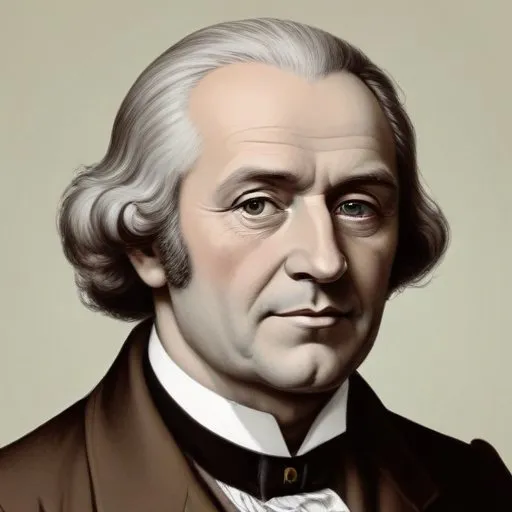
Georg Amadeus Carl Friedrich Naumann: The Pioneering Mineralogist and Geologist
A Legendary Figure in the Realm of Crystallography and Geognosy
Georg Amadeus Carl Friedrich Naumann was a renowned German mineralogist and geologist, celebrated for his groundbreaking contributions to the fields of crystallography, mineralogy, and geology. His remarkable work in these areas earned him a permanent place in the annals of scientific history, with the lunar crater Naumann being named in his honor.
Early Life and Education
Born on May 30, 1797, in Dresden, Naumann was the son of a distinguished musician and composer. He received his early education at Pforta, followed by studies at Freiberg under the guidance of the esteemed mineralogist, Abraham Werner. Naumann then pursued his education at Leipzig and Jena, ultimately graduating from the latter institution.
Career Highlights and Major Works
Naumann's academic career was marked by a series of prestigious appointments. In 1823, he began teaching in Jena, and a year later, he took up a position at Leipzig. In 1826, he succeeded Mohs as professor of crystallography at Freiberg, and in 1835, he became professor of geognosy at the same institution. Finally, in 1842, Naumann was appointed professor of mineralogy and geognosy at the University of Leipzig.
Some of Naumann's most notable publications include:
- Beiträge zur Kenntniss Norwegens (1824), a comprehensive work on Norway, which was widely acclaimed
- Lehrbuch der Mineralogie (1828), a seminal textbook on mineralogy
- Lehrbuch der reinen und angewandten Krystallographie (1830), a foundational work on crystallography, accompanied by an atlas
- Elemente der Mineralogie (1846), a landmark publication that underwent multiple editions
- Lehrbuch der Geognosie (1849-1854), a two-volume work on geognosy, accompanied by an atlas
Influence on Modern Society
Naumann's far-reaching influence can be seen in the numerous fields he touched upon. His work in crystallography and mineralogy laid the foundation for future generations of scientists. Additionally, his contributions to the geological map of Saxony, created in collaboration with Bernhard von Cotta in 1846, had significant practical applications.
Awards and Honors
Naumann's outstanding contributions earned him several prestigious honors. In 1869, he was elected as a member of the American Philosophical Society, and in 1873, he was elected a Foreign Honorary Member of the American Academy of Arts and Sciences.
Personal Milestones and Key Life Events
Naumann's life was marked by several notable milestones. He traveled to Norway in the early 1820s, gathering valuable insights and observations that would later inform his publications. His sketches from this period were admired by prominent artists, such as
Caspar David Friedrich and Carl Gustav Carus, who used them as inspiration for their paintings.
Legacy
Georg Amadeus Carl Friedrich Naumann's remarkable legacy continues to inspire scientists and scholars to this day. His groundbreaking work in crystallography, mineralogy, and geology has left an indelible mark on the scientific community, ensuring his place as one of the most significant figures in the history of these fields.
FAQ
What was Georg Amadeus Carl Friedrich Naumanns contribution to mineralogy?
Georg Amadeus Carl Friedrich Naumann was a German mineralogist and geologist who made significant contributions to the field of mineralogy. He is best known for his work on the classification of minerals and his discovery of several new mineral species.
What were Georg Amadeus Carl Friedrich Naumanns achievements as a scientist?
As a dedicated scientist, Georg Amadeus Carl Friedrich Naumann achieved several significant milestones, including the publication of several influential papers on mineralogy and geology. He was also a prolific lecturer and teacher, and was known for his ability to communicate complex scientific concepts to a broad audience.
How did Georg Amadeus Carl Friedrich Naumann become interested in mineralogy?
Georg Amadeus Carl Friedrich Naumann became interested in mineralogy at a young age, and was encouraged by his parents to pursue a career in science. He was educated at the University of Freiberg, where he studied under several prominent mineralogists and geologists.
What were Georg Amadeus Carl Friedrich Naumanns views on the classification of minerals?
As a leading mineralogist, Georg Amadeus Carl Friedrich Naumann believed in the importance of a systematic classification of minerals. He developed a classification system that was widely adopted by mineralogists and geologists, and remained in use for many years.
What is Georg Amadeus Carl Friedrich Naumanns legacy in the field of mineralogy?
Georg Amadeus Carl Friedrich Naumanns legacy in the field of mineralogy is that of a dedicated and prolific scientist who made significant contributions to our understanding of minerals and their classification. He is remembered as a pioneer in the field and a inspiration to future generations of scientists.