


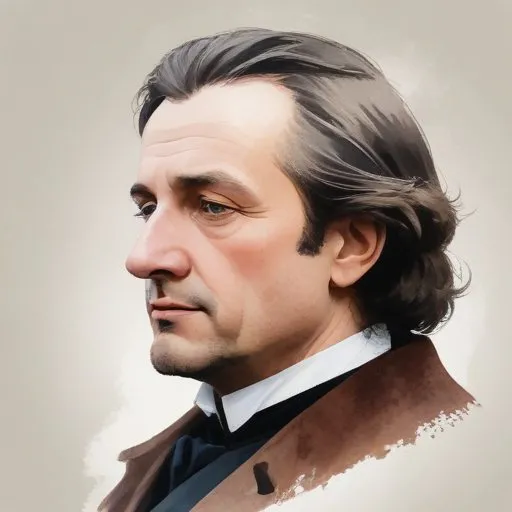
A 17th-century poet and translator who made significant contributions to the development of German literature, particularly in the Baroque period. He's also known for his poetic and linguistic innovations.
Georg Philipp Harsdrffer is renowned for his remarkable contributions to German literature and poetry during the 17th century. As a jurist, poet, and translator, he played a significant role in shaping the literary and cultural landscape of his time, earning him the appellation "the learned."
Born on November 1, 1607, in Nuremberg, Germany, Harsdrffer pursued his educational endeavors at Altdorf and Strassburg, where he studied law. Under the guidance of Professor Matthias Bernegger at the University of Strassburg, he refined his knowledge and skills, laying the foundation for his future achievements.
Harsdrffer's travels through the Netherlands, England, France, and Italy exposed him to diverse cultural and literary influences. During his time in Italy, he came into contact with distinguished members of learned academies, which further fueled his passion for reforming literary and linguistic standards. This extensive exposure to foreign cultures and literatures had a profound impact on his poetic style, making him a receptive and innovative poet.
Harsdrffer's most notable contributions include his Germanizations of foreign-language terms, which earned him recognition as a master of linguistic adaptation. His writings, comprising 50 volumes in German and Latin, demonstrate his exceptional linguistic skills and poetic prowess.
One of his most significant works is the treatise "Treatise to Protect the Work on the German Language" (1644), in which he asserted that German speaks with the tongues of nature. This treatise showcases his dedication to promoting and preserving the German language.
Harsdrffer was an active member of the Fruitbearing Society (Fruchtbringende Gesellschaft), where he was known as "der Spielende" (the player). In 1644, he co-founded the Pegnesischer Blumenorden, a literary society, with Johann Klaj in Nuremberg. Within this society, he was affectionately referred to as Strephon.
Georg Philipp Harsdrffer's contributions to German literature and poetry have had a lasting impact on the cultural landscape of his time. His commitment to promoting the German language and his innovative poetic style have ensured his legacy as one of the most significant figures of the Baroque era.
Widmann's biography of Harsdrffer, published in 1707, serves as a testament to his remarkable life and achievements. As a jurist, poet, and translator, Harsdrffer's contributions continue to inspire and educate readers to this day.
Born in 1749
A German literary giant who penned iconic works like "Faust" and "The Sorrows of Young Werther", shaping the Romantic movement and influencing countless writers.
Born in 1759
A renowned poet and playwright who crafted influential works that explored the human condition, morality, and the struggle for freedom, leaving a lasting impact on German literature.
Born in 1744
A German Enlightenment thinker who shaped modern philosophy, literature, and anthropology with his ideas on cultural relativism, nationalism, and the importance of folklore. He's often considered the father of comparative literature.
Born in 1729
A prominent Enlightenment thinker, he's known for his influential writings on philosophy, literature, and theology, which helped shape modern German culture. He's also credited with developing the concept of dramatic irony in literature.
Born in 1726
A German poet and playwright who wrote influential works that explored themes of love, nature, and the human condition, leaving a lasting impact on 18th-century literature.
Born in 1616
A 17th-century master of German literature, known for his poignant and expressive works that explored the human condition, often incorporating themes of love, death, and morality.
