


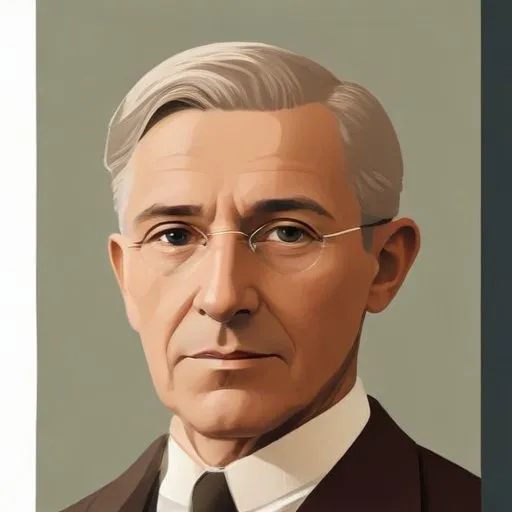
A Belgian-English zoologist and botanist who contributed significantly to the fields of herpetology and ichthyology, describing numerous species of reptiles and fish. Their work remains essential for understanding these animal groups.
George Albert Boulenger is renowned for describing and naming over 2,000 new animal species, primarily fish, reptiles, and amphibians, earning him a prestigious position in the annals of zoological history. His remarkable contribution to the field has left an indelible mark, making him one of the most prolific zoologists of his time.
Born on October 19, 1858, in Brussels, Belgium, Boulenger's fascination with the natural world was evident from an early age. His father, Gustave Boulenger, a Belgian public notary, and mother, Juliette Pirart, from Valenciennes, nurtured his curiosity, paving the way for a illustrious career in science.
Graduating in 1876 from the Free University of Brussels with a degree in natural sciences, Boulenger's academic excellence earned him a position as an assistant naturalist at the Royal Belgian Institute of Natural Sciences, Brussels. His early research focused on amphibians, reptiles, and fish, laying the foundation for his future accomplishments.
In 1880, Boulenger's expertise caught the attention of Dr. Albert C. L. G. Günther, who invited him to work at the Natural History Museum, then a department of the British Museum, in London. This pivotal move marked the beginning of a new chapter in Boulenger's life, as he became a naturalized British subject and devoted himself to cataloging the museum's extensive collection of amphibians.
Over the next four decades, Boulenger served as a first-class assistant in the Department of Zoology, showcasing his remarkable memory, writing skills, and dedication to his craft. His ability to recall every specimen and scientific name he had ever seen, combined with his extraordinary writing prowess, enabled him to produce manuscripts with few corrections, making him a prolific and respected author in his field.
Following his retirement from the British Museum in 1920, Boulenger's passion for botany blossomed. He devoted himself to the study of roses, publishing 34 papers on botanical subjects and two comprehensive volumes on the roses of Europe. This new chapter in his life demonstrated his remarkable adaptability and enthusiasm for scientific exploration.
George Albert Boulenger's contributions to zoology and botany are a testament to his boundless energy, intellectual curiosity, and dedication to the pursuit of knowledge. His remarkable legacy continues to inspire new generations of scientists, ensuring that his work remains an integral part of the scientific heritage.
Boulenger's passing on November 23, 1937, in Saint Malo, France, marked the end of an era, but his impact on the scientific community endures, a poignant reminder of the power of human ingenuity and the boundless wonders of the natural world.
Born in 1809
Developed the theory of evolution through natural selection, revolutionizing our understanding of life on Earth. This groundbreaking idea transformed the fields of biology, ecology, and beyond.
Born in 1823
A pioneering naturalist who discovered evolution through natural selection, independently of Charles Darwin, and contributed significantly to the field of biogeography.
Born in 1817
A renowned botanist and explorer who contributed significantly to the discovery and classification of numerous plant species, particularly in the Himalayas and Antarctica. His work laid the foundation for modern botanical research.
Born in 1810
A pioneering botanist who contributed significantly to the development of American botany, particularly in the fields of plant classification and evolution.
Born in 1834
A German biologist, physician, and philosopher who coined the term "ecology" and made significant contributions to the field of evolutionary biology, including the recapitulation theory.
Born in 1804
A pioneering figure in the fields of biology, anatomy, and paleontology, known for coining the term "Dinosauria" and making significant contributions to our understanding of vertebrate evolution.
Born in 1825
A prominent figure in the scientific community, known for advocating Charles Darwin's theory of evolution and coining the term "agnostic" to describe his own religious views.
Born in 1707
Developed the system of binomial nomenclature, which is still used today to classify and name living organisms. This system has had a profound impact on the fields of biology, ecology, and conservation.
