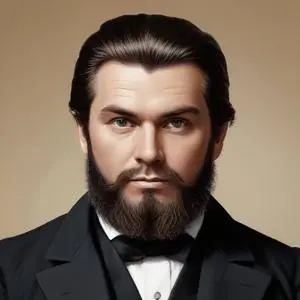
Thomas Henry Huxley: The Bulldog of Evolution
The Advocate of Darwin's Theory
Thomas Henry Huxley, known affectionately as "Darwin's Bulldog," was a British biologist and anthropologist who played a crucial role in popularizing
Charles Darwin's theory of evolution. With his mastery of comparative anatomy, Huxley became the most vocal supporter of Darwin's groundbreaking ideas, fearlessly debating skeptics and vigorously promoting scientific education.
Early Life and Education
Born on May 4, 1825, in Ealing, Middlesex, England, Huxley received little formal education. Despite this, he was driven by an insatiable curiosity and passion for learning. He spent countless hours studying and teaching himself, eventually becoming one of the most renowned comparative anatomists of the 19th century.
The Oxford Evolution Debate
One of the most pivotal moments in Huxley's career was the famous 1860 Oxford evolution debate with Samuel Wilberforce. This critical event marked a turning point in the acceptance of Darwin's theory and cemented Huxley's reputation as a fierce advocate for evolution. Although some historians debate the accuracy of the surviving account, it is undeniable that Huxley's participation in the debate significantly contributed to the widespread recognition of Darwin's work.
Agnosticism and the Nature of Knowledge
In 1869, Huxley coined the term "agnosticism" to describe his philosophical stance on the limits of human knowledge. He believed that certain truths, particularly those related to the existence of God, were beyond human comprehension. This concept, which he elaborated on in 1889, emphasized the importance of distinguishing between what can and cannot be known.
Huxley was instrumental in developing scientific education in Britain. He fought tirelessly against the rigidities of religious tradition, advocating for a more open-minded and evidence-based approach to learning. His commitment to education led to the establishment of institutions such as the Normal School of Science, which later became the Royal College of Science.
Huxley's groundbreaking research in comparative anatomy clarified relationships between previously misunderstood groups of organisms. His work on invertebrates and vertebrates, including his studies on the connection between apes and humans, significantly advanced the field. His comparison of Archaeopteryx with Compsognathus led him to conclude that birds evolved from small carnivorous dinosaurs, a view now widely accepted by modern biologists.
Huxley's personal life was marked by a strong sense of family and community. He married Henrietta Heathorn in 1855 and had five sons and five daughters with her. Throughout his life, he remained committed to promoting scientific literacy and critical thinking. His legacy extends far beyond his academic achievements, inspiring generations to approach knowledge with curiosity, open-mindedness, and a willingness to challenge established ideas.
- "The great tragedy of science—the slaying of a beautiful hypothesis by an ugly fact." — Thomas Henry Huxley
- "Sit down before fact as a little child, be prepared to give up every preconceived notion, follow humbly wherever nature leads, or you shall learn nothing." — Thomas Henry Huxley
Huxley's work and ideas have had a profound impact on modern society. His unwavering support for Darwin's theory paved the way for significant advances in biology, anthropology, and beyond. His advocacy for scientific education and critical thinking continues to inspire scholars and laypeople alike. As a testament to his enduring influence, Huxley's legacy remains a beacon of intellectual curiosity and a celebration of humanity's boundless potential.
FAQ
What was Thomas Henry Huxleys contribution to biology?
Thomas Henry Huxley was a prominent biologist who introduced the concept of agnosticism, advocating for the separation of science and religion, and made significant contributions to the study of evolution and comparative anatomy.
What was Thomas Henry Huxleys role in the scientific community?
Thomas Henry Huxley was a prominent figure in the scientific community, serving as President of the Royal Society and promoting scientific education and research in the United Kingdom.
What was Thomas Henry Huxleys relationship like with Charles Darwin?
Thomas Henry Huxley was a close friend and supporter of Charles Darwin, defending his theory of evolution and promoting its acceptance in the scientific community.
What were Thomas Henry Huxleys views on science and religion?
Thomas Henry Huxley believed in the importance of separating science and religion, advocating for a scientific approach to understanding the natural world and promoting critical thinking and skepticism.
When did Thomas Henry Huxley live?
Thomas Henry Huxley lived from 1825 to 1895, a period marked by significant scientific and intellectual developments in the United Kingdom.