


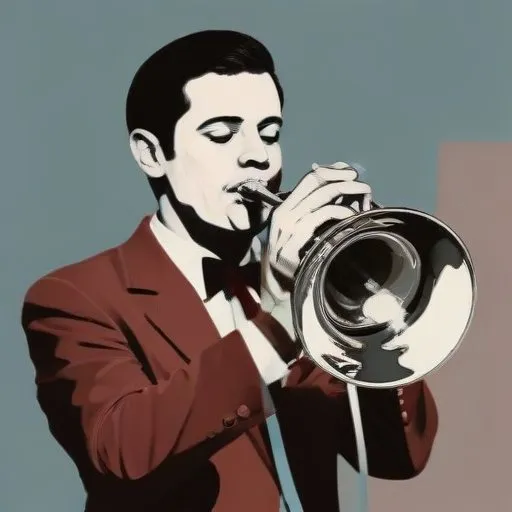
A renowned trombonist and bandleader, known for his unique "dirt style" playing and contributions to the development of jazz in the 1920s and 1930s.
Known for his unique trombone style and infectious sense of humor, George Brunies was a legendary figure in the jazz world. As a pioneering trombonist of the Dixieland Revival, Brunies' soulful playing and charismatic stage presence earned him the nickname "The King of the Tailgate Trombone."
Born on February 6, 1902, in New Orleans, Louisiana, Brunies was immersed in music from a young age. His father led a family band, and his brothers Henry, Merritt, Richard, and Albert Abbie all became accomplished musicians. Brunies' early introduction to music was through the alto horn, which he played professionally in Papa Jack Laine's band at the age of eight. He later switched to trombone, developing a style that would influence generations of jazz musicians.
In 1919, Brunies traveled to Chicago with Ragbaby Stevens' band, marking the beginning of his journey as a professional musician. He worked on riverboats along the Mississippi River, absorbing the rich musical heritage of the region. In 1921, he returned to Chicago and joined a band of New Orleans friends at the Friars Inn, which would later become the famous New Orleans Rhythm Kings.
Brunies' trombone style, characterized by its warm, rich tones and innovative solos, quickly gained recognition among his peers. His recordings with the New Orleans Rhythm Kings were highly influential, and his legacy continued to inspire young musicians.
After the Rhythm Kings disbanded in 1924, Brunies joined Ted Lewis' band, with whom he performed through 1934. He then worked with Louis Prima's band before landing a steady gig at Nick's, a renowned jazz club in New York City, through 1938. His time at Nick's was marked by innovative performances, including his signature "tailgate" style, where he would play the trombone while lying on the floor, often inviting the largest person in the audience to sit on his chest.
In 1939, Brunies joined Muggsy Spanier's band, with whom he recorded some of his most famous works. His partnership with Spanier showcased his remarkable technical abilities and cemented his status as a jazz legend.
In 1949, Brunies returned to Chicago to lead his own band, continuing to wow audiences with his unique stage presence and exceptional musicianship. Throughout his career, Brunies worked with some of the greatest jazz musicians of his time, including Eddie Condon and Muggsy Spanier.
George Brunies' contribution to jazz is immeasurable. His innovative trombone style, infectious sense of humor, and charismatic stage presence have inspired generations of musicians and audiences alike. Today, he is remembered as a true legend of the Dixieland Revival, and his music continues to delight and inspire.
"I never learned to read music, but I could pick up a tune and invent a part for my instrument."
Born in 1905
A pioneering trombonist and vocalist who blended jazz and swing, known for his smooth, soulful sound and iconic renditions of American standards.
Born in 1909
A virtuosic clarinetist and bandleader, known as the "King of Swing," who revolutionized jazz music with his energetic and sophisticated style, leading a racially integrated orchestra in the 1930s.
Born in 1904
A legendary trombonist, composer, and bandleader who led one of the most popular big bands of the 1930s and 1940s, creating iconic hits like "In the Mood" and "Moonlight Serenade".
Born in 1910
A virtuosic clarinetist and innovative bandleader, he revolutionized the swing era with his unique sound and iconic hits like "Begin the Beguine" and "Stardust".
Born in 1907
A legendary jazz musician who played saxophone and trumpet, and composed music for films and TV shows, leaving a lasting impact on the jazz genre.
Born in 1899
A legendary jazz pianist, composer, and bandleader who revolutionized the genre with his unique style and iconic compositions, such as "Take the A Train" and "Mood Indigo".
Born in 1904
A legendary jazz pianist and bandleader who led a iconic orchestra, blending swing and blues to create a unique sound that influenced generations of musicians. Known for his distinctive "less-is-more" style and hits like "April in Paris" and "One O'Clock Jump".
Born in 1897
A pioneering figure in early jazz, leading a renowned orchestra and composing innovative arrangements that influenced generations of musicians.
