


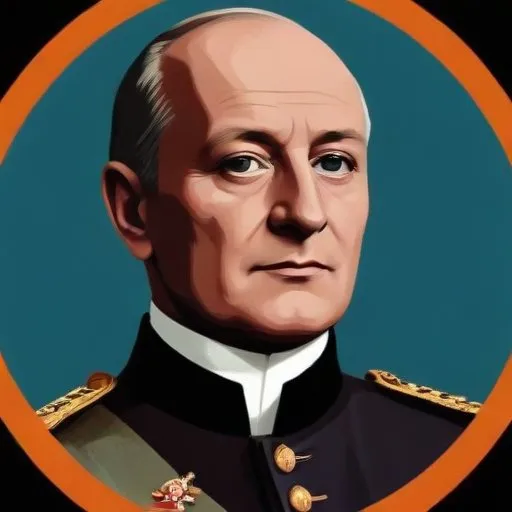
A British politician who served as Governor-General of India, implementing key reforms and shaping the country's modernization, while also being a prominent figure in British politics.
George Curzon, 1st Marquess Curzon of Kedleston, is renowned for his distinguished career as a British statesman, Conservative politician, and writer, who served as the Viceroy of India from 1899 to 1905. During his tenure, he implemented numerous reforms, addressed the British maltreatment of Indians, and sent a British expedition to Tibet, earning him a revered place in Indian and British history.
Born on January 11, 1859, in Derbyshire, England, Curzon belonged to an aristocratic family. He was educated at Eton College and later at Balliol College, Oxford, where he developed a keen interest in politics and international relations.
After completing his education, Curzon embarked on an extensive journey across Russia, Central Asia, and the Far East. These travels inspired him to write several books on the region, which highlighted his geopolitical outlook and warned of the perceived Russian threat to British control of India. His writings not only showcased his literary prowess but also demonstrated his expertise in international affairs.
In 1886, Curzon entered Parliament, marking the beginning of his illustrious political career. In 1891, he was appointed Under-Secretary of State for India, a position that laid the foundation for his future role as Viceroy of India. As Viceroy, he introduced several reforms, including the establishment of the Indian Railway Board, the creation of the Indian Police Commission, and the restoration of the Taj Mahal.
In 1905, Curzon's tenure as Viceroy of India was marked by the Partition of Bengal, a decision that sparked widespread protests and controversy. His disagreements with Lord Kitchener, Commander-in-Chief, India, over issues of military organization further strained his relations with the government. Unable to secure the backing of the government in London, Curzon resigned in 1905 and returned to England.
George Curzon's remarkable career has left an indelible mark on Indian and British history. His contributions to politics, literature, and international relations continue to inspire generations. As a testament to his legacy, his name remains synonymous with the Curzon Line, a border that played a significant role in shaping European politics in the 20th century.
In conclusion, George Curzon's life was a testament to his unwavering dedication to public service, his passion for international relations, and his commitment to leaving a lasting impact on the world. His remarkable achievements have earned him a revered place in the annals of history, ensuring that his legacy will continue to inspire and educate future generations.
Born in 1871
Prolific writer of historical novels and adventure stories, also a talented landscape painter.
Born in 1848
A Scottish-English lieutenant and politician who served as the 33rd Prime Minister of the United Kingdom, known for issuing the Balfour Declaration, a pivotal document supporting the establishment of a Jewish homeland in Palestine.
Born in 1863
A Welsh lawyer and politician who served as Prime Minister of the United Kingdom, leading the country through World War I and introducing key social reforms. He's known for his charismatic leadership and progressive policies.
Born in 1836
A British businessman and politician who played a key role in shaping the British Empire's colonial policies, particularly in Africa, and is known for his advocacy of imperialism and tariff reform.
