


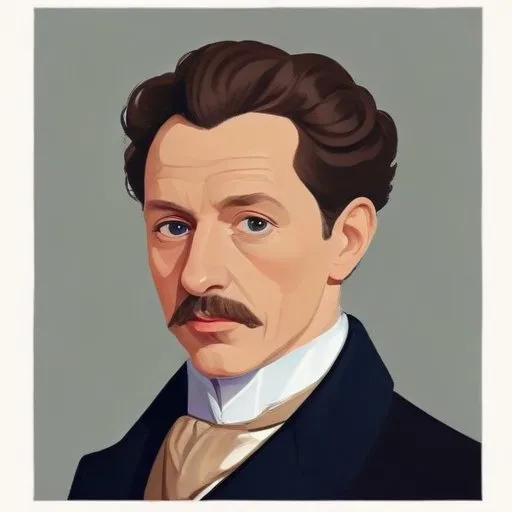
A prolific writer of novels and short stories that explored the lives of the working class and the struggles of urban poverty in Victorian England, known for his gritty realism and social commentary.
George Robert Gissing, a stalwart of English literature, is renowned for his 23 novels that pierced the hearts of readers in the late 19th and early 20th centuries. His works, Including The Nether World, New Grub Street, and The Odd Women, continue to enthrall audiences with their vivid portrayals of Victorian England's social landscape.
Born on November 22, 1857, in Wakefield, West Yorkshire, Gissing was the eldest of five children to Thomas Waller Gissing, a chemist, and Margaret née Bedford. His childhood home, now maintained by The Gissing Trust, was a haven for his burgeoning literary passion.
Gissing's love affair with literature began at the tender age of ten, when he devoured Charles Dickens' The Old Curiosity Shop. This sparked a lifelong dedication to the written word, fueled by his father's encouragement and the family's extensive library. His juvenilia, published posthumously in 1995, showcased his budding talent.
After his father's untimely death in 1870, Gissing was sent to Lindow Grove School in Cheshire, where he excelled academically. His standout performance in the Oxford Local Examinations earned him a scholarship to Owens College, the precursor to the University of Manchester.
At Owens College, Gissing's academic prowess shone through, winning numerous prizes, including the Poem Prize in 1873 and the Shakespeare Scholarship in 1875. During this period, he also began a romantic relationship with Marianne Nell Harrison, which would later inspire some of his works.
In the 1890s, Gissing's literary stature soared, earning him recognition as one of England's top three novelists, alongside Thomas Hardy and George Meredith. His novels, which tackled the complexities of Victorian society, resonated deeply with readers and critics alike.
Despite his untimely passing on December 28, 1903, Gissing's legacy endured. By the 1940s, he was hailed as a literary genius, and his works continued to captivate new generations of readers.
Gissing's influence extends beyond his own literary circle. His exploration of social realism paved the way for future authors, including D. H. Lawrence and E. M. Forster. His portrayal of the struggles faced by women, particularly in The Odd Women, remains a poignant commentary on the era's gender dynamics.
Today, Gissing's works continue to captivate readers, offering a window into the complexities of Victorian England. His dedication to his craft, despite the challenges he faced, serves as a testament to the power of literary passion.
George Gissing's remarkable life and works serve as a beacon of inspiration to writers and readers alike. His commitment to his art, despite the trials and tribulations, has left an indelible mark on English literature.
In conclusion, Gissing's remarkable journey, from a small town in Yorkshire to the echelons of literary greatness, is a testament to the transformative power of literature. His works, though penned in a bygone era, continue to captivate, educate, and inspire us to this day.
Born in 1840
A renowned author of novels and poetry that explored the human condition, often critiquing social conventions and the role of fate in people's lives.
Born in 1857
A Polish-born British novelist who wrote thought-provoking and psychologically complex stories that explored the human condition, often set against the backdrop of colonialism and the sea.
Born in 1873
A pioneering modernist writer, credited with influencing 20th-century literature through experimental novels and poetry that explored the human condition. Known for his impressionistic style and complex characters.
Born in 1866
A visionary writer who pioneered the science fiction genre, crafting timeless classics like "The Time Machine" and "War of the Worlds" that continue to inspire and captivate audiences today.
Born in 1867
A prolific writer of novels and plays, known for his realistic portrayals of life in the Staffordshire Potteries and his influence on the development of modern English literature.
Born in 1879
This celebrated author crafted novels and plays that probed the human condition, exploring themes of social class, morality, and personal relationships, with a distinctive wit and insight. Their works continue to captivate audiences with their nuanced portrayals of English society during the early 20th century.
Born in 1885
A pioneering writer of the early 20th century, known for exploring themes of human nature, relationships, and the clash between individual desire and societal expectations through novels like "Sons and Lovers" and "Lady Chatterley's Lover".
Born in 1885
A pioneering modernist poet and critic who transformed 20th-century literature with innovative styles and provocative ideas, shaping the course of modern poetry.
