


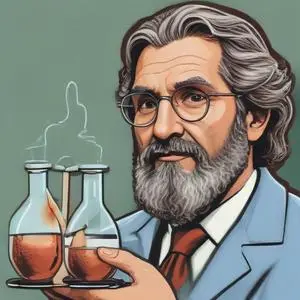
Pioneering geneticist, chemist, and engineer who developed innovative genome sequencing and editing technologies, including CRISPR-Cas9 gene editing. Known for his work in synthetic biology and personal genomics.
George M. Church, a renowned geneticist and synthetic biologist, is best known for his groundbreaking work in the fields of personal genomics and synthetic biology. His pioneering research has led to the development of innovative technologies that enable the manipulation of genetic code, revolutionizing our understanding of life and its potential applications.
Church's vision for personal genomics is centered around the idea of making genetic information accessible and affordable for individuals. He has been a driving force behind the development of low-cost, high-throughput DNA sequencing technologies, which enable the rapid and inexpensive analysis of an individual's genetic code.
In 2005, Church proposed the idea of sequencing an individual's genome for $1,000, a concept that was considered radical at the time. However, through his efforts and those of his colleagues, the cost of genome sequencing has plummeted, making it an increasingly viable option for personalized medicine and genetic research.
Church's work in synthetic biology involves the design and construction of new biological systems, such as genetic circuits and synthetic genomes. His research has focused on the development of novel biological pathways that can be used to produce biofuels, diagnose diseases, and even eradicate genetic disorders.
In 2010, Church's team successfully created the first self-replicating synthetic genome, a landmark achievement that demonstrated the feasibility of designing and constructing entirely new biological systems from scratch.
Church has held faculty positions at several prestigious institutions, including Harvard Medical School and the Massachusetts Institute of Technology (MIT). He has published numerous papers in top-tier scientific journals and has been recognized with several awards for his contributions to the fields of genomics and synthetic biology.
Church's work has far-reaching implications for various aspects of modern society, including medicine, energy, and agriculture. His contributions to the development of personalized genomics and synthetic biology have the potential to revolutionize healthcare, enable the production of sustainable biofuels, and improve crop yields.
Church has been vocal about the need for a more open and collaborative approach to genetic research, advocating for the creation of a "genomic commons" where data and resources are freely shared. He has also expressed concerns about the potential risks and ethics of emerging genetic technologies.
"The genome is not a static thing; it's a dynamic, interactive system." - George M. Church
"We need to think about the implications of these technologies, not just the science."
Church has received numerous awards and honors for his contributions to science, including the 2007 National Institutes of Health (NIH) Director's Pioneer Award and the 2011 election to the National Academy of Sciences.
Church's work has been featured in various media outlets, including The New York Times, Wired, and 60 Minutes. His research has also been highlighted in several books, including The Language Instinct by Steven Pinker and Regenesis: How Synthetic Biology Will Reinvent Nature and Ourselves by George M. Church and Ed Regis.
Church is an avid sailor and has crossed the Atlantic Ocean twice. He is also a talented piano player and has performed at several charity events.
Through his groundbreaking research and innovative ideas, George M. Church has left an indelible mark on the fields of genomics and synthetic biology. His contributions continue to shape our understanding of life and its potential applications, inspiring new generations of scientists and researchers.
79 Years Old
Pioneering geneticist who sequenced the human genome and created the first self-replicating synthetic cell, revolutionizing our understanding of life and its potential. 82
76 Years Old
Led the Human Genome Project, decoding human DNA and paving the way for genetic medicine. Currently directs the National Institutes of Health, shaping biomedical research and policy.
98 Years Old
Discovered the structure of DNA, revolutionizing our understanding of genetics and earning a Nobel Prize. Pioneering work in molecular biology has far-reaching implications for medicine and beyond.
69 Years Old
A renowned mathematician and geneticist who pioneered the Human Genome Project, leading to major breakthroughs in genetic research and personalized medicine.
88 Years Old
A renowned virologist and academic, he made groundbreaking discoveries on the genetic mechanisms of viruses, earning him a Nobel Prize in Physiology or Medicine in 1975. His work has significantly advanced our understanding of cancer and immunology.
Born in 1920
A British scientist who contributed significantly to the discovery of the structure of DNA, providing high-quality X-ray crystallography images that helped James Watson and Francis Crick develop their famous model.
Born in 1916
A Nobel Prize-winning physicist and biologist who contributed significantly to the discovery of the structure of DNA, using X-ray crystallography to produce the first clear images of the molecule.
84 Years Old
A Nobel Prize-winning biologist who led the team that sequenced the human genome, making groundbreaking discoveries in the field of genetics.
