


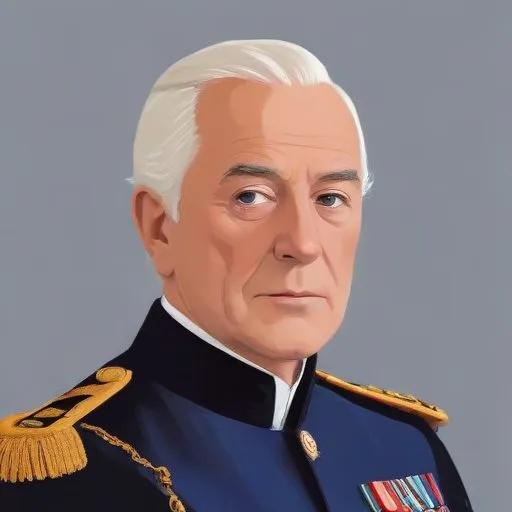
A British general and politician who served as Lord Lieutenant of Ireland, known for his military campaigns and influential role in shaping British politics in the 18th century.
George Montagu-Dunk, 2nd Earl of Halifax, is renowned for his instrumental role in extending British commerce in the Americas, earning him the esteemed title of "the father of the colonies." During his tenure as President of the Board of Trade from 1748 to 1761, he played a pivotal role in the foundation of Nova Scotia in 1749, with the city of Halifax being named in his honor.
Born on October 6, 1716, George Montagu-Dunk was the son of the 1st Earl of Halifax and was styled Viscount Sunbury until he succeeded his father as Earl of Halifax in 1739. He received his education at Eton College and Trinity College, Cambridge. In 1741, he married Anne Richards, who had inherited a substantial fortune from Sir Thomas Dunk, whose name Halifax later adopted.
Halifax's illustrious career in public service began as an official in the household of Frederick, Prince of Wales. He later became Master of the Buckhounds and, in 1748, President of the Board of Trade. During this period, he not only facilitated the establishment of Halifax, Nova Scotia, but also fostered trade, particularly with North America.
Halifax's authorization of a raid on the home of John Entick in 1762, in search of evidence of sedition, led to public controversy. The case, Entick v. Carrington, was eventually declared unlawful, tarnishing Halifax's reputation.
Despite controversies, Halifax's contributions to the expansion of British commerce and colonization in the Americas remain unparalleled. The city of Halifax, Nova Scotia, stands as a testament to his vision and leadership. His legacy continues to inspire admiration and reflection on the complex history of British colonization.
| Date | Event |
|---|---|
| 6 October 1716 | Born |
| 1739 | Succeeded as Earl of Halifax |
| 1741 | Married Anne Richards |
| 1748-1761 | President of the Board of Trade |
| 1749 | Foundation of Nova Scotia and Halifax |
| 8 June 1771 | Died |
Halifax's marriage to Anne Richards not only brought him a substantial fortune but also introduced him to the influential Dunk family. His close relationships with British politicians, including Lord Bute and George Grenville, played a significant role in shaping his career.
Halifax's vision for British colonization was rooted in the idea of expanding commerce and securing strategic territories. His policies, although often controversial, reflected his commitment to strengthening British influence in the Americas.
The city of Halifax, Nova Scotia, and the Province of Quebec, renamed by Halifax in 1763, stand as testaments to his enduring legacy in shaping modern society. His contributions to British colonization continue to be felt in the Americas, with his name becoming synonymous with courage, vision, and leadership.
Born in 1759
Prime Minister of the United Kingdom from 1783 to 1801 and 1804 to 1806, known for leading the country through the French Revolutionary and Napoleonic Wars.
Born in 1749
A prominent 18th-century politician who championed individual liberties and opposed British imperialism, known for his charismatic oratory skills and influential foreign policy decisions.
Born in 1738
The British monarch who ruled during the American Revolution, losing the colonies, and later suffered a mental illness that led to a regency crisis. He's also known for his cultural and artistic patronage.
Born in 1762
The only British Prime Minister to be assassinated, he served from 1809 to 1812 and is known for his strong leadership during the Napoleonic Wars.
Born in 1770
Prime Minister of the United Kingdom during the Napoleonic Wars, leading Britain to victory and establishing the country as a dominant world power. He also reformed the British government and economy.
