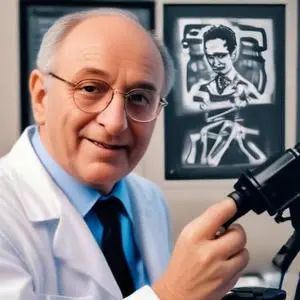
George Wald: The Visionary Who Illuminated the Secrets of the Retina
A Nobel laureate and a pioneer in the field of vision
George Wald is renowned for his groundbreaking discoveries in the field of vision, which have transformed our understanding of the human eye and its functions. As a pioneer in the study of pigments in the retina, Wald's work has had a profound impact on our comprehension of vision and has paved the way for numerous breakthroughs in the field of ophthalmology.
Early Life and Education
Born on November 18, 1906, in New York City, George Wald was the son of Jewish immigrant parents, Ernestine Rosenmann and Isaac Wald. He was a member of the first graduating class of the Brooklyn Technical High School in 1923 and went on to receive his Bachelor of Science degree from New York University in 1927. Wald earned his PhD in zoology from Columbia University in 1932, which marked the beginning of his illustrious career in scientific research.
Research and Discoveries
Wald's research focused on the pigments present in the retina, particularly rhodopsin, which is responsible for low-light vision. His experiments demonstrated that vitamin A is an essential component of the retina and plays a crucial role in retinal function. This discovery led to a deeper understanding of the biochemical processes involved in vision and has had significant implications for the treatment of vision disorders.
In the 1950s, Wald developed a technique called microspectrophotometry, which enabled him to measure the absorbance of light by pigments in individual cells. This innovation allowed him to determine the absorbance of pigments in cone cells, providing valuable insights into the mechanisms of color vision.
Awards and Honors
Wald's groundbreaking research earned him the Nobel Prize in Physiology or Medicine in 1967, which he shared with
Haldan Keffer Hartline and
Ragnar Granit. This prestigious award recognized his pioneering work on the physiology of the eye and its functional mechanisms.
Philosophical Contributions and Beliefs
Wald was not only a brilliant scientist but also a passionate advocate for social and environmental causes. In 1970, he predicted that human civilization would face catastrophic consequences if immediate action was not taken to address the pressing issues of the time, including overpopulation, pollution, and war. This prophecy, though dire, underscored the urgent need for collective action to ensure a sustainable future.
Personal Milestones and Key Life Events
Wald's personal life was marked by significant milestones, including his marriage to Frances Kingsley in 1931. The couple had two sons, and Wald's family life was marked by a deep sense of love and commitment.
Influence on Modern Society
Wald's work has had a profound impact on modern society, influencing the development of treatments for vision disorders and inspiring future generations of scientists. His advocacy for social and environmental causes has also raised awareness about the pressing issues of our time.
Legacy
George Wald's legacy extends far beyond his scientific achievements. He was a visionary who illuminated the secrets of the retina and inspired a new era of research in the field of vision. His advocacy for social and environmental causes continues to resonate with us today, reminding us of the importance of collective action in shaping a sustainable future.
- Wald's work has been recognized with numerous awards and honors, including the Lasker Award and the National Medal of Science.
- He was a prolific writer and published numerous papers and articles on his research, including a seminal work on the biochemistry of vision.
- Wald's prediction about the end of human civilization has been the subject of much debate and discussion, highlighting the urgent need for collective action to address global challenges.
Remembering George Wald
George Wald's remarkable life and achievements serve as a testament to the power of human curiosity and ingenuity. As we reflect on his legacy, we are reminded of the importance of continued innovation and advocacy in shaping a better future for all.
FAQ
What did George Wald discover about the eye?
George Wald discovered the molecular basis of vision, including the role of vitamin A in the visual process. His research led to a deeper understanding of the structure and function of the eye.
What was George Walds contribution to the field of neurobiology?
George Wald made significant contributions to the field of neurobiology, including the discovery of the role of rhodopsin in the visual process and the characterization of the chemistry of vision.
What awards did George Wald win for his research?
George Wald was awarded the Nobel Prize in Physiology or Medicine in 1967, along with Haldan Keffer Hartline and Ragnar Granit, for their discoveries on the visual process.
What was George Walds role in the Harvard University community?
George Wald was a prominent figure in the Harvard University community, serving as a professor of biology and chair of the biology department. He was also a vocal advocate for social justice and peace.
What was George Walds legacy in the scientific community?
George Walds legacy in the scientific community is that of a pioneering researcher who expanded our understanding of the biology of vision and inspired generations of scientists to pursue careers in neurobiology and vision research.