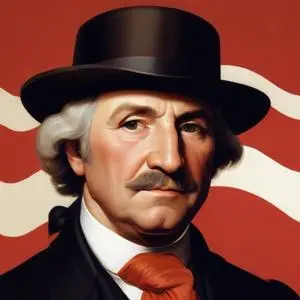
George Washington Goethals: The Visionary Behind the Panama Canal
The Construction of a Lifetime
George Washington Goethals is renowned for his administration and supervision of the construction and opening of the Panama Canal, a marvel of modern engineering. As a United States Army general and civil engineer, Goethals' impressive leadership and technical expertise transformed the Panamanian isthmus, connecting the Atlantic and Pacific Oceans and revolutionizing global trade.
Early Life and Education
Born on June 29, 1858, in Brooklyn, New York, to Flemish immigrants from Stekene, Belgium, Goethals' early life was marked by a strong academic foundation. He entered the College of the City of New York at the tender age of 14 and later won an appointment to the United States Military Academy at West Point in 1876. Graduating second in his class in 1880, Goethals was commissioned as a second lieutenant in the Army Corps of Engineers.
Military Career
Goethals' military career spanned over four decades, during which he showcased his exceptional skills as an engineer and leader. Some notable highlights include:
- Assistant instructor in practical astronomy at West Point (1880)
- Engineer officer of the Department of Columbia in Vancouver, Washington (1882)
- Taught civil and military engineering at West Point (1885-1889)
- Assisted Colonel John W. Barlow with navigational improvements on the Cumberland and Tennessee Rivers (1889)
Advocate for Education and Racial Equality
Goethals' commitment to education and racial equality is exemplified through his mentorship of Charles Young, the third African American graduate of West Point. Goethals tutored Young, who had failed an engineering class, and helped him pass and graduate in 1889.
The Panama Canal: A Project of Unparalleled Complexity
In 1907, Goethals took on the monumental task of completing the Panama Canal, a project that had been plagued by engineering challenges, tropical diseases, and logistical nightmares. Under his leadership, the canal was finally completed in 1914, an achievement that earned him international acclaim and transformed global commerce.
Legacy and Honors
Goethals' numerous accolades include:
- Recipient of the Army Distinguished Service Medal (1915)
- Elected to the National Academy of Sciences (1915)
- Inducted into the National Inventors Hall of Fame (1979)
Personal Life and Later Years
Goethals retired from the Army in 1916 and went on to serve as the State Engineer of New Jersey and the Acting Quartermaster General of the United States Army. He passed away on January 21, 1928, leaving behind a legacy that continues to inspire generations of engineers, leaders, and visionaries.
Quote
"The Isthmus of Panama is a very small place, but it is a very big job." - George Washington Goethals
FAQ
What was George Washington Goethals role in the Panama Canal project?
George Washington Goethals was an American general and engineer who played a crucial role in the construction of the Panama Canal. He served as the chief engineer and chairman of the Isthmian Canal Commission from 1907 to 1914.
How did George Washington Goethals contribute to the success of the Panama Canal?
Goethals oversaw the final stages of the canals construction, implementing innovative engineering solutions and overcoming significant technical challenges. He also played a key role in the canals opening in 1914.
What were George Washington Goethals views on engineering and innovation?
Goethals was a strong advocate for innovation and engineering excellence. He believed in the importance of investing in infrastructure and promoting technological progress.
How did George Washington Goethals work on the Panama Canal impact global trade?
The Panama Canal, which Goethals helped build, revolutionized global trade by providing a shortcut between the Atlantic and Pacific Oceans. This significantly reduced travel time and increased trade between the East and West Coasts of the United States.
What is George Washington Goethals legacy in modern-day engineering?
Today, Goethals is remembered as a pioneering engineer and a champion of innovation. His legacy continues to inspire engineers and innovators around the world.