


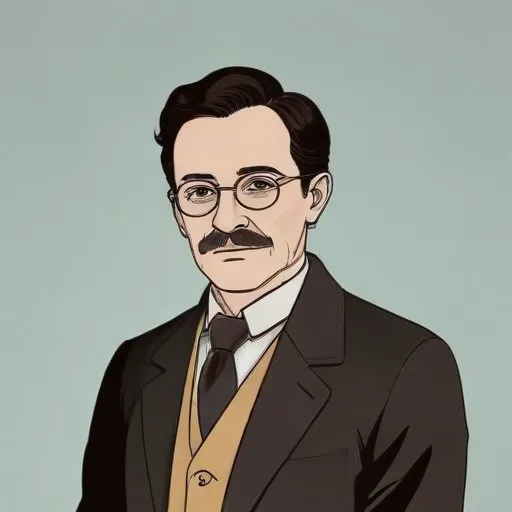
Developed a method to produce calcium carbide, a crucial component in the production of acetylene gas, which revolutionized the manufacturing of steel and other metals. This innovation transformed the industrial landscape.
Georges Imbert, a French chemical engineer and inventor, left an indelible mark on the world of science and technology with his groundbreaking invention of the wood gas generator. This innovative device would go on to revolutionize the way people perceived alternative energy sources, earning Imbert a permanent place in the annals of history.
Born on March 26, 1884, in Niederstinzel, France, Imbert was the eldest of four children. His academic prowess led him to attend Sarreguemines High School, followed by the prestigious School of Chemistry in Mulhouse. This institution, renowned for its excellence, provided Imbert with the perfect platform to hone his skills and nurture his passion for chemical engineering.
Imbert's inventive streak was evident from an early age. At just 20, he filed his first patent, marking the beginning of an illustrious career. Over the next decade, he developed and patented various industrial processes, showcasing his remarkable talent for innovation. In 1908, he opened a soap factory in Diemeringen, where he applied his patented processes, further solidifying his reputation as a mastermind.
During World War I, Imbert served in the German army, working as a chemist in factories in Linden and Berlin. His experiences during this period undoubtedly influenced his later work, as he went on to explore alternative energy sources.
In the early 1920s, Imbert began experimenting with charcoal gasification, driven by the need to find an alternative to liquid fuel. His tireless efforts culminated in the creation of a charcoal gasifier in 1921, followed by his groundbreaking invention of the wood gas generator in 1923. This innovative device could power vehicles using wood as a fuel source, paving the way for a more sustainable future.
In recognition of his groundbreaking work, the French government commissioned Imbert to build a wood gasifier in 1923. This led to the establishment of his gas-fired plant in SarreUnion in 1925, cementing his status as a pioneer in the field of alternative energy.
Georges Imbert's invention of the wood gas generator has had a lasting impact on the world of science and technology. His innovative spirit and commitment to finding alternative energy sources have inspired generations of scientists and inventors. Today, his legacy continues to inspire researchers and engineers working towards a more sustainable future.
Georges Imbert's remarkable journey serves as a testament to the power of human ingenuity and innovation. His pioneering work in the field of alternative energy has left an indelible mark on the world, inspiring future generations to strive for a more sustainable tomorrow.
Born in 1867
A pioneering scientist who pioneered radioactivity research, discovering elements polonium and radium, and paving the way for breakthroughs in medicine and energy.
Born in 1859
A pioneer in radioactivity research, discovering elements like polonium and radium, and pioneering radioactive isolation techniques. Their groundbreaking work paved the way for advancements in medicine, energy, and materials science.
Born in 1852
Discovered the element fluorine and developed an electric arc furnace, earning a Nobel Prize in Chemistry in 1906.
Born in 1868
Developed a process to synthesize ammonia, revolutionizing agriculture and warfare, and was awarded the Nobel Prize in Chemistry in 1918.
Born in 1874
Developed the Haber-Bosch process, a method to produce ammonia on an industrial scale, revolutionizing fertilizer production and agriculture. This innovation had a profound impact on global food supply and population growth.
Born in 1900
A Nobel Prize-winning physicist who pioneered radioactivity research and discovered artificial radioactivity, leading to breakthroughs in medicine and industry.
Born in 1892
A French physicist and Nobel laureate who proposed that particles, such as electrons, can exhibit wave-like behavior, revolutionizing quantum mechanics. His hypothesis led to major breakthroughs in understanding the atomic structure.
Born in 1870
A Nobel Prize-winning physicist and chemist who pioneered the study of the atom, providing conclusive evidence for its existence and structure. Their work laid the foundation for modern particle physics.
