


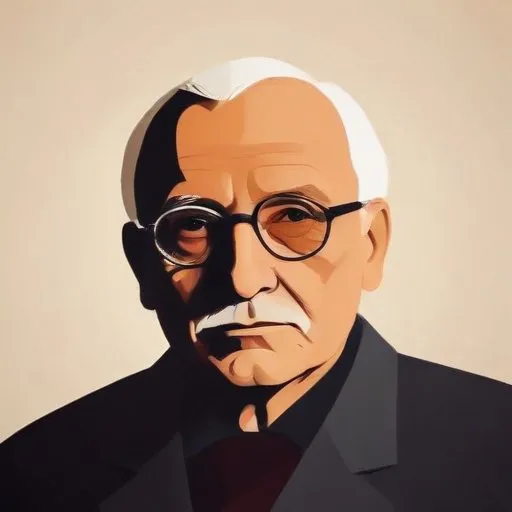
A philosopher and author who wrote extensively on the history and philosophy of science, particularly on Kant and Newton, and was known for his insightful critiques of scientific theories.
Gerd Buchdahl, a German-English philosopher of science, is renowned for his groundbreaking contributions to the understanding of metaphysics, epistemology, and the history of science. As a pioneer in his field, Buchdahl's work has had a profound impact on the way we approach the study of science and its relationship with philosophy.
Born on August 12, 1914, in Mainz, Germany, to German-Jewish parents, Buchdahl's early life was marked by turmoil. His family was forced to flee Nazi Germany, and he was eventually transported to Australia as an enemy alien in 1940. This experience would later shape his perspective on the intersection of politics and philosophy.
Buchdahl's academic journey took him to the University of Cambridge, where he became the first lecturer in history and philosophy of science. He went on to found the journal Studies in the History and Philosophy of Science, which became a seminal publication in the field. His book, Metaphysics and the Philosophy of Science: The Classical Origins, Descartes to Kant, published in 1969, is considered a landmark work that explored the interdependencies of philosophy and the natural sciences.
Another significant contribution was his book, Kant and the Dynamics of Reason: Essays on the Structure of Kant's Philosophy, published in 1992. This work shed light on Kant's critical intellectualism in the context of contemporary scientific developments, particularly for the anglophone world.
Buchdahl's philosophical contributions have far-reaching implications for our understanding of the natural sciences and their relationship with philosophy. His work has influenced many scholars in their views on the history of science and philosophy, shaping the way we approach scientific inquiry and its epistemological foundations.
Buchdahl was a founding fellow of Darwin College, Cambridge, and was appointed University Reader in 1966. He was also the Tarner Lecturer at Trinity College in 1973, speaking on "Science and Rational Structures."
Buchdahl's personal life was marked by resilience and determination. Despite being transported to Australia as an enemy alien, he went on to build a distinguished academic career. He was married to Nancy and had three sons, and passed away on May 17, 2001, in Cambridge.
Gerd Buchdahl's work has left an indelible mark on the philosophy of science, metaphysics, and epistemology. His contributions continue to inspire scholars and shape the way we approach the study of science and its relationship with philosophy. As a testament to his legacy, the journal Studies in the History and Philosophy of Science remains a leading publication in the field, ensuring that his ideas continue to influence generations to come.
Born in 1922
A Hungarian mathematician and philosopher who developed the concept of "methodology of scientific research programs" and critiqued the traditional notion of scientific progress. He's known for his work on the philosophy of mathematics and science.
Born in 1924
A provocative philosopher who challenged traditional notions of science, reason, and knowledge, arguing that there is no single, objective truth. He's known for his anarchic approach to epistemology and his critique of scientific methodology.
Born in 1922
A physicist-turned-historian who challenged traditional notions of scientific progress, arguing that paradigm shifts occur in revolutionary leaps rather than gradual accumulation of knowledge. He's famous for his book "The Structure of Scientific Revolutions".
Born in 1872
A renowned thinker who made significant contributions to mathematics, philosophy, and social commentary, known for his influential writings on logic, ethics, and politics. He's a prominent figure in shaping modern intellectual thought.
Born in 1889
A philosopher who challenged traditional philosophy by emphasizing the importance of language and its limits, and is famous for his philosophical ideas on logic, reality, and the nature of meaning.
Born in 1910
A prominent logical positivist, he championed the idea that only verifiable statements are meaningful, and his book "Language, Truth, and Logic" remains a seminal work in 20th-century philosophy.
Born in 1900
A philosopher who challenged traditional views on the mind-body problem, proposing a more holistic approach to understanding human behavior and consciousness. He's known for his concept of "category mistake."
Born in 1911
Developed the concept of "speech acts" and argued that language is not just about conveying information, but also about performing actions and creating social relationships.
