


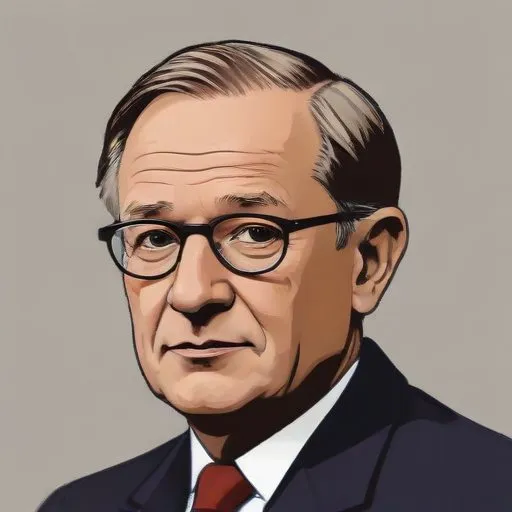
A Dutch economist and politician who served as Deputy Prime Minister of the Netherlands, known for his leadership in shaping the country's economic policies and reforms. He played a crucial role in stabilizing the Dutch economy during a period of crisis.
Gerrit Zalm, a renowned Dutch politician and economist, is best known for his instrumental role in shaping the country's economic policy during his tenure as the Minister of Finance. With a career spanning over three decades, Zalm has left an indelible mark on the Netherlands' economic landscape.
Zalm was born on May 6, 1952, and pursued a Master's degree in Economics from the Free University Amsterdam. His academic background laid the foundation for his future endeavors in the world of economics and politics.
Zalm's career in politics began in 1975 when he joined the Ministry of Finance as a civil servant. He quickly rose through the ranks, becoming a professor of Political Economy at his alma mater in 1990. This unique blend of academic and administrative experience prepared him for the challenges that lay ahead.
In 1994, Zalm was appointed as the Minister of Finance in the Cabinet Kok I, a position he held until 2002. During his tenure, he oversaw significant economic reforms, earning him recognition as a key architect of the Netherlands' economic policy. He continued to serve in this capacity until 2003, when he became the Deputy Prime Minister and Minister of Finance in the Cabinet Balkenende II.
In 2002, Zalm became the Leader of the People's Party for Freedom and Democracy (VVD), a position he held until 2004. His leadership was marked by a commitment to fiscal responsibility and economic growth. Although he stepped down as Leader, Zalm continued to serve as the Minister of Finance until 2006.
After retiring from active politics in 2006, Zalm transitioned to the private sector, working as a corporate director for several prominent banks, including DSB Bank, Fortis Bank, and ABN AMRO. He also served on various state commissions and councils, leveraging his expertise to benefit the public sector.
Zalm's economic philosophy is rooted in the principles of fiscal responsibility, free market economy, and social welfare. Throughout his career, he has advocated for policies that promote economic growth, reduce unemployment, and ensure social security.
Zalm's contributions to Dutch economic policy have had a lasting impact on the country's growth and development. His leadership and vision have inspired a generation of policymakers, ensuring a continued focus on fiscal responsibility and economic growth.
"A strong economy is the foundation of a prosperous society."
Zalm's legacy serves as a testament to his dedication to the people of the Netherlands and his unwavering commitment to shaping the country's economic future.
87 Years Old
Led the Netherlands as Prime Minister from 1994 to 2002, implementing significant economic reforms and guiding the country's integration into the European Union. He's also known for his role in shaping the country's social and economic policies.
87 Years Old
The Prime Minister of the Netherlands from 1982 to 1994, known for leading the country through a period of economic growth and implementing significant welfare state reforms. He also served as the United Nations High Commissioner for Refugees from 2001 to 2005.
70 Years Old
A Dutch jurist and politician who served as Prime Minister of the Netherlands from 2002 to 2010, known for his Christian democratic views and leadership during a period of significant social and economic change.
59 Years Old
The Prime Minister of the Netherlands, leading the country since 2010, known for his economic policies and handling of the European migrant crisis.
94 Years Old
A Dutch journalist and politician who served as Deputy Prime Minister of the Netherlands, known for his progressive views and leadership in the Democrats 66 party. He played a key role in shaping the country's social and economic policies.
