


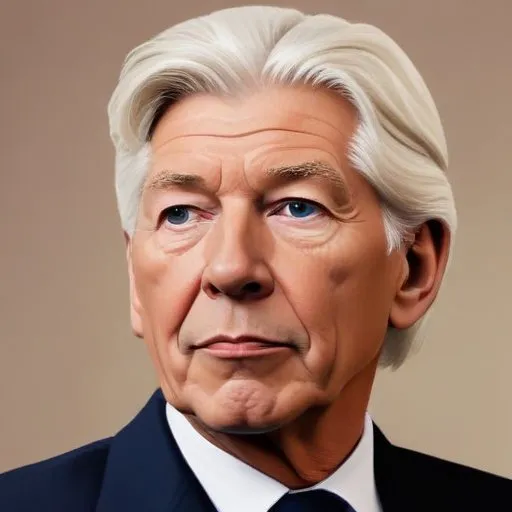
Led the Netherlands as Prime Minister from 1994 to 2002, implementing significant economic reforms and guiding the country's integration into the European Union. He's also known for his role in shaping the country's social and economic policies.
Wim Kok, a stalwart figure in Dutch politics, is renowned for his remarkable tenure as the Prime Minister of the Netherlands from 1994 to 2002. During his two consecutive terms, Kok spearheaded a period of unprecedented economic growth, social reform, and international cooperation, earning him the reputation as one of the most successful premiers in Dutch history.
Born on September 29, 1938, in Bergambacht, Netherlands, Wim Kok's entry into politics was preceded by his involvement in the trade union movement. He studied business administration at the Nyenrode Business School and later worked as a trade union leader for the Dutch Confederation of Trade Unions from 1961 to 1976. This experience not only honed his leadership skills but also instilled in him a deep commitment to the principles of social justice and collective bargaining.
Kok's journey to the top began in 1986, when he was elected to the House of Representatives. Shortly thereafter, he succeeded Joop den Uyl as the leader of the Labour Party (PvdA). This marked the beginning of a new era in Dutch politics, as Kok's charisma, pragmatism, and ability to forge alliances propelled him to the forefront of national politics.
Wim Kok's premiership, which spanned from 1994 to 2002, was marked by two successive cabinets that implemented far-reaching reforms. The first Kok cabinet (1994-1998) introduced a series of measures aimed at stimulating economic growth, reducing unemployment, and increasing government efficiency. The second Kok cabinet (1998-2002) built upon these achievements, focusing on issues such as education reform, healthcare modernization, and environmental protection.
Some of Kok's most notable policy initiatives include:
Wim Kok's contributions to Dutch politics and society have been recognized with several awards and honors, including:
Following his retirement from politics in 2002, Kok has remained active in the private and public sectors. He has served on the boards of several companies, including the Dutch banking giant, ABN AMRO. Additionally, he has been involved in various philanthropic initiatives, focusing on issues such as education, healthcare, and international development.
The legacy of Wim Kok continues to inspire a new generation of Dutch politicians and policymakers. His commitment to social justice, economic progress, and international cooperation has left an indelible mark on the Netherlands and beyond.
87 Years Old
The Prime Minister of the Netherlands from 1982 to 1994, known for leading the country through a period of economic growth and implementing significant welfare state reforms. He also served as the United Nations High Commissioner for Refugees from 2001 to 2005.
Born in 1919
A Dutch journalist, economist, and politician who served as Deputy Prime Minister of the Netherlands, known for his progressive policies and efforts to reduce economic inequality. He played a key role in shaping the country's social and economic landscape.
95 Years Old
A Dutch statesman who served as Prime Minister of the Netherlands from 1977 to 1982, known for his progressive policies and European integration efforts.
70 Years Old
A Dutch jurist and politician who served as Prime Minister of the Netherlands from 2002 to 2010, known for his Christian democratic views and leadership during a period of significant social and economic change.
59 Years Old
The Prime Minister of the Netherlands, leading the country since 2010, known for his economic policies and handling of the European migrant crisis.
77 Years Old
Directed blockbuster films like The Fast and the Furious and xXx, known for high-octane action sequences and memorable characters.
94 Years Old
A Dutch physician-turned-politician who served as Deputy Prime Minister, known for her efforts to improve healthcare and social policies. She played a key role in legalizing euthanasia in the Netherlands.
