


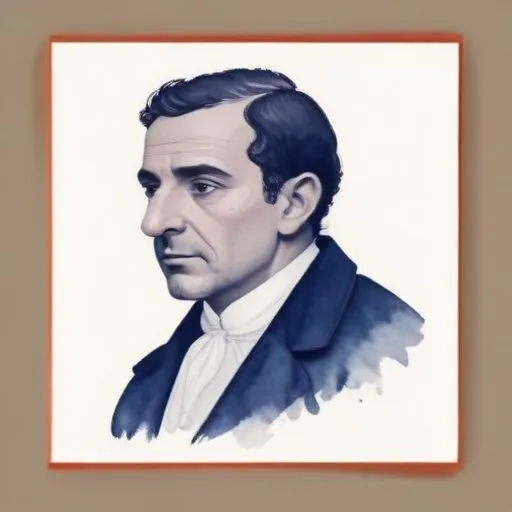
A 17th-century poet who dominated the Italian literary scene with his elaborate and ornate style, influencing many later poets. He's known for his epic poem "Adone", a masterpiece of Baroque literature.
Giambattista Marino, an Italian poet, is renowned for his epic masterpiece L'Adone, which catapulted him to fame in the 17th century. This iconic work earned him the reputation as one of the greatest Italian poets of all time, as proclaimed by The Cambridge History of Italian Literature.
Marino's poetry revolutionized the literary world with its unique style, characterized by extravagant and excessive conceits, lavish descriptions, and a sensuous musicality of verse. This distinctive approach, known as Marinism or Secentismo, emphasized the artificiality of Mannerism, relying heavily on antithesis and wordplay.
Born on October 14, 1569, in Naples, Italy, Marino's early life was marked by a rift with his father, who had hoped his son would pursue a law career. However, Marino's passion for poetry prevailed, leading him to abandon his legal studies and embark on a life of literary innovation.
Marino's work resonated with audiences across Europe, earning him widespread admiration and imitation. In France, he was idolized by members of the précieux school, including Georges Scudéry, and the libertins, such as Tristan l'Hermite. His poetry also inspired Lope de Vega in Spain, Constantijn Huygens in Holland, and Christian Hoffmann von Hoffmannswaldau in Germany.
In England, John Milton and Richard Crashaw were among his admirers, translating his works into English. Marino's influence extended to Poland, Portugal, and other Catholic countries, solidifying his reputation as a literary icon of the Baroque era.
Although Marino's work fell out of favor in the 18th and 19th centuries, when Baroque poetry was deemed "bad taste," his poetic procedures experienced a renaissance in the 20th century. Scholars such as Benedetto Croce, Carlo Calcaterra, Giovanni Pozzi, Marziano Guglielminetti, Marzio Pieri, and Alessandro Martini reevaluated his work, recognizing its significance in the development of Baroque poetry.
Marino's poetry reflects his fascination with the relationship between art and nature. He believed that poetry should be a reflection of the world's beauty and imperfections, rather than a representation of reality itself. This philosophical stance is evident in his use of extravagant and excessive conceits, which pushed the boundaries of linguistic expression.
Giambattista Marino's innovative spirit, mastery of language, and poetic vision have left an indelible mark on literature, cementing his status as one of the greatest Italian poets of all time.
Born in 1544
A 16th-century poet and educator who wrote influential epic poems, particularly "Jerusalem Delivered", which showcased his mastery of Italian language and style.
Born in 1543
The 5th Superior General of the Society of Jesus, a prominent Catholic order, played a crucial role in shaping the Jesuit mission and education, leaving a lasting impact on the Catholic Church. He's known for his efforts to centralize and standardize Jesuit practices.
Born in 1550
A 17th-century philosopher and writer who challenged Aristotelian views and developed a rational approach to understanding the natural world, influencing the scientific revolution.
