


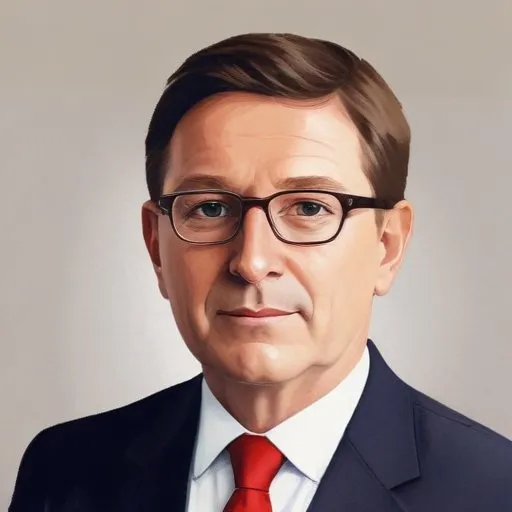
Australian public servant who played a key role in shaping the country's foreign policy and diplomatic relations, particularly during World War II and the early Cold War era.
Sir Giles Chippindall was a renowned Australian public servant, best known for his exceptional leadership roles in the Department of Supply and Shipping and the Postmaster-General's Department during a transformative period in Australian history.
Born on May 21, 1893, in Carlton, Melbourne, Chippindall was educated at state schools in Victoria and Prahran College, laying the foundation for his future success.
Chippindall joined the Australian Public Service in 1908 as a telegraph messenger in the Postmaster-General's Department, marking the beginning of his illustrious career. During World War II, he served in various roles, significantly contributing to the war effort. In 1945, he was appointed Secretary of the Department of Supply and Shipping, a position he held until 1946.
In 1949, Chippindall was appointed Director-General of the Postmaster-General's Department, a role he held until his retirement in May 1958. During his tenure, he oversaw significant developments in the department, earning recognition for his exceptional leadership skills.
After retiring from the public service, Chippindall went on to serve as Chairman of the Overseas Telecommunications Commission (1961-1962) and the Australian National Airlines Commission (1959-1966). His outstanding contributions were acknowledged with various honors, including being made a Commander of the Order of the British Empire in June 1950 and a Knight Bachelor in January 1955.
In 1955, Chippindall's portrait, painted by Lucy Lee, was an Archibald Prize finalist. In recognition of his achievements, a street in the Canberra suburb of Theodore was named Chippindall Circuit in his honor in 1987.
Born in 1916
The 21st Prime Minister of Australia, a lawyer, and lieutenant who introduced sweeping social and economic reforms, including universal healthcare and free education, and played a significant role in shaping the country's modern identity.
96 Years Old
The 22nd Prime Minister of Australia, serving from 1975 to 1983, known for leading the country through a period of significant social and economic change, and for his strong stance on human rights and multiculturalism.
96 Years Old
Leader of the Australian Labor Party who served as Prime Minister from 1983 to 1991, known for his charismatic leadership and economic reforms.
82 Years Old
The 24th Prime Minister of Australia, a Labor Party leader who implemented significant economic reforms, including deregulation and privatization, and is known for his bold and charismatic leadership style.
73 Years Old
A British singer-songwriter and pianist known for his emotive, poetic lyrics and soaring melodies, crafting introspective and atmospheric indie-pop soundscapes.
69 Years Old
The 26th Prime Minister of Australia, a diplomat, and leader who apologized to the Indigenous Australians for past injustices and played a key role in shaping the country's climate change policies.
65 Years Old
The first female Prime Minister of Australia, serving from 2010 to 2013, known for her progressive policies and leadership during a period of significant economic reform.
69 Years Old
The 28th Prime Minister of Australia, a conservative leader who served from 2013 to 2015, known for his tough stance on immigration and climate change skepticism. He's also a Rhodes Scholar and athlete.
