


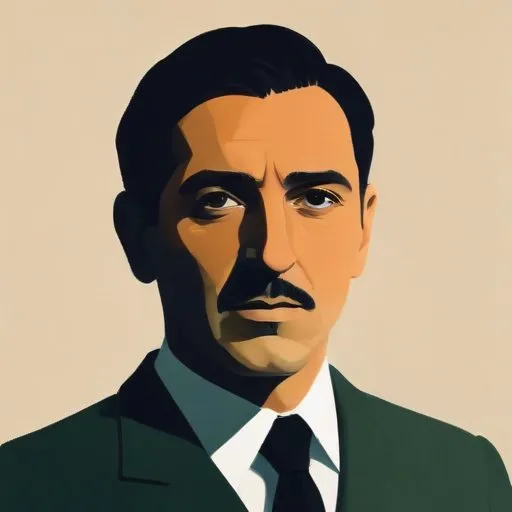
Acclaimed filmmaker behind powerful, politically charged dramas that explore social justice and humanity, such as the classic "Battle of Algiers".
Gillo Pontecorvo is renowned for directing the groundbreaking war docudrama, The Battle of Algiers (1966), which won the Golden Lion at the 27th Venice Film Festival and earned him Oscar nominations for Best Director and Best Original Screenplay. This iconic film cemented his status as a pioneer of the political cinema movement of the 1960s and 1970s.
Born on November 19, 1919, in Pisa, Italy, Pontecorvo came from a wealthy secular Italian Jewish family. His father was a businessman, and his siblings included notable figures such as Bruno Pontecorvo, a nuclear physicist, and Guido Pontecorvo, a geneticist. Pontecorvo's fascination with opposition political forces and leftist ideologies began during his university days at the University of Pisa, where he studied chemistry.
In 1938, faced with growing antisemitism in Italy, Pontecorvo followed his elder brother Bruno to Paris, where he worked as a journalist and tennis instructor. It was in Paris that he became immersed in the film world, producing short documentaries and laying the foundation for his future in cinema.
Pontecorvo's filmmaking career spanned over three decades, during which he directed a range of thought-provoking films that tackled complex social and political issues. Some of his notable works include:
In addition to his feature films, Pontecorvo directed several documentaries and short films that showcased his versatility as a filmmaker.
Pontecorvo's contributions to cinema were recognized with several prestigious awards, including the Pietro Bianchi Award at the 2000 Venice Film Festival. The same year, he was appointed as a Knight Grand Cross of the Order of Merit of the Italian Republic.
Gillo Pontecorvo's work continues to inspire filmmakers and audiences alike, offering a unique perspective on the complexities of human conflict and social injustice. His films serve as a testament to the power of cinema as a tool for raising awareness and sparking critical thinking.
Through his remarkable body of work, Pontecorvo leaves behind a legacy that extends beyond the world of cinema, influencing generations to come.
Born in 1912
A pioneering filmmaker who explored the human condition through visually stunning and psychologically complex movies, often focusing on alienation and social isolation.
Born in 1920
Visionary filmmaker behind surreal, poetic, and deeply personal cinematic masterpieces that blur the lines between reality and fantasy.
Born in 1906
Acclaimed Italian filmmaker renowned for lavish, visually stunning productions that often explored themes of social class, morality, and the human condition. His cinematic masterpieces continue to influence filmmakers today.
Born in 1901
A renowned filmmaker and actor, known for directing poignant, neorealist classics like "Bicycle Thieves" and "Umberto D.", which still influence world cinema today.
Born in 1906
Pioneering filmmaker behind neorealist classics like "Rome, Open City" and "Paisan", known for gritty, socially conscious storytelling that influenced generations of directors.
83 Years Old
Acclaimed filmmaker behind gritty, intense, and visually stunning movies that often explore themes of redemption, faith, and the human condition, with a distinctive directing style that blends violence and artistry.
87 Years Old
Academy Award-winning filmmaker behind epic movies like The Godfather and Apocalypse Now, known for his groundbreaking storytelling and direction.
79 Years Old
Acclaimed filmmaker behind iconic movies like Jaws, E.T., and Jurassic Park, revolutionizing the film industry with his imaginative storytelling and visual effects. Co-founder of DreamWorks, a prominent production company.
