


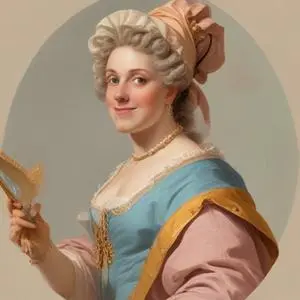
A renowned 18th-century painter of grand, sweeping scenes, celebrated for his vivid use of color and dramatic flair in frescoes and altarpieces.
Giovanni Battista Tiepolo was an 18th-century Italian painter and printmaker known for his magnificent frescoes and altarpieces that adorned the ceilings and walls of palaces, churches, and galleries across Europe. His work epitomized the Rococo style, characterized by light, airy, and playful compositions that captivated the hearts of aristocrats and art enthusiasts alike.
Born on March 5, 1696, in Venice, Italy, Tiepolo was the youngest of six children to Domenico and Orsetta Tiepolo. His father, a small shipping merchant, passed away when Tiepolo was just a year old, leaving his mother to raise the family. Despite the challenges, Tiepolo's mother ensured he received a good education and encouraged his artistic talent from an early age.
In 1710, Tiepolo became a pupil of Gregorio Lazzarini, a successful painter with an eclectic style. However, Tiepolo's early work was also influenced by his study of other contemporary artists such as Sebastiano Ricci and Giovanni Battista Piazzetta, as well as the works of his Venetian predecessors, including Tintoretto and Veronese.
Tiepolo's career was marked by rapid success, with his first major commission coming in 1716 for the decoration of the church of San Eustachio in Venice. This was followed by a string of prestigious projects, including the decoration of the Palazzo Sandi in Venice, the Royal Palace of Madrid, and the Würzburg Residence in Germany.
Tiepolo's work was not only aesthetically pleasing but also reflected his philosophical beliefs. He was deeply influenced by the ideals of the Enlightenment, emphasizing reason, individualism, and the pursuit of knowledge. His art often featured mythological and allegorical themes, encouraging viewers to contemplate the human condition and the nature of morality.
Tiepolo's legacy extends far beyond his own lifetime. His work has inspired countless artists, from the Romantics to the Modernists, and continues to influence contemporary art, design, and architecture. His mastery of color, composition, and storytelling has also made him a favorite among art historians and enthusiasts.
In 1719, Tiepolo married Maria Cecilia Guardi, the sister of the famous painter Francesco Guardi. The couple had nine children, several of whom became artists in their own right. Tiepolo's later years were marked by financial difficulties, but he continued to work tirelessly until his death on March 27, 1770.
Tiepolo's remarkable career and artistic achievements have cemented his place as one of the greatest painters of the 18th century. His work continues to inspire and delight audiences around the world, a testament to the timeless power of art to captivate and transform.
Born in 1678
A virtuosic violinist and prolific composer, he crafted over 400 concertos, including "The Four Seasons," which remains a beloved and iconic masterpiece of classical music.
Born in 1707
Wrote over 150 comedies that revitalized Italian theatre, introducing realistic characters and satire, influencing the development of comedy and opera.
Born in 1659
A prominent painter of the late Baroque period, known for his vivid and emotive works that blended classical and contemporary styles. His frescoes and altarpieces adorn many Italian churches and palaces.
Born in 1712
A Venetian painter of landscapes and vistas, capturing the essence of 18th-century Venice with dreamy, soft brushstrokes and vivid colors. His works evoke a sense of nostalgia and romance.
Born in 1683
A prominent 18th-century painter of dramatic and emotionally charged scenes, known for his bold use of chiaroscuro and innovative composition.
