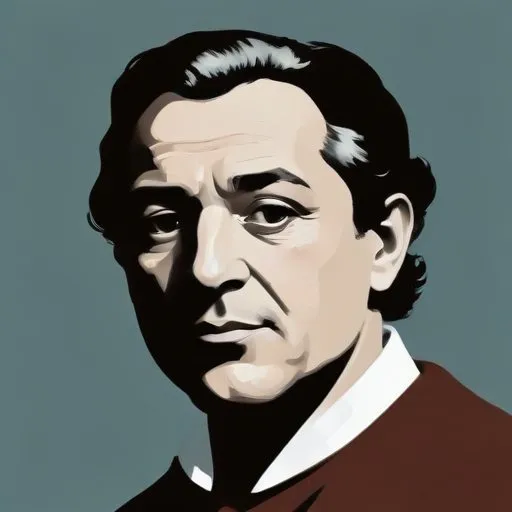
Giovanni Battista Piazzetta: The Venetian Master of Rococo Painting
A Painter of Intimacy and Mystery
Giovanni Battista Piazzetta was a renowned Italian Rococo painter, celebrated for his evocative and intimate depictions of religious subjects and everyday life. His distinctive style, characterized by warm, rich colors and a deep sense of mystery, set him apart from his contemporaries and continues to captivate art lovers to this day.
The Early Years: Training and Influences
Born in Venice in 1682, Piazzetta was the son of a sculptor, Giacomo Piazzetta. He received early training in woodcarving from his father before studying with the painter
Antonio Molinari in 1697. A pivotal period in his development as an artist was his time in Bologna, where he was influenced by the works of Giuseppe Maria Crespi and Carlo Cignani. Although there is no record of formal tutelage under Crespi, Piazzetta was deeply impressed by his art, which combined the dramatic chiaroscuro of Caravaggio with a sense of gentle charm.
A Return to Venice and Rise to Prominence
Around 1710, Piazzetta returned to Venice, where he quickly gained recognition as a leading artist. Despite his relatively modest output and unassuming nature, he won the admiration of his peers and patrons. His range of subjects was unusually broad, encompassing not only grand religious altarpieces but also intimate genre scenes of everyday life.
A Distinctive Style: Warmth, Mystery, and Poetry
Piazzetta's art is characterized by its warm, rich colors and a sense of mystery that draws the viewer in. He often depicted peasants and ordinary people in a grand, almost monumental style, imbuing them with a sense of dignity and beauty. His paintings exude a quiet poetry, as if the subjects are holding secrets and stories that they will only reveal to the attentive observer.
Influence and Legacy
Despite his relatively quiet nature, Piazzetta's influence on his contemporaries was significant. The younger artist Gianbattista Tiepolo, who collaborated with Piazzetta on several projects, was deeply influenced by his style and went on to become one of the leading painters of the Venetian Rococo. In turn, Tiepolo's luminous palette and sense of ease influenced Piazzetta's later work.
Major Works
- The Assumption of the Virgin, a stunning altarpiece created for the church of San Lio in Venice
- The Bearded Priest, a portrait of a humble, introspective cleric that showcases Piazzetta's ability to capture the human condition
- The Fortuneteller, a delightful genre scene of everyday life that reveals Piazzetta's talent for storytelling
A Lasting Impact on Art and Culture
Giovanni Battista Piazzetta's contribution to the world of art is immeasurable. His unique style, which blended the dramatic with the intimate, has inspired generations of artists and continues to captivate audiences today. As a painter of mystery and poetry, he reminds us that art can be both beautiful and profound, and that the ordinary can be transformed into the extraordinary.
FAQ
What style of painting did Giovanni Battista Piazzetta specialize in?
Giovanni Battista Piazzetta specialized in Baroque and Rococo painting, which was characterized by dramatic lighting, intense emotions, and ornate details. He was particularly known for his use of chiaroscuro, a strong contrast between light and dark, to create a sense of drama and tension.
What was Giovanni Battista Piazzettas most famous work?
Piazzettas most famous work is The Ecstasy of St. Francis, a dramatic and emotionally charged painting that showcases his mastery of Baroque style. The painting depicts St. Francis of Assisi in a state of ecstasy, surrounded by angels and cherubs.
How did Giovanni Battista Piazzetta influence the development of Venetian painting?
Piazzettas work had a significant impact on the development of Venetian painting, as he helped to establish the city as a center for artistic innovation and excellence. He also influenced a generation of Venetian painters, including Tiepolo and Guardi.
What was Giovanni Battista Piazzettas relationship with the Venetian artistic community?
Piazzetta was a respected member of the Venetian artistic community, where he was known for his technical skill and artistic innovation. He was also a sought-after teacher and mentor, and his studio attracted many young artists seeking to learn from him.
What is Giovanni Battista Piazzetta remembered for today?
Today, Piazzetta is remembered as one of the leading artists of the Baroque era, whose work continues to inspire and influence artists around the world. His dramatic and emotionally charged paintings remain popular among art lovers and historians alike.