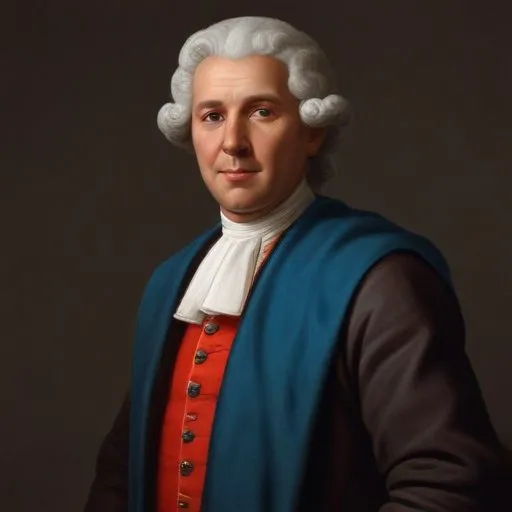
Giovanni Paolo Panini: The Master of Vedute and Architectural Paintings
The Painter of Rome's Antiquities
Giovanni Paolo Panini, also known as Gian Paolo Panini or Pannini, was a renowned Italian painter and architect who immortalized the beauty of Rome's antiquities through his stunning vistas. He is best known for his
vedute, or view paintings, that captured the essence of Rome's ancient architecture, making him one of the most celebrated
vedutisti of his time.
Early Life and Training
Born on June 17, 1691, in Piacenza, Italy, Panini began his artistic journey under the guidance of local artists Giuseppe Natali and Andrea Galluzzi. He later moved to Rome in 1711, where he honed his skills in drawing under the tutelage of Benedetto Luti. Panini's early training also included stage design, which he studied with Francesco Galli Bibiena.
Rise to Prominence
Panini's talent and dedication soon earned him recognition in Rome's artistic circles. In 1719, he was admitted to the prestigious Congregazione dei Virtuosi al Pantheon, a group of artists and intellectuals dedicated to promoting the arts. He went on to decorate several prominent palaces, including the Villa Patrizi (1719-1725), the Palazzo de Carolis (1720), and the Seminario Romano (1721-1722). These commissions solidified his reputation as a skilled decorator and painter.
Vedute Paintings and Architectural Masterpieces
Panini's most famous works are his
vedute paintings, which showcased Rome's iconic landmarks and ancient ruins. These works often featured fanciful and unreal embellishments, characteristic of the
capriccio style, popularized by Marco Ricci. Some of his most celebrated paintings include:
- Interior of the Pantheon, painted for Francesco Algarotti
- Vedute paintings of picture galleries containing views of Rome
These paintings not only demonstrated Panini's technical skill but also his deep appreciation for Rome's rich cultural heritage.
Teaching and Legacy
Panini was an esteemed teacher and mentor, sharing his knowledge with students at the Accademia di San Luca and the Académie de France in Rome. He is believed to have influenced the French painter
Jean-Honoré Fragonard, among others. In 1754, he was appointed as the prince director of the Accademia di San Luca, a testament to his stature in the art world.
International Recognition
Panini's work transcended national borders, earning him recognition from European monarchs. He was commissioned by King
Philip V of Spain to create paintings for the Lacquer Room of the Royal Palace of La Granja de San Ildefonso.
Personal Life and Family
In 1724, Panini married Miss Gossert, sister-in-law of the director of the French Academy in Rome. The couple had two sons, Giuseppe Pannini (1720-1812), an architect, and Francesco Panini (1745-1812), a painter who followed in his father's footsteps.
Legacy and Impact
Giovanni Paolo Panini's contributions to the world of art and architecture are immeasurable. His
vedute paintings continue to inspire artists and art lovers alike, offering a glimpse into Rome's rich cultural heritage. As a painter, decorator, and teacher, Panini left an indelible mark on the art world, cementing his place as one of the most celebrated Italian artists of the 18th century.
FAQ
What style of painting was Giovanni Paolo Panini known for?
Giovanni Paolo Panini was known for his vedute, or view paintings, which depicted scenes of everyday life in Rome, as well as his capricci, which featured fantastical and imaginative scenes.
What were the main subjects of Giovanni Paolo Paninis paintings?
Paninis paintings primarily depicted scenes of ancient Roman architecture, landscapes, and everyday life in Rome, as well as fantastical and imaginative scenes.
How did Giovanni Paolo Panini influence the development of European art?
Paninis work had a significant impact on the development of European art, influencing the Neoclassicism movement and inspiring artists such as Hubert Robert.
What was the significance of Giovanni Paolo Paninis use of perspective?
Paninis innovative use of perspective created a sense of depth and realism in his paintings, allowing viewers to imagine themselves in the scenes he depicted.
What is the legacy of Giovanni Paolo Panini in art history?
Giovanni Paolo Panini is remembered as one of the greatest painters of his time, known for his innovative use of perspective and his beautiful depictions of everyday life in Rome.