


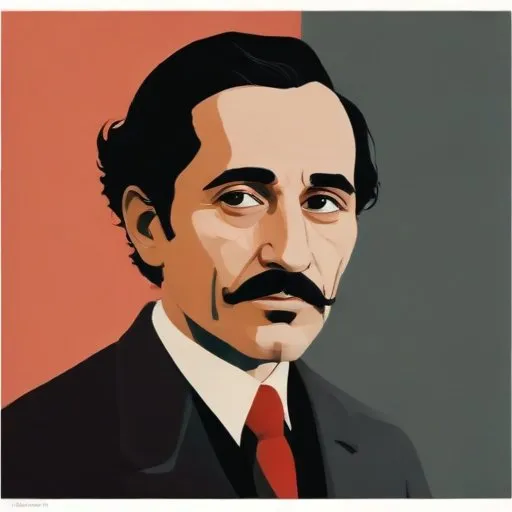
An 18th-century Italian polymath who wrote influential works on art, literature, and science, making complex ideas accessible to a broad audience. They're known for popularizing Newton's theories and inspiring Voltaire's writing.
Francesco Algarotti was an 18th-century Italian polymath, philosopher, poet, essayist, anglophile, art critic, and art collector, renowned for his profound impact on the convergence of art and science. He was a trailblazer in popularizing Newtonianism, and his works embodied a unique blend of intellectual curiosity and artistic flair.
Born on December 11, 1712, in Venice, Algarotti was the son of a wealthy merchant family with a rich cultural heritage. His father and uncle were avid art collectors, and this exposure sparked Algarotti's fascination with the arts. Defying family expectations, he chose not to pursue a career in trade, instead opting to become an author. Algarotti received a classical education in Venice and Rome, and later studied natural sciences and mathematics in Bologna. His intellectual curiosity was insatiable, and he experimented with optics under the guidance of Francesco Maria Zanotti, who became a lifelong friend.
Algarotti's travels took him to Paris, where he befriended prominent intellectuals like Pierre-Louis Moreau de Maupertuis and Voltaire. His exceptional conversational skills, coupled with his striking appearance and versatile intelligence, earned him a place among the city's elite. In 1728, he was elected a Fellow of the Royal Society in London, solidifying his reputation as a Renaissance man.
Algarotti's most famous work, Newtonianismo per le dame (Newtonism for Ladies), published in 1737, was a groundbreaking treatise that introduced women to the world of astronomy, physics, and mathematics. Dedicated to Bernard le Bovier de Fontenelle, this seminal work showcased Algarotti's dedication to education and his commitment to making science accessible to all. His literary output was diverse, encompassing poetry, essays, and art criticism, earning him a reputation as a master of language and thought.
Algarotti's personal life was marked by a series of intriguing relationships and controversies. He was embroiled in a bisexual love triangle with the politician John Hervey and Lady Mary Wortley Montagu, leading to a period of turmoil and eventual departure from London. His connections with prominent figures like Frederick the Great, Jean-Baptiste de Boyer, Marquis d'Argens, and Julien Offray de La Mettrie testify to his ability to navigate complex social circles.
Francesco Algarotti's legacy extends far beyond his literary contributions. He played a pivotal role in shaping the cultural landscape of 18th-century Europe, fostering a spirit of intellectual curiosity and artistic innovation. His work continues to inspire scholars, artists, and scientists, as a testament to the power of interdisciplinary thinking and the pursuit of knowledge.
Through his extraordinary life and work, Francesco Algarotti reminds us of the importance of embracing multiple disciplines, fostering creativity, and pushing the boundaries of human knowledge.
Born in 1712
A pioneering thinker who shaped modern democracy and education with his ideas on social contracts, general will, and the importance of early childhood education. His writings influenced the French Revolution and modern political thought.
Born in 1694
A witty and insightful 18th-century writer and philosopher who used satire to critique societal norms and advocate for reason, tolerance, and human rights.
Born in 1717
A French Enlightenment thinker who made significant contributions to mathematics, physics, and philosophy, particularly in the fields of fluid dynamics and the study of vibrating strings. He's also known for his work on the Encyclopedia, a comprehensive reference work that aimed to compile all knowledge of the time.
Born in 1698
A renowned 18th-century poet and librettist, he penned opera texts that captivated European audiences, shaping the genre with his lyrical and dramatic flair.
Born in 1707
Wrote over 150 comedies that revitalized Italian theatre, introducing realistic characters and satire, influencing the development of comedy and opera.
Born in 1696
A renowned 18th-century painter of grand, sweeping scenes, celebrated for his vivid use of color and dramatic flair in frescoes and altarpieces.
