


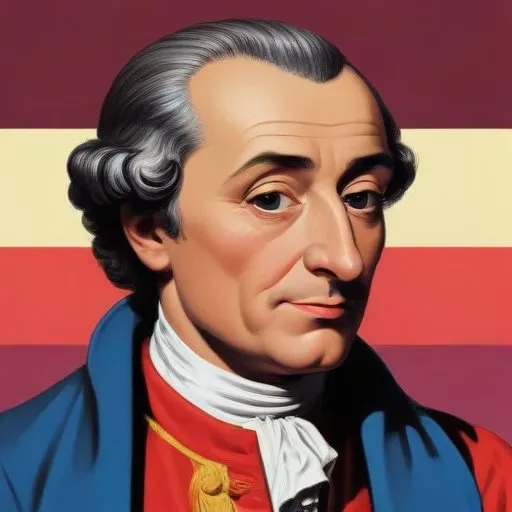
A French philosopher and writer who challenged traditional morality and religion through his libertine novels and philosophical works, influencing the Enlightenment era. He's known for his provocative ideas on free will, morality, and the nature of humanity.
Jean-Baptiste de Boyer, Marquis d'Argens, was a French rationalist, author, and critic of the Catholic Church, known for his scathing critiques of religious dogma and his unwavering commitment to reason and enlightenment. As a close friend of Voltaire, he spent much of his life in exile at the court of Frederick the Great, where he penned some of his most influential works.
Born on June 24, 1704, in Aix-en-Provence, France, Jean-Baptiste was the eldest of seven children to Pierre-Jean de Boyer and Angélique de L'Enfant. His father, a member of the Second Estate, held the position of Procureur général, or Attorney General, for the Regional Parliament of Provence. This placed the family among the noblesse de robe, a class of middle-class professionals who owed their rank to their possession of judicial or administrative posts.
As the eldest son, Jean-Baptiste was expected to follow in his father's footsteps and pursue a legal career. However, he rejected this path, instead choosing to become a rationalist author and critic of the Church. This decision would ultimately lead to his disinheritance in favor of his younger brother Alexandre in 1734.
Jean-Baptiste's literary career spanned several decades, during which he penned numerous works that critiqued religious dogma and promoted reason and enlightenment. His most famous work, Lettres juives, chrétiennes et philosophiques, was a scathing critique of the Catholic Church and its doctrines. The work was widely read and praised by many, including Voltaire, who counted Jean-Baptiste among his closest friends.
Jean-Baptiste's philosophical contributions were significant, as he challenged the dominant Catholic ideology of the time. He believed in the power of reason and the importance of individual freedom, and his works reflected these values. He was also a strong advocate for the separation of church and state, a notion that was revolutionary for its time.
In 1749, Jean-Baptiste married French ballerina and writer Babette Cochois, with whom he had a daughter, Barbe. However, his life in France was marked by controversy and persecution, and he was eventually forced to flee to Berlin, where he found refuge at the court of Frederick the Great. Here, he spent many years, writing some of his most influential works and enjoying the company of his friend Voltaire.
Jean-Baptiste de Boyer, Marquis d'Argens, left behind a legacy of intellectual curiosity and critique. His works, though often controversial, challenged the dominant ideologies of his time and paved the way for future generations of thinkers and writers. His commitment to reason, individual freedom, and the separation of church and state continues to inspire and influence thinkers to this day.
In the words of Voltaire, "Argens was a true philosopher, and his writings will always be read with pleasure and profit."
Jean-Baptiste de Boyer, Marquis d'Argens, may have lived a life of exile and controversy, but his impact on the world of literature and philosophy is undeniable. He remains one of the most important and influential thinkers of the 18th century, and his works continue to inspire and challenge readers to this day.
Born in 1694
A witty and insightful 18th-century writer and philosopher who used satire to critique societal norms and advocate for reason, tolerance, and human rights.
Born in 1712
A pioneering thinker who shaped modern democracy and education with his ideas on social contracts, general will, and the importance of early childhood education. His writings influenced the French Revolution and modern political thought.
Born in 1689
A French lawyer and philosopher who developed the concept of separation of powers, which divides a government into legislative, executive, and judicial branches to prevent abuse of power. His ideas greatly influenced modern democracy.
Born in 1724
Developed influential philosophical frameworks, such as the Critique of Pure Reason, that shaped modern Western thought on ethics, morality, and human understanding.
Born in 1717
A French Enlightenment thinker who made significant contributions to mathematics, physics, and philosophy, particularly in the fields of fluid dynamics and the study of vibrating strings. He's also known for his work on the Encyclopedia, a comprehensive reference work that aimed to compile all knowledge of the time.
Born in 1647
A 17th-century philosopher and writer who critiqued religious intolerance and advocated for reason, skepticism, and intellectual freedom. His works influenced the Enlightenment and modern critical thinking.
