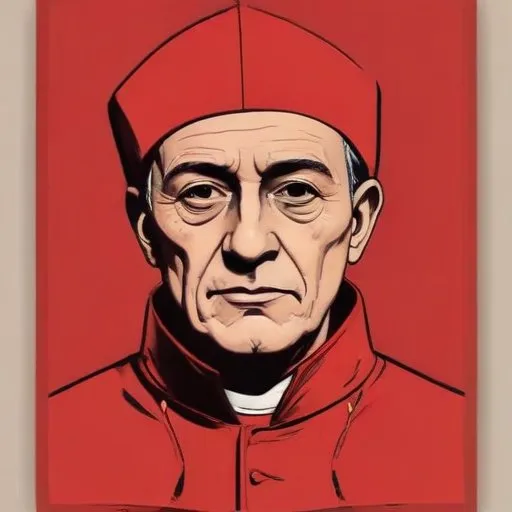
Giovanni Morone: The Celebrated Italian Cardinal and Diplomat
A Lifetime of Service to the Church
Giovanni Morone, also known as Moroni, was a renowned Italian cardinal who served the Catholic Church with distinction from 1529 until his death in 1580. He is remembered for his remarkable diplomatic career, which took him to various European courts, and his influential role in shaping the Church's response to the Protestant Reformation.
Early Life and Education
Born on January 25, 1509, in Milan, Italy, Morone was the son of Count Girolamo Morone, a grand chancellor who later supported Charles V, the King of Spain. His father's influence helped Morone secure a bright future, and he was educated in Padua, where he studied jurisprudence with great success.
Rise to Prominence
At the tender age of 20, Morone was nominated as the Bishop of Modena by Pope
Clement VII in 1529, a testament to his father's service to the Church. Although he was too young to be consecrated a bishop at the time, he was finally ordained priest and consecrated bishop on January 12, 1533.
Diplomatic Missions
Morone's exceptional diplomatic skills led to his appointment as a papal legate to various European courts. He was entrusted with several high-profile missions, including:
- A trip to France in 1535 to negotiate a peace treaty between King Francis I and the Emperor
- A mission to King Ferdinand I, the Emperor's brother, in 1536
- A legation to Hagenau and Worms in 1539-1540 to reclaim these regions for the Catholic Church
Cardinalate and Later Life
In 1542,
Pope Paul III elevated Morone to the rank of cardinal, recognizing his outstanding service to the Church. As a cardinal, Morone resided in the Vatican's Apostolic Palace and was consulted by Saint Ignatius, the founder of the Jesuits. He continued to play an active role in Church affairs until his death on December 1, 1580.
Legacy
Giovanni Morone's remarkable career left an indelible mark on the Catholic Church. His diplomatic efforts helped shape the Church's response to the Protestant Reformation, and his consultative role with Saint Ignatius highlights his importance in the early days of the Jesuit order. Today, Morone is remembered as a devoted servant of the Church, whose life's work continues to inspire generations of Catholics.
FAQ
Who was Giovanni Morone?
Giovanni Morone was an Italian cardinal and bishop who played a key role in the Council of Trent during the 16th century. He was a prominent figure in the Roman Catholic Church and a respected theologian and diplomat.
What was Giovanni Morones role in the Council of Trent?
Giovanni Morone was a leading figure in the Council of Trent, where he worked to promote Catholic reform and defend the Church against Protestantism. He played a key role in shaping the Councils decrees and was a powerful advocate for Church reform.
What were Giovanni Morones theological views?
Giovanni Morones theological views were shaped by his commitment to Catholicism and his opposition to Protestantism. He believed in the authority of the Church and the importance of tradition, while also advocating for reform and renewal.
What was Giovanni Morones relationship with the papacy?
Giovanni Morone had a complex and often tumultuous relationship with the papacy. He was a loyal servant of the Church, but also criticized papal abuses and advocated for reform.
What is Giovanni Morones legacy?
Giovanni Morones legacy is that of a committed Catholic reformer who worked to strengthen the Church and promote its mission. His contributions to the Council of Trent and his advocacy for Church reform continue to shape Catholic theology and practice today.