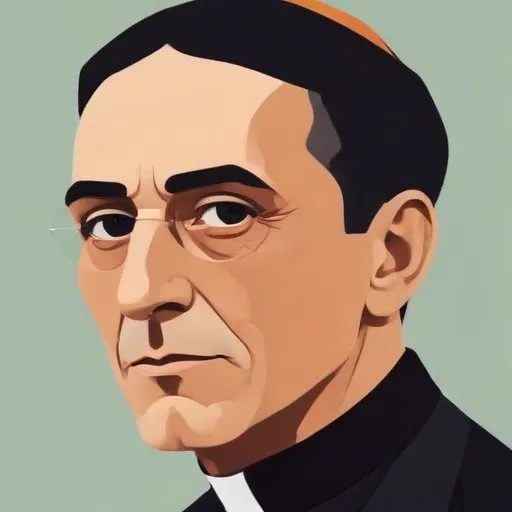
Giuseppe Baini: The Maestro of Sacred Music
A Champion of Ecclesiastical Harmony
Giuseppe Baini, an Italian priest, music critic, conductor, and composer, left an indelible mark on the world of sacred music. Born in Rome on October 21, 1775, Baini's exceptional talent and dedication to his craft earned him the esteemed position of musical director to the choir of the pontifical chapel, a role he held from 1814 until his passing in 1844.
A Life of Harmony and Devotion
Baini's musical prowess was nurtured from a young age by his uncle, Lorenzo Baini, and later by G. Jannaconi. His powerful bass voice, spanning an impressive range from low E to high G, secured his entry into the pontifical chapel choir in 1802. This early start laid the foundation for his future accomplishments as a composer and music critic.
A Master of the Severe Ecclesiastical Style
Baini's compositions, though few in number, showcased his mastery of the severe ecclesiastical style. His ten-part Miserere, written for Holy Week in 1821 at the behest of
Pope Pius VII, took its rightful place in the services of the Sistine Chapel during Passion Week. This masterpiece exemplified Baini's ability to create music that resonated deeply with the faithful.
A Musical Historian and Critic
Baini's true calling, however, lay in his role as a musical historian and critic. His magnum opus,
Memorie storicocritiche della vita e delle opere di Giovanni Pierluigi da Palestrina (1828), cemented his reputation as a leading authority on the life and works of Palestrina. This seminal work not only shed light on Palestrina's contributions but also coined the phrase "Il Principe della Musica," forever linking the composer's name to the epitome of musical excellence.
A Legacy of Hero Worship and Musical Scholarship
Baini's biography of Palestrina fueled a 19th-century attitude of hero worship towards the Renaissance master of counterpoint. While contemporary scholarship has nuanced this view, acknowledging Palestrina's place among many skilled composers, Baini's work remains a testament to his dedication to musical scholarship.
Personal Milestones and Key Life Events
- 1775: Born in Rome on October 21
- 1802: Joined the pontifical chapel choir
- 1814: Appointed musical director to the choir of the pontifical chapel
- 1821: Composed a ten-part Miserere for Holy Week
- 1828: Published Memorie storicocritiche della vita e delle opere di Giovanni Pierluigi da Palestrina
- 1844: Passed away on May 21
Impact on Modern Society
Giuseppe Baini's contributions to sacred music and musical scholarship continue to inspire generations of musicians, composers, and musicologists. His legacy serves as a beacon, guiding those who seek to create music that uplifts and inspires the human spirit.
FAQ
What was Giuseppe Bainis role in the development of Italian music?
Giuseppe Baini was an Italian priest, composer, and critic who played a key role in the development of Italian music in the 19th century. He was a leading figure in the Cecilian Movement, which aimed to reform Catholic church music.
What were Giuseppe Bainis contributions to music criticism?
Giuseppe Baini was a prominent music critic who wrote extensively on music and composers. He was a strong advocate for the music of Palestrina and other Renaissance composers.
Where was Giuseppe Baini born?
Giuseppe Baini was born on May 21, 1775, in Rome, Papal States (now Italy).
What was Giuseppe Bainis role in the Catholic Church?
Giuseppe Baini was a Catholic priest who served in various roles, including as a chaplain to Pope Pius VII. He was known for his piety and his commitment to the Catholic Church.
How did Giuseppe Baini die?
Giuseppe Baini died on May 21, 1844, at the age of 69, in Rome, Papal States (now Italy). He died of natural causes after a long illness.