


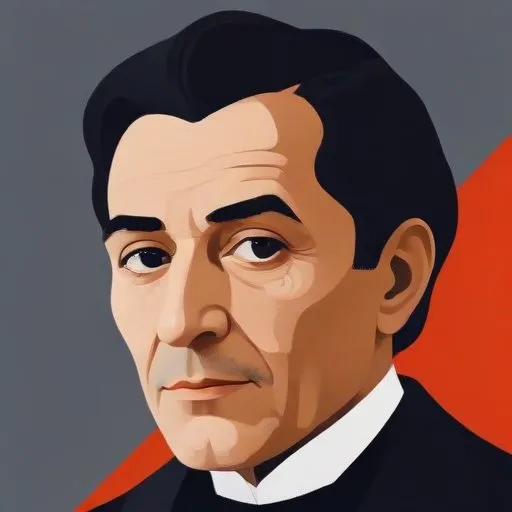
An 18th-century composer and educator, he wrote over 40 operas and taught renowned musicians, contributing significantly to the development of classical music.
Giuseppe Gazzaniga was a renowned Italian opera composer, known for his remarkable contributions to the Neapolitan school of opera. With a career spanning over four decades, he composed an impressive 51 operas, earning him the reputation as one of the last great Italian opera buffa composers.
Born on October 5, 1743, in Verona, Italy, Gazzaniga was initially destined for the priesthood, as desired by his devout parents. However, his passion for music led him to pursue a career in the arts, against his parents' wishes. He began his studies in Venice and later enrolled at the Conservatorio di Sant'Onofrio a Porta Capuana in Naples, where he was mentored by prominent composers Niccolò Piccinni and Nicola Porpora.
Gazzaniga's debut opera, Il barone di Trocchia, premiered at the Teatro di San Carlo in 1768, marking the beginning of his successful career. Over the years, he wrote numerous operas, mostly in Italy, with occasional trips to Dresden, Vienna, and Prague. His most celebrated opera, Don Giovanni Tenorio, composed in 1787, is believed to have inspired the libretto of Mozart's Don Giovanni.
In 1791, Gazzaniga became the musical director of Crema Cathedral in the Lombardy region, where he focused on composing sacred works, including cantatas, oratorios, and masses. He remained in this position until his death on February 1, 1818. Gazzaniga's life and works were later studied in detail by the prominent German critic Friedrich Chrysander.
Gazzaniga's contributions to the world of opera are undeniable, and his legacy continues to inspire and influence composers to this day. His remarkable career serves as a testament to his dedication to the art form, and his works remain a vital part of Italy's rich cultural heritage.
Gazzaniga's life and works offer a fascinating glimpse into the world of 18th-century opera. His compositions not only showcase his mastery of the opera buffa genre but also provide valuable insights into the cultural and social context of his time. As one of the last great Italian opera composers, Gazzaniga's legacy continues to captivate audiences and inspire new generations of musicians and composers.
Born in 1756
A child prodigy and master of classical music, he composed over 600 works, including symphonies, operas, and chamber music, that continue to inspire and influence musicians today.
Born in 1770
A musical genius who expanded the possibilities of classical music, creating iconic symphonies and piano sonatas that continue to inspire and influence generations of artists.
Born in 1782
A virtuosic violinist and composer who revolutionized the instrument's technical possibilities, leaving an indelible mark on classical music.
Born in 1792
Operatic mastermind behind iconic comedies like "The Barber of Seville" and "William Tell," crafting catchy, witty, and playful music that still delights audiences today.
Born in 1797
A renowned Italian composer of the Romantic era, best known for his operas, particularly "L'elisir d'amore" and "Don Pasquale", which are still widely performed today.
Born in 1801
Operatic mastermind behind bel canto classics like "Norma" and "La Sonnambula", renowned for their beautiful, expressive melodies and dramatic flair.
Born in 1791
A renowned 19th-century pianist and composer, he revolutionized opera with grand, spectacular productions, blending drama, music, and dance. His works, like "Les Huguenots," remain iconic in the operatic repertoire.
Born in 1749
An 18th-century Italian composer and educator, known for his operas and sacred music, particularly his comic operas that showcased his mastery of melody and harmony.
