


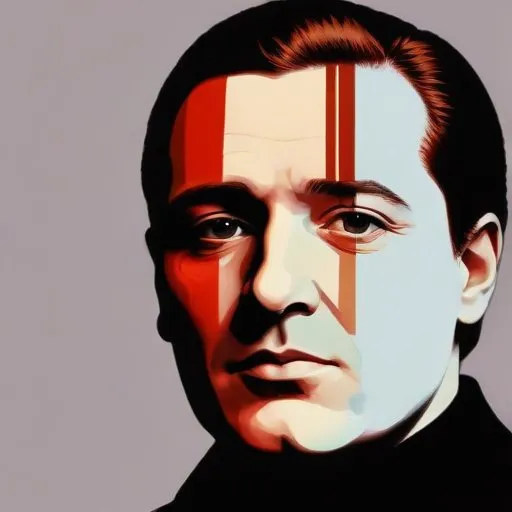
A German opera singer celebrated for his powerful, expressive voice and iconic performances in Wagner's operas. He was a leading tenor at the Bayreuth Festival, renowned for his portrayal of Siegfried.
Gnther Treptow, born on October 22, 1907, in Berlin, Germany, was a renowned operatic tenor best known for his powerful performances in Richard Wagner's iconic roles. With a career spanning over three decades, Treptow established himself as one of the leading heldentenors of his generation, mesmerizing audiences with his commanding stage presence and rich, velvety voice.
Treptow began his vocal studies in Berlin as a baritone under the Italian bass, Giovanni Scarneo. However, it wasn't until he joined the SA and Nazi Party in 1926 that his career took a significant turn. Unfortunately, his mother's Jewish heritage was discovered in 1934, leading to his banishment from performing. It wasn't until 1935 that Treptow received special permission from Joseph Goebbels to resume his career.
Treptow made his stage debut in 1936 as the Italian singer in Der Rosenkavalier, a role that marked the beginning of his rise to fame. He went on to appear at the Vienna Volksoper in 1938, singing the role of Florestan in Fidelio, and later at the Sopot Festival in 1939, where he took on the title role of Tannhuser.
Treptow's breakthrough came in 1940 when he made his debut at the Munich State Opera, followed by appearances at the Vienna State Opera in 1947 and the Bayreuth Festival in 1951. His powerful performances in Wagner's operas earned him critical acclaim, with roles such as Siegmund in Die Walküre, Siegfried in Siegfried and Götterdämmerung, and Tristan in Tristan und Isolde becoming synonymous with his name.
Treptow's talent soon transcended borders, with guest appearances at La Scala in Milan, La Monnaie in Brussels, the Royal Opera House in London, the Teatro Colón in Buenos Aires, and the Metropolitan Opera in New York. He also performed in Leningrad and Moscow, cementing his status as a globally renowned operatic tenor.
Treptow's impressive discography includes recordings of Die Walküre, Siegfried, Götterdämmerung, and Parsifal, all conducted by Rudolf Moralt, as well as Die Meistersinger von Nürnberg, conducted by Eugen Jochum. His contribution to the world of opera has left an indelible mark, inspiring generations of singers and opera enthusiasts alike.
Treptow continued to perform until his retirement in 1972, after which he spent his later years in Berlin, where he passed away on March 28, 1981. Despite the controversies surrounding his early career, Treptow's legacy as a masterful Wagnerian tenor continues to be celebrated and revered to this day.
'The art of singing is not just about producing beautiful sounds, but about conveying the emotional depth of the character.' - Gnther Treptow
Treptow's influence on modern opera is undeniable, with many contemporary singers drawing inspiration from his iconic performances. His commitment to the art form has paved the way for future generations of opera enthusiasts, ensuring that the world of Wagner continues to thrive and captivate audiences worldwide.
Born in 1864
A renowned composer and conductor of the late Romantic era, known for his tone poems and operas that showcased his mastery of orchestration and expressive storytelling.
Born in 1860
A visionary composer and conductor who expanded symphonic music's emotional depth and complexity, creating works of profound beauty and intensity.
Born in 1813
A revolutionary composer who transformed opera with his epic, mythological works, creating a new era of musical storytelling. His iconic operas, such as "Der Ring des Nibelungen," continue to captivate audiences worldwide.
Born in 1869
A late Romantic composer and conductor, known for his operas and symphonic works that blended traditional and modern elements. His music is characterized by its lyricism and rich orchestration.
Born in 1809
A renowned 19th-century musician who masterfully blended classical and romantic styles, creating iconic works like the "Wedding March" and "Elijah" oratorio. His compositions continue to inspire and influence generations of artists.
Born in 1810
A renowned Romantic-era composer and influential music critic, known for his expressive and emotionally charged works, including symphonies, piano music, and art songs.
Born in 1811
A virtuosic pianist and composer who revolutionized classical music with his technically demanding and emotionally expressive works, blending Hungarian folk influences with Romantic-era drama.
Born in 1813
A renowned composer of iconic operas like La Traviata and Aida, known for his masterful blending of drama and music. His works continue to captivate audiences worldwide.
