


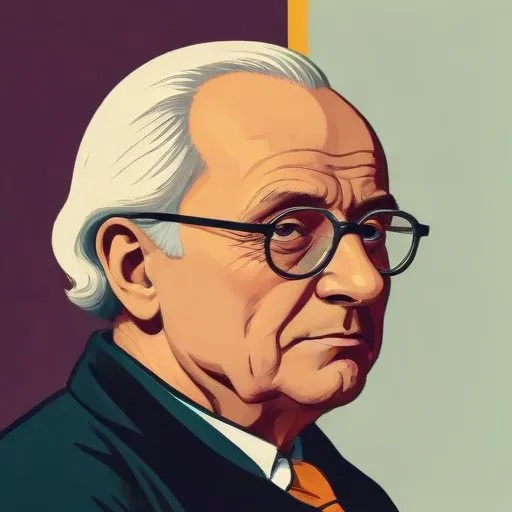
A pioneer in the field of statistics, this 18th-century scholar developed the concept of "statistics" as a scientific discipline, applying it to the study of statecraft and governance.
Gottfried Achenwall, a German philosopher, historian, economist, jurist, and statistician, is renowned for his groundbreaking contributions to the field of statistics, earning him the title of "Father of Statistics."
Born on October 20, 1719, in Elbing (now Elblag), Polish province of Royal Prussia, Achenwall pursued his academic endeavors in various German cities, including Jena, Halle, and Leipzig.
Achenwall's academic career was marked by significant milestones, including his appointment as an extraordinary professor of philosophy at the University of Göttingen in 1748.
Achenwall's magnum opus, Staatsverfassung der Europäischen Reiche im Grundrisse (Constitution of the Present Leading European States), published in 1752, is widely regarded as his most significant contribution to the field of statistics.
In Staatsverfassung, Achenwall presented a comprehensive overview of the constitutions of various European countries, complemented by statistical data on their agriculture, manufactures, and commerce.
Achenwall's academic pursuits were complemented by his travels, which were often financially supported by King George III.
Achenwall's contributions to statistics have had a lasting impact on modern society, with his work influencing fields such as economics, politics, and demography.
Through his pioneering efforts, Achenwall has left an indelible mark on the development of statistics, earning him a place among the most influential thinkers of the 18th century.
Born in 1724
Developed influential philosophical frameworks, such as the Critique of Pure Reason, that shaped modern Western thought on ethics, morality, and human understanding.
Born in 1679
Developed a philosophical system that combined elements of Leibniz and Descartes, and was a prominent figure in the German Enlightenment. He wrote extensively on metaphysics, ethics, and logic.
Born in 1762
A German philosopher and academic who developed the concept of German idealism, emphasizing the role of the individual and the nation in shaping reality. He's known for his influence on German philosophy and the development of existentialism.
Born in 1759
A renowned poet and playwright who crafted influential works that explored the human condition, morality, and the struggle for freedom, leaving a lasting impact on German literature.
Born in 1769
A pioneering geographer and explorer who mapped much of South America and discovered the Caspian Sea's connection to the Black Sea, greatly advancing our understanding of the natural world.
Born in 1749
A German literary giant who penned iconic works like "Faust" and "The Sorrows of Young Werther", shaping the Romantic movement and influencing countless writers.
Born in 1770
A German philosopher and academic who developed a comprehensive and systematic philosophy that emphasized the unity of all things and the dialectical process of thesis, antithesis, and synthesis. His ideas have had a profound impact on modern thought, influencing fields such as philosophy, politics, and art.
